




Recently, I was interviewed by a reporter representing a big city daily newspaper. She was new to truck safety and was working on a feature story. We sat in my office as I explained what the new Federal Motor Carrier Safety Administration (FMCSA) is doing to improve motor carrier safety. I described our goals, objectives, and strategies that focus FMCSA's resources on improved information systems, targeted enforcement, increased use of technology, and ways in which we plan to effectively heighten safety awareness.
At one point in the interview, she indicated that she had been talking to a wide variety of public and private organizations and individuals with an interest in truck and bus safety and that many of these individuals/groups asked "who will be accountable for the 50% reduction of truck related fatalities once Secretary Slater leaves office?" I told this reporter, "Everyone is accountable."
I still get disturbed when I think about this exchange because many individuals and groups, ostensibly concerned about truck safety, will not acknowledge their own responsibility to improve truck safety. Whenever a "killer" truck story appears in the media, the finger pointing begins. Carriers blame drivers and shippers, drivers blame carriers and shippers, shippers blame carriers and drivers, safety interest groups blame everyone and everyone blames the government.
It's the government's fault -- If the regulators just issued those rules quicker; if they were just tougher on carriers and drivers; if they just made all the trucks stay in one lane; if they only allowed trucks to drive at certain times; if they just made trucks larger; if they just made trucks smaller ... we wouldn't have all these accidents.
It's the carriers' fault -- If carriers ignored "just in time delivery;" if they paid their drivers differently; if they paid their drivers better; if they didn't push their drivers to drive such long hours; if they only checked their drivers better; if they only allowed daytime operations; if they "held the line" with shippers... we wouldn't have all these accidents.
It's the truck drivers' fault -- If truck drivers didn't all speed and drive like maniacs; if they didn't lie to get a CDL; if they didn't drink and drive; if they didn't drive when they are tired; if they didn't park on the shoulders of freeways ... we wouldn't have all these accidents.
It's the four-wheelers' fault -- If passenger vehicle drivers didn't all speed and drive like maniacs; if they didn't drive in the No-Zone; if they didn't drive when they had been drinking; if they didn't drive when they were tired ... we wouldn't have all these accidents.
It's the shippers' fault -- If shippers didn't play one carrier off against another; if they just established routes which were reasonable; if they modified "just in time delivery;" if they paid drivers for loading and unloading... we wouldn't have all these accidents.
Sound familiar? Sure it does. You've probably played the "blame game" yourself. But, guess what? You're right. Everybody is right. It's all those people's fault. And, each of us is one of "those people." Which brings me to my point. We are all accountable for the 50% reduction in truck-related fatalities and we are all responsible for safety.
Yet, we have become a nation of finger-pointers. We rush to point the finger of blame at others when it should be pointed at ourselves. We should make sure we are doing all we can to improve the situation, before we blame others.Why? Because every single one of us is responsible for motor carrier safety.
Let's change by just doing the "right thing." If you're a truck driver, make sure you're the best, most professional driver you can be. Practice patience. Don't tailgate; don't drink and drive; don't take drugs; don't drive when you are tired; don't drive too fast for conditions; and don't take an assignment that puts you or me or our families in jeopardy.
If you're a car driver, give trucks room to operate safely. Don't cut the truck driver off; don't slow down abruptly in front of a truck after passing; don't drink and drive; don't drive too fast for conditions; always wear a seat belt and always secure your children in approved safety seats or booster seats in the rear of your vehicle.
If you're a shipper or receiver, schedule deliveries responsibly; don't use the economic pressures of your position to put road users at risk; don't require drivers to load or unload your shipments without compensation; and never create an environment where you force someone to choose between their livelihood and safety.
If you are a carrier or owner-operator, make sure your equipment is well maintained; make sure you only hire qualified drivers; make sure you never ask a driver to choose between his livelihood and safety; never dispatch a tired or sick driver; never let a shipper coerce you into unsafe practices; and treat your drivers like employees rather than commodities.
Make safety the top priority in everything you do.
If we are to be successful in improving truck safety, the finger-pointing and negativity has to stop. Constructive ideas would be a wonderful substitute. Proactive safety programs, "Our organization is doing this, and this, and this to improve motor carrier safety in America, today" complete the picture. Only with these actions can we consider ourselves credible motor carrier safety advocates.
Become a safety advocate. Other words describing advocate include backer, fighter, patron, savior, spokesperson, and sponsor. To be considered a motor carrier safety advocate, you would have constructive and concrete ideas about how to improve truck and bus safety.
I learn from safety advocates, Parents Against Tired Truckers (P.A.T.T.), the Commercial Vehicle Safety Alliance (CVSA), National Association of Governor Highway Safety Representatives (NAGHSR) and AAA, who have been proactive in discussing ideas and programs to improve truck safety. True motor carrier safety advocates should use every opportunity to discuss ideas, proposals, and to partner with the government agency regulating the motor carrier industry.
Today, as throughout my career, I stand ready to do what it takes to improve safety.
The FMCSA is implementing a carefully thought-out, aggressive, and balanced safety action plan. Others are investing in safety technology used in trucks, such as crash avoidance systems, anti-rollover systems, and satellite tracking.
Many are actively involved in providing effective driver training and public education, and more. FMCSA will work enthusiastically with all who are dedicated to improving motor carrier safety.
We will discuss and consider every possible solution and reasonable suggestion to prevent truck and bus fatalities and injuries. We don't have all the answers, but we are totally committed to safety... to doing the best job possible.
That's where you come in. Work with us to improve motor carrier safety. We need your help and welcome your suggestions and efforts.
Finally, consider this... if everyone were do the "right thing," make the "right choices," in the name of motor carrier safety, we wouldn't need a government agency to set and enforce truck and bus rules and regulations. Everyone would be driving safely, operating safe equipment, and only driving when well-rested. But, until that time comes, FMCSA will work with all interested parties, to prevent truck and bus-related deaths and injuries.
Who's Accountable?
Recently, I was interviewed by a reporter representing a big city daily newspaper. She was new to truck safety and was working on a feature story. We sat in my office as I explained what the
More Safety & Compliance

Nominations Open for HDT Truck Fleet Innovators 2026
Heavy Duty Trucking is searching for forward-looking leaders at trucking fleets as nominations for HDT’s Truck Fleet Innovators 2026. Deadline is May 15.
Read More →
Freightliner Expands Detroit Assurance with New Intersection and Turning Safety Tech
Detroit’s next-generation ABA6 safety system adds cross-traffic detection and enhanced side guard assist with left-turn protection, targeting high-risk urban scenarios.
Read More →
'Beyond Compliance,' Regulations, Driver Coaching on ATRI’s 2026 Research List
The American Transportation Research Institute will examine driver coaching, regulatory impacts — including the "Beyond Compliance" concept —and weather disruptions that shape trucking operations.
Read More →
FMCSA Revamps DataQs to Improve Fairness, Speed of Reviews
New requirements add firm deadlines and independent review steps, addressing long-standing complaints about inconsistent rulings and slow response times.
Read More →
FMCSA Extends Paper Medical Card Exemption … Again
Five states still aren't ready to accept commercial driver medical exam information directly from the medical examiner's registry.
Read More →
HDT Honors the Best New Products of 2025 at TMC [Photos]
Heavy Duty Trucking's Top 20 Products awards recognize the best new products and technologies. Check out the award presentations at the 2026 Technology & Maintenance Council annual meeting.
Read More →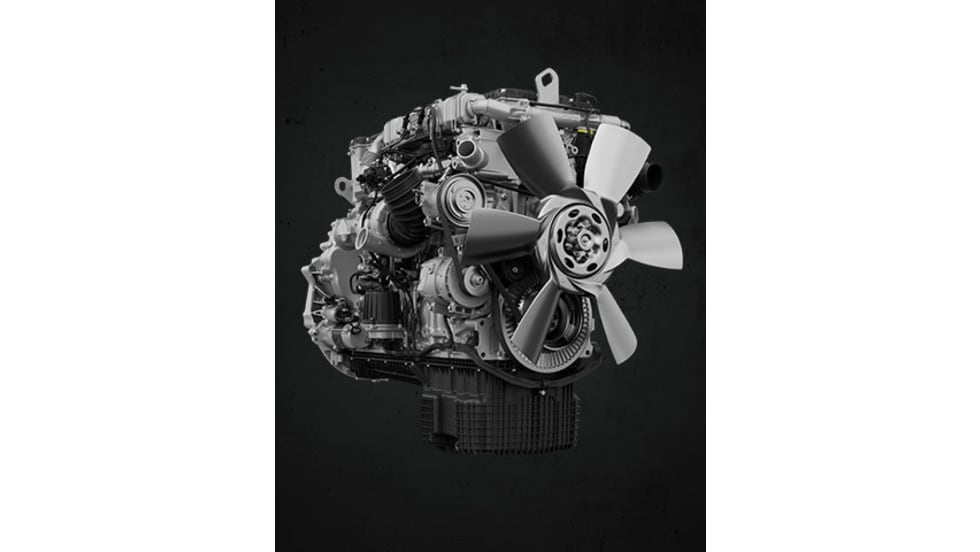
Detroit Engines: Trusted Performance, Built for What's Next
The Detroit® Gen 6 engine platform proves that real progress doesn’t require a complete redesign. Built on 20 years of trusted technology, these engines are designed for efficiency, stronger performance, and greater reliability than before. And they do it all while complying with 2027 EPA standards on every mile.
Read More →
Aperia Expands Halo Platform with Steer-Tire Inflation System, Fifth-Wheel Integration
Aperia Technologies introduced a new automatic tire inflation system for steer axles and a partnership with Fontaine Fifth Wheel to integrate coupling status into its Halo Connect platform.
Read More →
Fleetworthy and HAAS Alert Expand Partnership Stopped Truck Protection Alerts
Fleetworthy and HAAS Alert expanded their partnership to deliver real-time digital alerts that warn motorists when commercial trucks are stopped roadside and notify truck drivers when approaching emergency responders.
Read More →
New Entrants, Chameleon Carriers, and Safety: Is It Too Easy to Start a Trucking Company?
More than 100,000 new trucking companies enter the industry each year, but regulators manage to audit only a fraction of them. That churn creates opportunities for inexperienced startups — and for “chameleon carriers” that shut down after safety violations and reappear under new identities. Read more from Deborah Lockridge in this commentary.
Read More →