





Read HDT's award winning series, Trucking Under the Influence
What Does MORE Act Mean for Truckers and Marijuana?
A bill that would decriminalize marijuana at the federal level has passed the House – although it has virtually no chance of getting through the Republican-controlled Senate. The bill also would allow marijuana to remain on the list of disqualifying substances for safety-sensitive transportation workers such as truck drivers.
December 7, 2020
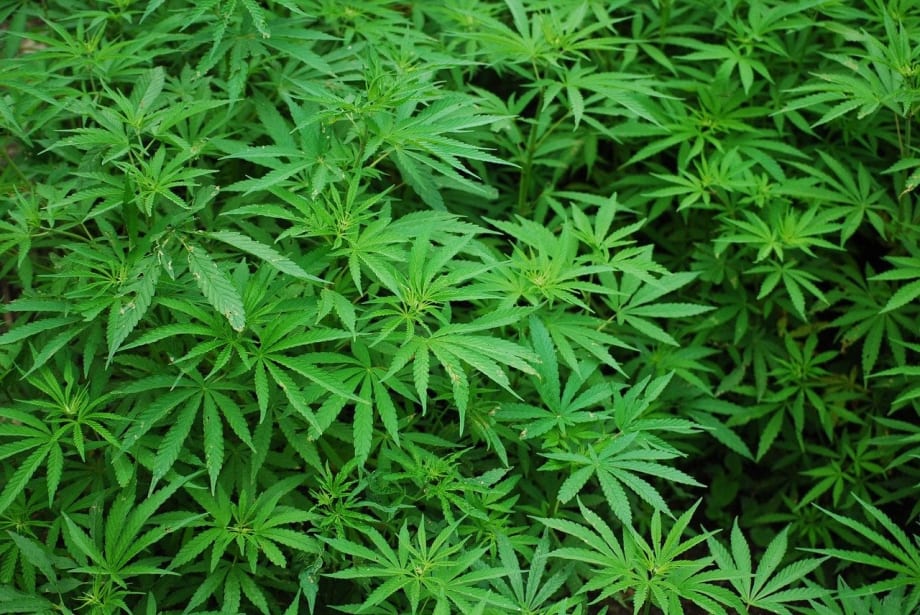
Would transportation workers be left out of federal decriminalization of marijuana?
Photo: Rex Median via Pixabay
4 min to read
For the first time, a bill that would decriminalize marijuana at the federal level has passed one chamber of Congress. However, the House-passed MORE Act has virtually no chance of getting through the Republican-controlled Senate. In addition, it would allow marijuana to remain on the list of disqualifying substances for safety-sensitive workers such as truck drivers.
"Millions of Americans' lives have been upended as a result of convictions for possessing small amounts of marijuana, and the racial disparities in conviction rates for those offenses are as shocking as they are unjust," House Majority Leader Steny Hoyer, a Maryland Democrat, said in a statement after the vote. "That's why we passed the Marijuana Opportunity Reinvestment and Expungement (MORE) Act."
The MORE Act would entirely remove cannabis from the Schedule of Controlled Substances – but there’s language that would allow federal agencies to still requiring testing of “safety-sensitive” transportation workers for marijuana.
The bill would prohibit “engaging in suspicionless cannabis drug testing of … prospective or current employees, except with respect to drug testing for safety-sensitive positions, as defined under the Omnibus Transportation Testing Act of 1991.”
Federal transportation agencies would continue to be able to test workers in safety-sensitive jobs for marijuana use for "any substance ... that was a substance under such section as of December 1, 2018, and whose use the Secretary of Transportation decides has a risk to transportation safety.’’ Marijuana was a Schedule I substance as of Dec.1, 2018.
One of the groups pushing for that carve-out amendment was the National Drug & Alcohol Screening Association. "The decision to provide language for a safety carve-out was the right one and will protect the public when it comes to transportation safety,” said NDASA Board Chairman Jim Greer in an email announcement from the group.
More about MORE Act
The bill notes that 47 states have reformed their laws pertaining to cannabis despite the Schedule I status of marijuana and its Federal criminalization. It points out that legal cannabis sales totaled $9.5 billion in 2017 and are projected to reach $23 billion by 2022. Enforcing cannabis prohibition laws costs taxpayers billions of dollars every year, and enforcement and sentencing disproportionately affect people of color.
Currently, 33 states and the District of Columbia regulate the production, sale, and use of marijuana and marijuana-infused products for medical purposes. Eleven of these states also permit marijuana possession by adults, and 10 of them also regulate adult-use sales.
These state-level legalization policies are in conflict with federal law, which classifies the cannabis plant as a Schedule I criminal substance, along with drugs such as heroin and LSD. According to the Drug Enforcement Administration, substance are classified as Schedule 1 under the Controlled Substances Act that have “a high potential for abuse, no currently accepted medical use in treatment in the United States, and a lack of accepted safety for use under medical supervision.”
By removing marijuana from the controlled substances act, the bill would give individual states the authority to be the primary arbiters of cannabis policy and eliminate the existing conflict between state-level marijuana legalization policies and federal law.
Even though the MORE Act is highly unlikely to make it into law, a number of observers have called it historic. As marijuana advocacy group NORML notes, “It will be the first time since the passage of the Controlled Substances Act of 1970 that a Congressional chamber has ever voted on legislation to remove marijuana from its prohibitive classification under federal law.”
It’s unclear what fate cannabis may have under the Biden Administration. Joe Biden has publicly supported decriminalizing cannabis possession, legalizing medical cannabis, expunging prior cannabis convictions, and allowing states to make their own laws/regulations on the subject, but has stopped short of calling for legalization.
The Biden administration could move on the regulatory side and move marijuana to Schedule II of the Controlled Substances Act with other drugs with only a “high potential for abuse,” like morphine, codeine, and fentanyl.
However, Democrats are also typically pro-safety regulation, so it’s quite possible that any such moves could still mean marijuana would be illegal for truck drivers and others in safety-sensitive positions as outlined in the MORE Act.
More Safety & Compliance

FMCSA Pauses Biennial-Update Enforcement Amid Motus Transition
Carriers whose updates were due on or after June 1 have more time, while FMCSA works to stabilize its new registration system and warns of phishing sites impersonating its new carrier registration system, Motus.
Read More →
ZF Expands Commercial Vehicle Push in North America
ZF is expanding its North American commercial-vehicle presence with new transmission applications, electrification, trailer technology and autonomous-driving systems.
Read More →
Truck Drivers Need More Than Another Alert
Fleets have more visibility into truck health, safety events, and driver activity than ever. The next challenge is turning all that information into useful guidance for the person who has to decide what to do next.
Read More →
Tesla Wants a Self-Driving Semi. Are Cameras Enough?
Could Tesla’s camera-only autonomous driving technology work on an 80,000-pound Semi? In this commentary, HDT's Deborah Lockridge takes a look at Tesla, Cybercab, and how autonomous trucks see the road.
Read More →
What DOT’s Automated Vehicle Strategy Means for Trucking
The U.S. Department of Transportation issued a new automated-vehicle strategy that outlines plans for driverless-truck regulations, cross-state freight corridors, and federal safety standards.
Read More →
NYC Expands Speed, Pedestrian Safety Tech Across Fleet
New York City is expanding intelligent speed assistance and pedestrian-alert systems across its municipal fleet, moving the technologies from pilot programs into vehicle procurement and retrofit requirements.
Read More →
FMCSA Removes 110 Truck Driver Training Schools from Certified ELDT List
Federal regulators also are targeting more than 160 additional training providers and launching a nationwide audit of third-party CDL skills testers as part of a broader crackdown on trucking fraud.
Read More →
Beyond DOT Compliance: What Makes a Trucking Fleet Truly Safe?
A trucking fleet can follow every rule and still make unsafe decisions. The real test comes when safety conflicts with freight, productivity, or cost.
Read More →
Hours of Service Pilot Programs: FMCSA Readies for 2027 Rollout
Two pilot programs could eventually reshape hours-of-service rules, giving truck drivers options to pause their 14-hour clock or use longer split sleeper rest periods.
Read More →
New Guide Offers Pet Safety Tips for Truck Drivers
Hundreds of thousands of pets travel in truck cabs. A new safety guide from Volvo Trucks and the Center for Pet Safety offers practical advice for truck drivers who bring dogs and cats along for the ride.
Read More →