




Washington to Get 11 Public Propane Refueling Stations
The state of Washington will soon be home to one of the nation’s largest privately funded propane autogas public refueling networks, and the single largest installation of alternative fuel infrastructure in the Pacific Northwest.
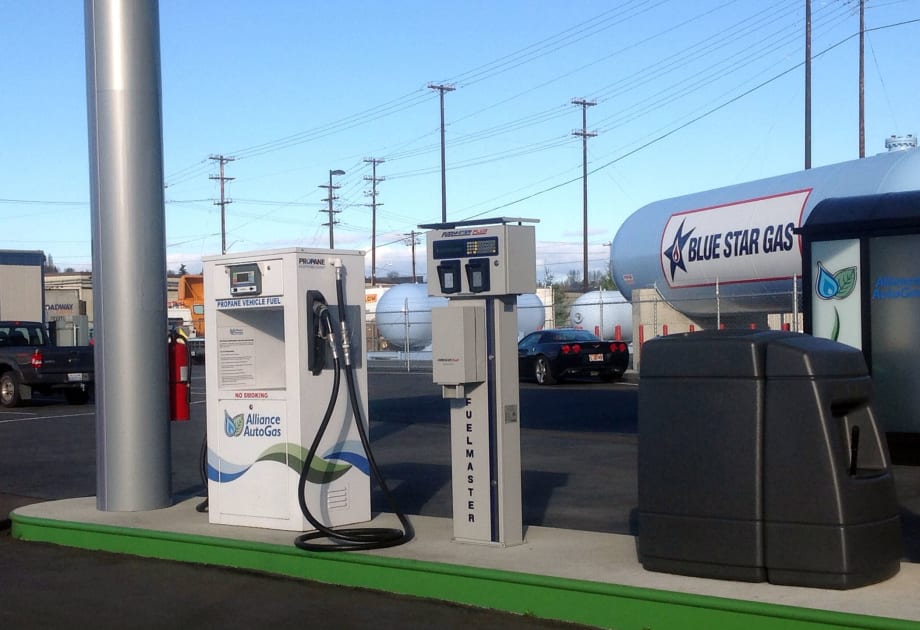
The state of Washington will soon be home to one of the nation’s largest privately funded propane autogas public refueling networks, and the single largest installation of alternative fuel infrastructure in the Pacific Northwest.
Eleven 24-hour public refueling stations in the Puget Sound region were funded and spearheaded by Blue Star Gas, a propane fuel supplier, and a member of the Alliance AutoGas clean vehicle conversion and refueling network.
The public propane autogas refueling sites will service the Pacific Northwest’s growing population of alternative fuel vehicles.
The refueling stations, similar in operation to traditional gasoline filling stations, will serve more than 400 customer vehicles in the Pacific Northwest. These customers can gain access to the pumps 24/7 via a card-reading system, which also enables users to track fuel savings and miles-per-gallon usage.
Fleets in the area can contact a local Blue Star Gas fleet specialist for access to the stations and training on safe refueling.
The Blue Star Gas public refueling network first came online in Oct. 2011 with a site installation in the University District of Seattle, which services Seattle Children’s Hospital. By July 2014, all 11 public refueling stations will be in service throughout the Puget Sound region. The network’s flagship station is located at Blue Star Gas – Seattle Co. in Tukwila.
More than 21 million vehicles worldwide currently run on propane autogas. The EPA-approved alternative fuel emits 12 percent less carbon dioxide, 20 percent less nitrogen oxide, 60 percent less carbon monoxide, and costs 40 to 50 percent less than gasoline.
For a complete list of propane autogas public refueling stations and locations in the Blue Star Gas network, visit www.bluestargas.com. You can also learn more about propane autogas, available equipment options, or speak with a Blue Star Gas fleet specialist by visiting www.bluestargas.com.
More Fleet Management

How Telematics Improves Visibility, Control, and Performance in Refrigerated Fleets
Explore how telematics help refrigerated fleets improve visibility, uptime, efficiency, compliance, and cargo protection across connected cold chain operations.
Read More →
What the U.S.-Canada Trade War Means for Trucking
Escalating U.S.-Canada tariffs could disrupt cross-border freight, reduce truck volumes, raise costs, and create new uncertainty for carriers on both sides of the border.
Read More →
What Are Trucking’s Top Concerns for 2026?
The American Transportation Research Institute wants to know what's worrying trucking fleet managers, drivers, and other stakeholders in its annual Industry Issues survey.
Read More →

American Trucking Associations Looks for a New Leader
ATA President and CEO Chris Spear abruptly left his job at the association on August 21, at a pivotal time for the trucking industry.
Read More →
Public Wi-Fi Cybersecurity Risks: How Truck Drivers and Fleets Can Protect Their Data
Public Wi-Fi can expose truck drivers and fleets to credential theft, malware, and other cyber threats. Here’s how to reduce the risk on the road.
Read More →
For Nicky Cupp, Fleet Innovation Starts With Frustration
HDT Truck Fleet Innovator Nicky Cupp turns everyday pain points at Fraley & Schilling into opportunities for better technology and smarter processes.
Read More →
Adam Buttgenbach’s Approach to Electric Trucks: Start With Where They Fit
HDT Truck Fleet Innovator Adam Buttgenbach helped PepsiCo build one of North America’s largest EV fleets by focusing on where electric trucks make operational sense.
Read More →
Deen Albert: Let Automation Do the Math, People Make the Decisions
HDT Truck Fleet Innovator Deen Albert makes sure people are still at the heart of operations at Grand Island Express, even while adopting artificial intelligence tools. AI-assisted dispatch helped boost revenue 25% with the same number of trucks.
Read More →
Trimble’s New AI Agent Takes Aim at Fleet Back-Office Busywork
Arc Agent works across Trimble TMS products to automate repetitive tasks such as freight orders, maintenance, invoices, fuel costs and more.
Read More →
How HDT’s 2026 Truck Fleet Innovators Are Rethinking Fleet Operations
Meet five trucking leaders who are challenging assumptions, solving operational problems, and putting innovative ideas to work.
Read More →