




Volvo Honors Safe Fleets
LAS VEGAS - Volvo Trucks honored two fleets with its 2012 Volvo Trucks Safety Award. Each recipient will receive $25,000 to be used toward safety-related activities
LAS VEGAS - Volvo Trucks honored two fleets with its 2012 Volvo Trucks Safety Award. Each recipient will receive $25,000 to be used toward safety-related activities.
The fleets were recognized during an awards ceremony at the American Trucking Associations Management Conference & Exhibition in Las Vegas. - Michelin Americas Truck Tires partnered with Volvo for the 2012 Volvo Trucks Safety Award again this year. To be considered, fleets had to operate at least five Class 8 trucks, and at least one of those had to be a Volvo.
"Safety has been a core value for Volvo since the company was founded in 1927," said Magnus Koeck, Volvo Trucks vice president, marketing and brand management. "Both companies showed dedication to running the safest operations. The whole company is committed to safety; resources are dedicated to the effort. Investment in drivers is another criteria. Skilled dedicated drivers make all the difference. We also take into consideration a focus on prevention. These fleets know that everybody wins when accidents don't occur."
The awards are given in two categories: one for fleets with less than 20 million miles of annual operation and the other for those with more than 20 million miles. Fleets were ranked by their accident frequency rates, using the U.S. Department of Transportation definition of a "recordable accident," as well as their accident prevention programs.
Erb International Inc. of New Hamburg, Ontario, won the Volvo Trucks Safety Award in the over 20 million miles category. The Erb Group of companies began as a one-man operation in 1959 and now employs more than 1,200 staff and 140 owner-operators across a network of 10 terminals. Erb International operates more than 240 trucks, and in 2011 recorded an accident frequency rate of just .294 while logging 27.2 million miles on the road.
Erb International focuses on employee training and performance by establishing an employee and driver wellness program, encouraging and supporting driver participation in Truck Driving Championships, offering a driver performance monitoring and incentive program and collecting driver performance data for use in developing driver risk assessment reports. They also stress preventative safety through a hazard prevention program, active communication of safety reminders in all terminal driver's rooms and available driver supervisors and trainers at each terminal.
Munoz Trucking Inc. of El Paso, Texas, received the Volvo Trucks Safety Award in the under 20 million miles category. Munoz Trucking began in 1989 as a dry-van company hauling general freight. Today they provide a wide range of transportation and warehousing services throughout North America. With a fleet of 79 trucks, Munoz Trucking had zero recordable accidents in 2011 during close to 10.2 million miles of operation.
Munoz Trucking employs a three-phase safety process that's enforced in each department. Phase 1 focuses on staying informed of the newest safety regulations and industry trends, with a specific attention on the full status of drivers, including CDL status, driver physical, driver logs and other documentation. Phase 2 focuses on enforcing the safety policies and identifying potential driver issues. Phase 3 rewards safety compliance, providing driver bonuses for every clean DOT inspection and a year-end bonus for remaining accident-free throughout the calendar year.
More Safety & Compliance
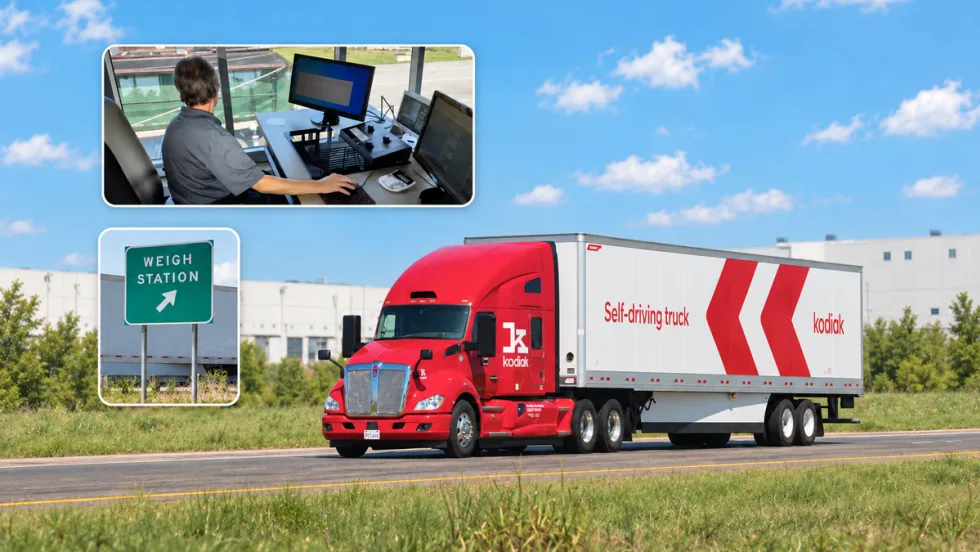
PrePass, Kodiak Connect Driverless Trucks to Roadside Enforcement
The system will allow enforcement agencies to verify Enhanced Inspection information and decide whether Kodiak’s autonomous trucks can bypass roadside screening sites.
Read More →
From One Generation to the Next: How Mentorship Builds Safer Truck Drivers
After three decades in trucking, Harold Perry shares what he's learned about driver safety, mentorship, and helping the next generation build confidence behind the wheel.
Read More →
FMCSA Pauses Biennial-Update Enforcement Amid Motus Transition
Carriers whose updates were due on or after June 1 have more time, while FMCSA works to stabilize its new registration system and warns of phishing sites impersonating its new carrier registration system, Motus.
Read More →
ZF Expands Commercial Vehicle Push in North America
ZF is expanding its North American commercial-vehicle presence with new transmission applications, electrification, trailer technology and autonomous-driving systems.
Read More →
Truck Drivers Need More Than Another Alert
Fleets have more visibility into truck health, safety events, and driver activity than ever. The next challenge is turning all that information into useful guidance for the person who has to decide what to do next.
Read More →
Tesla Wants a Self-Driving Semi. Are Cameras Enough?
Could Tesla’s camera-only autonomous driving technology work on an 80,000-pound Semi? In this commentary, HDT's Deborah Lockridge takes a look at Tesla, Cybercab, and how autonomous trucks see the road.
Read More →
What DOT’s Automated Vehicle Strategy Means for Trucking
The U.S. Department of Transportation issued a new automated-vehicle strategy that outlines plans for driverless-truck regulations, cross-state freight corridors, and federal safety standards.
Read More →
NYC Expands Speed, Pedestrian Safety Tech Across Fleet
New York City is expanding intelligent speed assistance and pedestrian-alert systems across its municipal fleet, moving the technologies from pilot programs into vehicle procurement and retrofit requirements.
Read More →
FMCSA Removes 110 Truck Driver Training Schools from Certified ELDT List
Federal regulators also are targeting more than 160 additional training providers and launching a nationwide audit of third-party CDL skills testers as part of a broader crackdown on trucking fraud.
Read More →
Beyond DOT Compliance: What Makes a Trucking Fleet Truly Safe?
A trucking fleet can follow every rule and still make unsafe decisions. The real test comes when safety conflicts with freight, productivity, or cost.
Read More →