Heavy Duty Trucking Logo
MenuMENU
SearchSEARCH

Union Pacific Opens Intermodal Terminal at Joliet

Union Pacific Railroad officially opened a 785-acre intermodal terminal at Joliet, Ill., expanding its international and domestic container capacity and improving rail traffic efficiencies throughout the Chicago region

by Staff
October 19, 2010
Union Pacific Opens Intermodal Terminal at Joliet


2 min to read


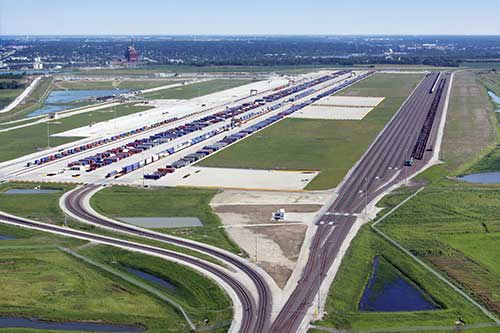
Union Pacific Railroad officially opened a 785-acre intermodal terminal at Joliet, Ill., expanding its international and domestic container capacity and improving rail traffic efficiencies throughout the Chicago region.


Officials and customers gathered to celebrate the opening of $370 million facility located approximately 5 miles south of I-80 and 7 miles east of I-55. The terminal is designed to handle an annual capacity of 500,000 over-the-road trailers or ocean-going containers. The new facility is the second only to Union Pacific's intermodal terminal in Long Beach, with an annual capacity of 700,000 trailers or containers. based on capacity.

"Our $370 million private investment for this intermodal terminal will greatly enhance our ability to serve customers and the community. The advanced computers and technology used here coordinate all movements in the terminal, improving productivity and performance while reducing emissions," said Jim Young, Union Pacific chairman and CEO.

There has been substantial growth in intermodal traffic, particularly in the Chicago area, during the last decade, and Union Pacific's new Joliet Intermodal Terminal is designed to handle an annual capacity of 500,000 over-the-road trailers or ocean-going containers. This capacity allows Union Pacific to continue to pursue opportunities in this growing rail-truck market. The new facility has additional space for future expansion based on customer demand and capacity needs.

Phase One of the Joliet Intermodal Terminal project features many advantages for Union Pacific customers, including:

* Four 8,000-foot tracks with capacity to handle the loading or unloading of 104 intermodal "double-stack" rail cars.

* Six 8,000-foot tracks to give train crews the ability to sort rail cars by destination.

* An additional six tracks to stage rail cars prior to unloading or loading.

* Four cranes that straddle the rail cars and one rubber-tired mobile "packer" that lifts trailers and containers on and off rail cars. The cranes are equipped with Global Positioning System (GPS) technology, increasing loading and unloading efficiencies.

* More than 4,000 "staging," or parking places, for trailers and containers.

* Advanced technology that coordinates all movement of rail cars, trucks and trailers and containers at the facility will decrease truck processing time at the terminal's entrance from four minutes to as little as 30 to 90 seconds, resulting in reduced fuel use and emissions.

More info: www.up.com.



More Fleet Management

Illustration of hacker and information network
Fleet Managementby Ben WilkensMay 22, 2026

The Trucking Industry’s Threat Intelligence Gap

The trucking industry has no shortage of cybersecurity reports and cargo crime statistics. What it lacks is timely, operational intelligence that fleets can actually use.

Read More →
Illustration of rising costs with truck in background

Truck Crash Rates Are Down. So Why Do Insurance Costs Keep Rising?

ATRI’s latest research points to litigation, social inflation, and soaring claims costs as key drivers behind record-high liability premiums for trucking fleets. But there are things motor carriers can do.

Read More →
ATA Truck Tonnage April 2026

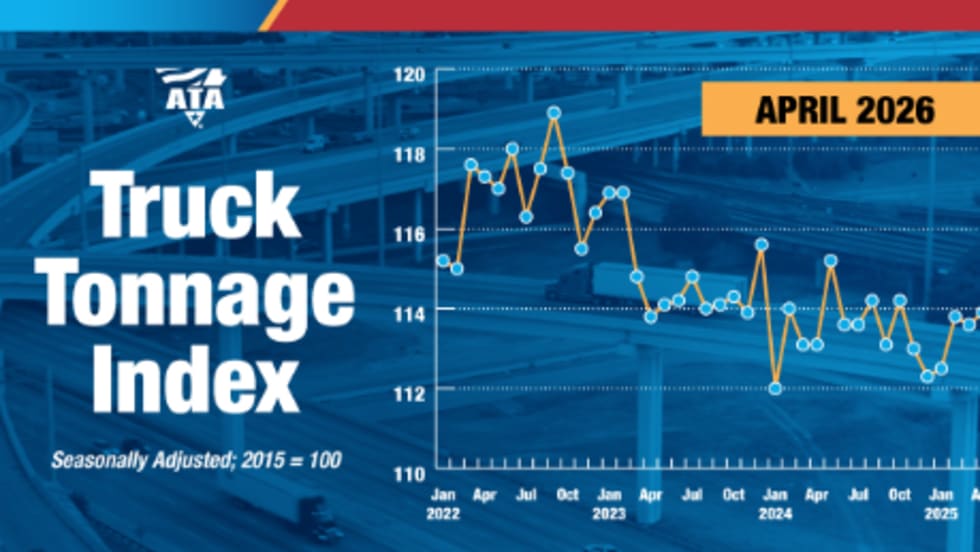
ATA Truck Tonnage Holds Steady in April at Highest Levels Since 2022

ATA’s For-Hire Truck Tonnage Index was unchanged in April after a strong March gain, with freight volumes remaining at their highest levels since late 2022.

Read More →
Ad Loading...
Greg Feary, president and managing partner of transportation law firm Scopelitis, Garvin, Light, Hanson & Feary.
Fleet Managementby Jack RobertsMay 20, 2026

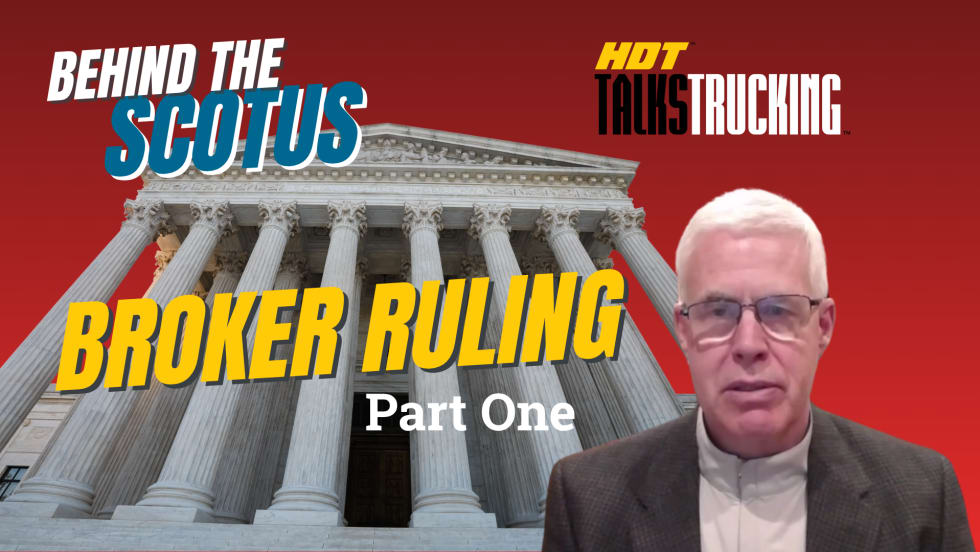
Behind the SCOTUS Broker Ruling Part 1

Transportation attorney Greg Feary breaks down the recent Supreme Court decision that brokers can be held liable for damages in truck accidents and what it means for the trucking industry going forward.

Read More →
ACT Research preliminary trailer orders April 2026.

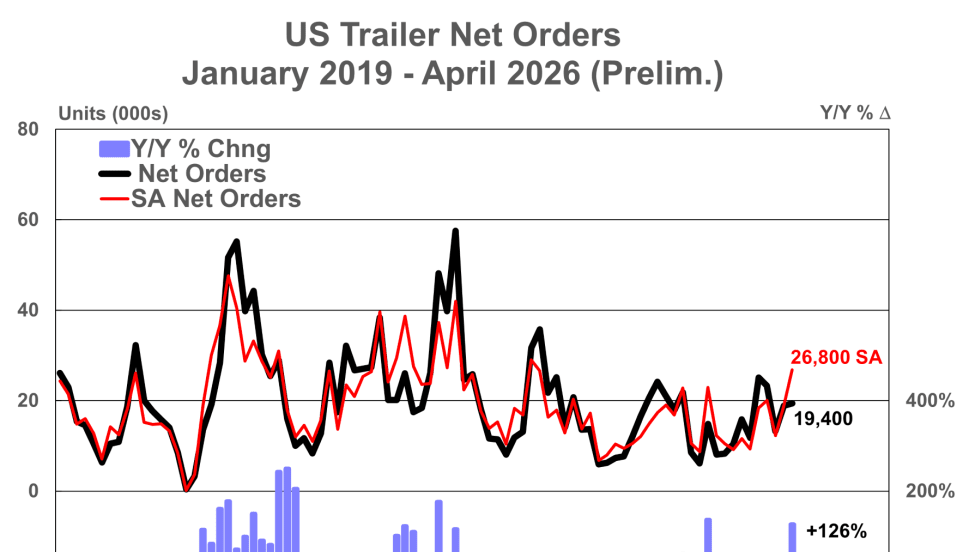
ACT Research: Trailer Orders Continue Upward Surprise in April

Preliminary net trailer orders rose 3% from March and jumped 126% year over year, signaling stronger-than-expected demand despite typical seasonal softness.

Read More →
Ad Loading...
DAT Freight Volume April 2026

DAT: Fuel Surcharges Drive April Truckload Rate Gains as Freight Volumes Slip

Truckload spot and contract rates climbed in April. But DAT says higher fuel costs -- not stronger freight demand -- were behind most of the increase.

Read More →
Graphic with light bulbs, HDT Truck Fleet Innovators logo, and the word Nominations
Fleet ManagementMay 15, 2026

Deadline Extended for HDT Truck Fleet Innovators Nominations

Heavy Duty Trucking has extended the deadline for nominations for its Truck Fleet Innovators awards. The deadline has been extended to May 22.

Read More →
Illustration of U.S. Supreme Court building and a truck crash

Supreme Court Ruling Puts Freight Broker Vetting Practices in Spotlight

The unanimous SCOTUS ruling in the closely watched Montgomery v. Caribe case allows state negligence claims against freight brokers that hire unsafe motor carriers, raising new liability and vetting concerns among brokers.

Read More →
Ad Loading...
Mobile tablet showing Motus screen against highway background with Motus logo

FMCSA’s Motus System Is Coming. What Fleets Need to Know Now

FMCSA's long-awaited registration system promises a single portal — and tighter fraud controls. And there are steps you need to take by May 14.

Read More →