




TuSimple Shutters U.S. Operations
Chinese-American autonomous truck technology developer TuSimple announced it is shutting down its North American operations.

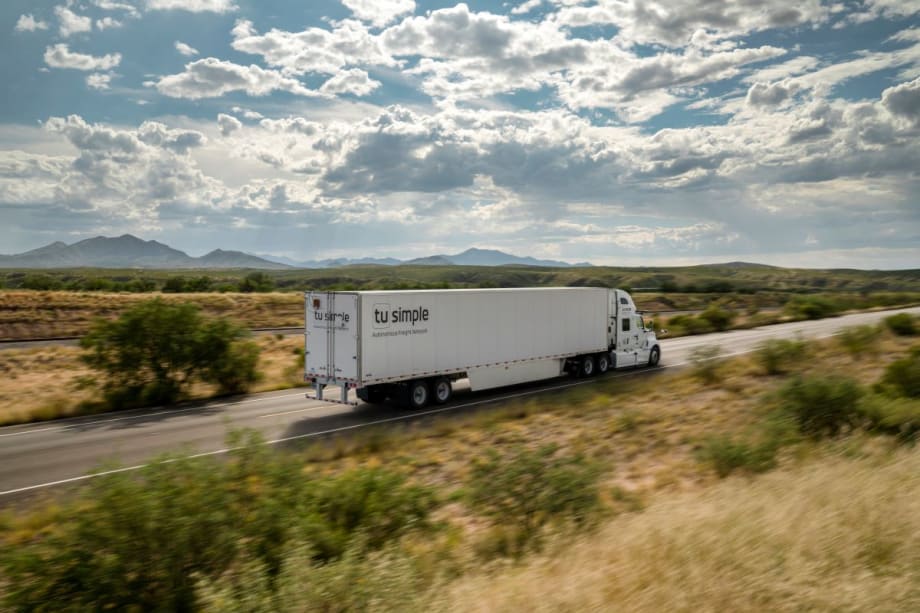
Autonomous truck developer TuSimple is leaving the U.S. market and will focus its future operations in Asia and the Pacific.
Photo: TuSimple
Autonomous truck development company TuSimple is closing down operations in the U.S.
TuSimple is a joint Chinese-American company. It will continue operations in China, according to filings the company made with the U.S. Securities and Exchange Commission.
Turmoil and Investigations
In June, TuSimple announced it was looking for a buyer or other strategic options for its U.S. operations. At the time, the company said it was adjusting its focus on operations in Asia and the Pacific as well as other global markets.
The June decision, TuSimple said in a press statement, was due to the “review of multiple business factors and commercial opportunities."
However, TuSimple has endured management turmoil over the past several years, with co-founder Xiaodi Hou being forced out of the company over his ties to Chinese startup company Hydron. The FBI and the SEC also looked into allegations that TuSimple defrauded investors by financing and giving autonomous vehicle technology to Hydron, which is backed by the Chinese government. The investigations underscored the importance of autonomous vehicle technology as a component of modern warfare and U.S. national security, as well as a potentially powerful economic driver for the global trucking industry.
Those shakeups were followed by safety concerns about its technology in the wake of an August 2022 crash on I-10 in Arizona.
Following its failure to find a buyer for its U.S. operations this year, TuSimple has laid off approximately 150 employees — about 75% — of its U.S. staff, according to published reports.
In addition, the company has ceased freight-hauling operations in the U.S. and ended most of its autonomous technology research and development work. Remaining U.S. TuSimple employees are tasked with shutting down operations in this country, including selling off company assets.
Early Self-Driving Truck Entrant
TuSimple announced in 2017 that it would start testing autonomous trucks in Arizona. It attracted investments and partnerships from companies such as chip-maker Nvidia, UPS, ZF, Navistar, Traton, Goodyear Ventures, U.S. Xpress, Ryder, DHL, and Werner Enterprises.
According to the Wall Street Journal, TuSimple is currently valued at about $229 million. It went public in the U.S. in 2021 with an initial valuation of $8.5 billion.
More Equipment

How Volvo Updated Its D13 for EPA 2027 [Watch]
Volvo’s updated D13 promises lower emissions without sacrificing performance or fuel economy. Take a closer look at what changed inside the engine in this HDT Spotlight video.
Read More →
Michelin Tire Improves Efficiency and Durability for Regional Fleets
The Michelin X Multi Energy D2 is a regional haul drive tire engineered to help fleets improve fuel efficiency, durability and traction in demanding stop-and-go operations.
Read More →
ZF Expands Commercial Vehicle Push in North America
ZF is expanding its North American commercial-vehicle presence with new transmission applications, electrification, trailer technology and autonomous-driving systems.
Read More →
Tesla Wants a Self-Driving Semi. Are Cameras Enough?
Could Tesla’s camera-only autonomous driving technology work on an 80,000-pound Semi? In this commentary, HDT's Deborah Lockridge takes a look at Tesla, Cybercab, and how autonomous trucks see the road.
Read More →
Kodiak: Driverless Long-Haul Truck Launch on Track for 2026
Kodiak AI says its driverless long-haul safety case is 93% complete and it remains on track to begin commercial operations by year-end 2026.
Read More →
What DOT’s Automated Vehicle Strategy Means for Trucking
The U.S. Department of Transportation issued a new automated-vehicle strategy that outlines plans for driverless-truck regulations, cross-state freight corridors, and federal safety standards.
Read More →
East Coast Port Launches $45M Electric Truck Push
The Port Authority of New York and New Jersey announced millions in incentives for zero-emission drayage trucks, yard tractors, and new charging hubs near the port.
Read More →
PlusAI Going Public to Fund Autonomous Truck Launch
A SPAC deal could provide PlusAI with up to $300 million as it works toward a 2027 commercial launch of factory-built autonomous trucks.
Read More →
NHTSA Moves to Rewrite Truck Fuel-Economy Rules
The National Highway Traffic Safety Administration says it lacks authority to regulate medium- and heavy-duty truck engines separately from complete vehicles, but the existing standards have not yet been eliminated.
Read More →
Detroit Opens Orders for EPA 2027 Engines
Detroit isn’t starting from scratch to meet EPA 2027 diesel emissions standards. Its Gen 6 DD13 and DD15 engines keep much of today’s platform while updating the fuel and aftertreatment systems.
Read More →