





Related: Twin 33s Would Be Safer than 28s, U of Michigan Researcher Says
Truckload Carriers Association Drops Higher Truck Weights from Policy
After five years of presenting an official united front on the issue of truck sizes and weights, American Trucking Associations and the Truckload Carriers Association are going their separate ways.
April 25, 2016

Wabash National showed off a 33-foot-pup, one of the size/weight proposals debated in Washington last year, at the Technology & Maintenance Council’s 2014 annual meeting. Photo: Tom Berg
4 min to read
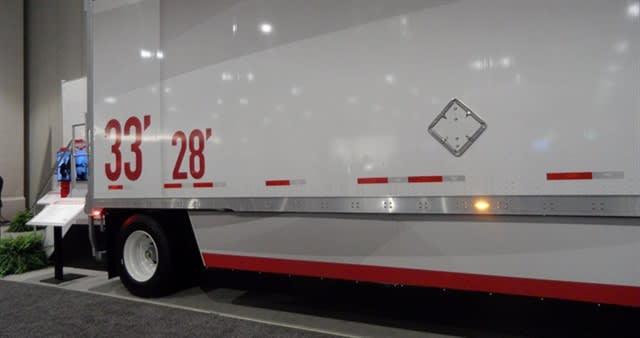
Wabash National showed off a 33-foot-pup, one of the size/weight proposals debated in Washington last year, at the Technology & Maintenance Council’s 2014 annual meeting.Photo: Tom Berg
After five years of presenting an official united front on the issue of truck sizes and weights, American Trucking Associations and the Truckload Carriers Association are going their separate ways.
During its recent convention in Las Vegas, TCA officially changed its policy to endorse the current five-axle, 80,000-pound federal weight limit. Since 2011, TCA and ATA had been united in endorsing two different options to increase current truck size/weight regulations: a five-axle, 88,000-pound weight limit or six-axle, 97,000-pound limit.
At that time, ATA and the Coalition for Transportation Productivity had been lobbying for a limit of 97,000 pounds on a new six-axle configuration. Truckload carriers, however, did not like the plan because it would mean investing in new equipment and likely would not mean increased revenue to offset that expense. The two groups forged the dual-option compromise in order to present a united front to government officials.
That has changed following heated truck size and weight battles on Capitol Hill last year. According to its website, the group amended its size and weight policy on March 6 to read, “TCA supports a policy of no increase in truck weight, however as an association, we will continue to examine components of increasing productivity as they arise.”
When asked to comment, American Trucking Associations provided the following statement: "ATA's policy supports safely improving the size and weight of large trucks. However, ATA is not currently pursuing any change in federal policy. ATA's policy stance comes from direction we've received from our Executive and Strategic Action Committees, and was made well before TCA's board narrowly voted to change its policy."
Highway bill battle
Last year, as Congress worked to pass a long-overdue highway bill, the issue of truck sizes and weights was a controversial one on Capitol Hill.
ATA added a new wrinkle by lobbying, not for heavier trucks, but for longer ones, supporting a provision to allow twin 33-foot trailers in the less-than-truckload sector, pushed by FedEx Chairman Frederick Smith.
TCA was one of the groups that lobbied against it, contending that allowing twin 33-foot trailers would require carriers currently operating single 51- to 53-foot trailers to rapidly switch over to the twin 33-foot configuration in order to remain competitive on a basis of volume per load. It also cited concerns about driver safety, the driver shortage, truck parking, increased operating costs and loss of resale value of single trailers which would suddenly become “obsolete.”
It was a battle illustrating how diverse and divided the trucking industry is. In addition to TCA, against the measure were 13 truckload and two LTL carriers, who wrote a letter opposing it; the state trucking associations of Arizona, Louisiana and Mississippi; The Trucking Alliance (a coalition of trucking businesses that lobbies for safety improvements); and the International Brotherhood of Teamsters.
Trucking stakeholders in favor of allowing the nationwide running of twin 33s included the American Trucking Associations and the Coalition for Efficient & Responsible Trucking, a nonprofit organized by leading less-than-truckload carriers.
But the twin-33s weren't the only lobbying effort going on for truck size and weights.
At the same time, the Coalition for Transportation Productivity was pushing for the 97,000-pound/six axle configuration. A 91,000-pound version was introduced by Wisconsin Rep. Reid Ribble as the Safe, Flexible, and Efficient (SAFE) Trucking Act, which was supported by the National Private Truck Council.
However, none of these measures survived the lobbying against them.
Changing of the guard
The diverging positions come at the same time as changes in leadership at TCA and ATA. TCA has had three different presidents in less than two years. Longtime TCA head Chris Burruss resigned suddenly in June 2014, and his replacement, Brad Bentley, was there less than a year. The current TCA president, John Lyboldt, has been in the position since late 2015.
Meanwhile, ATA is searching for a new leader after Bill Graves, who has been the group’s president since 2003, announced during last year’s annual Management Conference & Exhibition that he would step down at the end of 2016.
Kevin Burch, president of Ohio-based truckload carrier Jet Express and incoming ATA chairman, is also a former chairman of TCA. He told Truckinginfo.com with a bit of a rueful laugh that his reputation as a bridge-builder is likely going to come in handy. He takes over this October at a time when ATA will be bringing in a new leader and we also will have a new presidential administration.
“There are many members of TCA that are members of ATA and vice versa,” he said in an interview. “We’re a diversified group [at ATA]. We’ve got reefers and flatbeds, less-than-truckload and truckload, union and non union... I’m for the best interests of the industry.”
While saying he respects the current feeling at TCA, “I am in favor of productivity, and I think as we move forward in the industry we’ve got to be aware of some of the options.”
Meanwhile, there seems to be little concrete scientific evidence for policymakers to turn to in making these decisions, at least according to the U.S. Department of Transportation. Earlier this month, the DOT finally released a long-awaited study on truck sizes and weights to Congress, almost four years after it was mandated to do so by the MAP-21 highway bill, reporting that it needed more information before it could make any recommendations about changing federal weight laws.
More Fleet Management
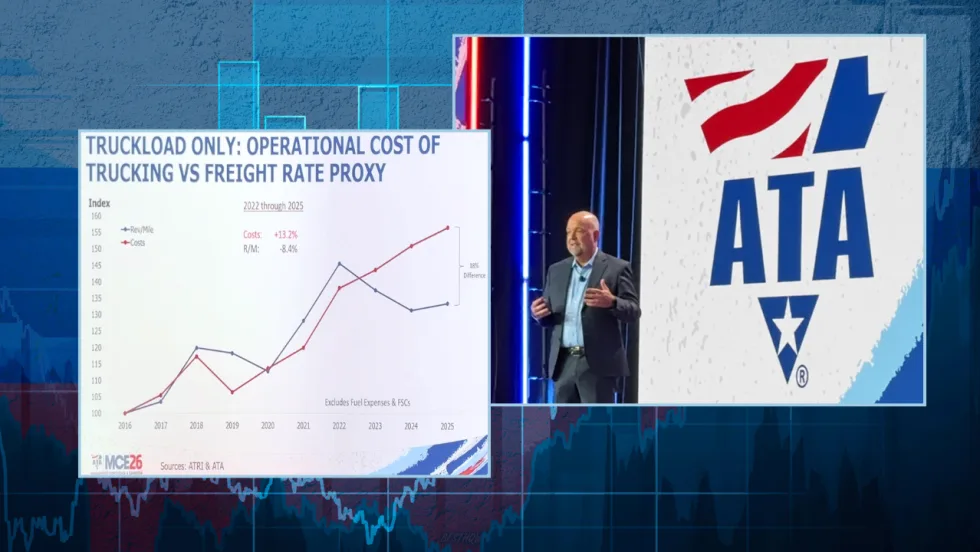
Why This Trucking Recovery Is Different
Freight demand remains sluggish, but rising costs and tougher enforcement have taken enough capacity out of the market to change the outlook for motor carriers.
Read More →
Platform Science Adds Dispatch and Safety Tools
Four additions to PS Fleet help fleets monitor loads, manage driver coaching, share truck locations and adjust video system settings.
Read More →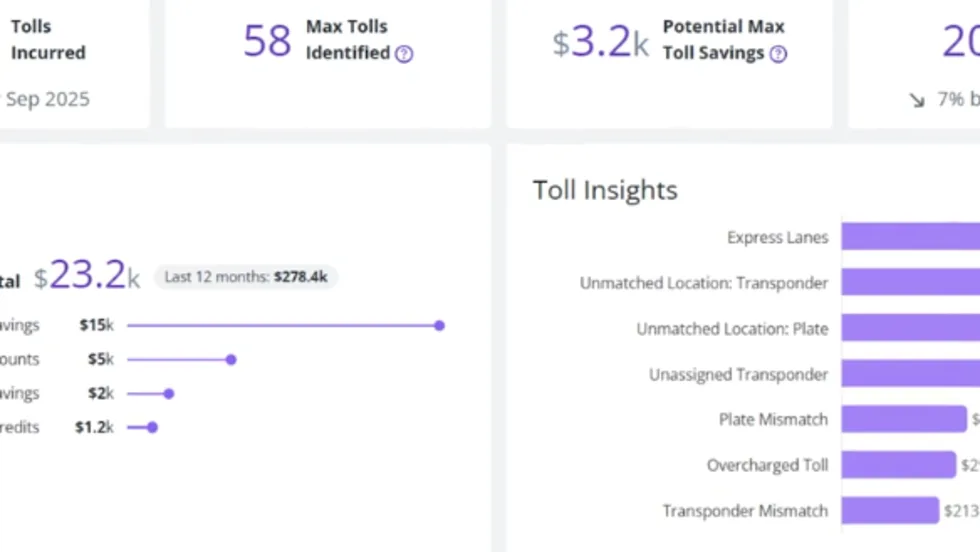
PrePass Intelligence Mines Fleet Bypass, Toll and Safety Data
PrePass Intelligence helps fleets measure bypass savings, flag potential toll overcharges, and spot suspicious transactions by combining data from separate systems.
Read More →
Motive Adds AI Agents for Fleet Operations
New tools automate follow-up on fleet data, from maintenance work orders to driver alerts, with two-way voice conversations planned for later this year.
Read More →
Can You Beat Our Trucking Trivia Challenge?
Test your truck knowledge with 19 trivia questions from Heavy Duty Trucking Exchange. Can you keep up with the fleet pros?
Read More →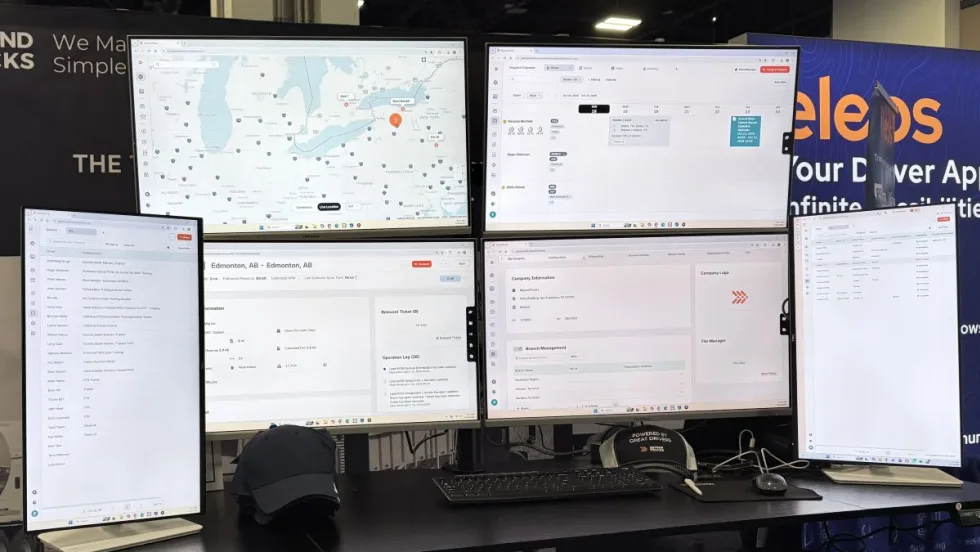
BeyondTrucks Adds Rules Checks to Dispatch
New Compatibility Engine checks driver qualifications, equipment requirements and fleet policies before loads are dispatched.
Read More →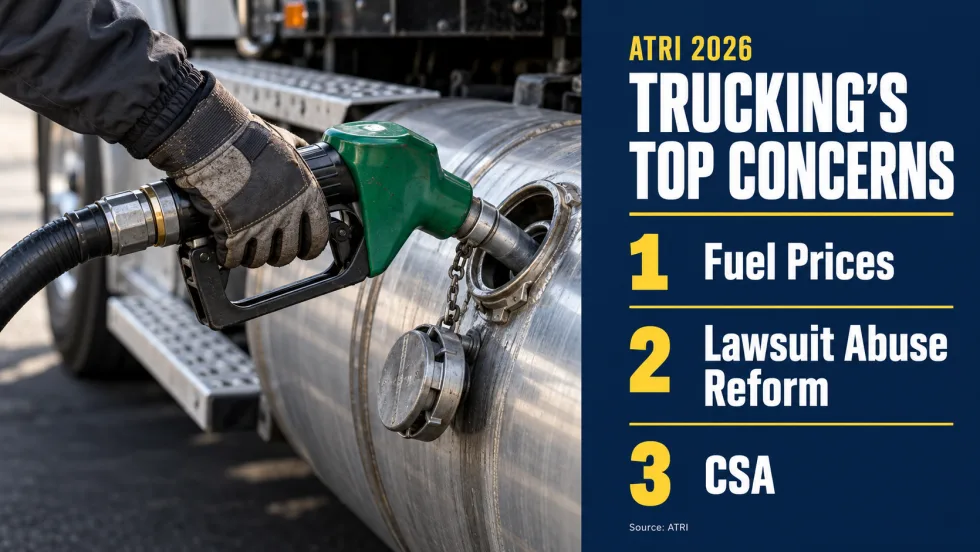
Diesel Prices Hijack Trucking’s Worry List
ATRI’s annual survey finds cautious optimism about freight, but diesel costs, litigation, and insurance continue to squeeze fleets. Drivers have different priorities on several issues.
Read More →
Nomination Deadline Extended for HDT Emerging Leaders
Just a few more days to nominate accomplished trucking fleet professionals under 40 who are making an impact and helping lead the industry forward for the HDT Emerging Leaders award. Deadline extended to October 20!
Read More →
What Will ATA’s New Leader Bring to Trucking's Table?
Incoming President and CEO Mark Colson’s record in Alabama offers clues about his priorities and approach following Chris Spear’s abrupt departure as the head of the American Trucking Associations.
Read More →
Volvo, Waabi Start Commercial Autonomous Operations in Texas
Volvo VNL Autonomous trucks, powered by the Waabi Driver, are hauling freight directly to third-party facilities for a customer in Texas.
Read More →