




Related: House Funding Bill Addresses Trucking Rules on Meal Breaks, Hours of Service, and More
Trucking Groups Take Their Priorities to House Transportation Committee
Testifying before a House subcommittee, several trucking stakeholder groups made a case for the importance of trucking to the U.S. economy and offered plans on how to improve it, from infrastructure funding to safety regulations.

Steven Martinez・Web Editor
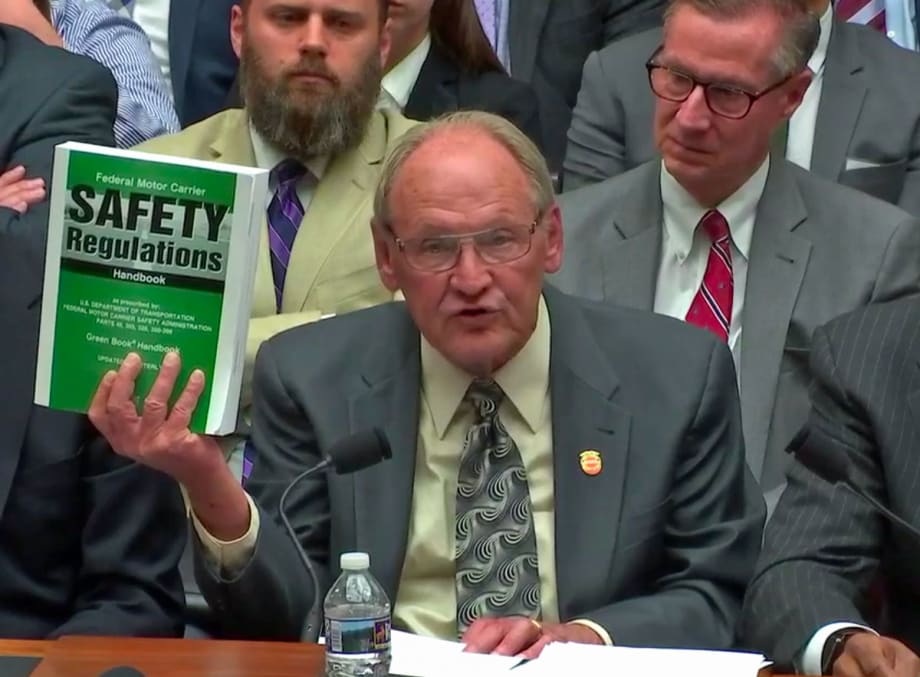
OOIDA president Todd Spencer painted a bleak picture of the American truck driver and said that overregulation has only hurt drivers' ability to do their job safely.
4 min to read
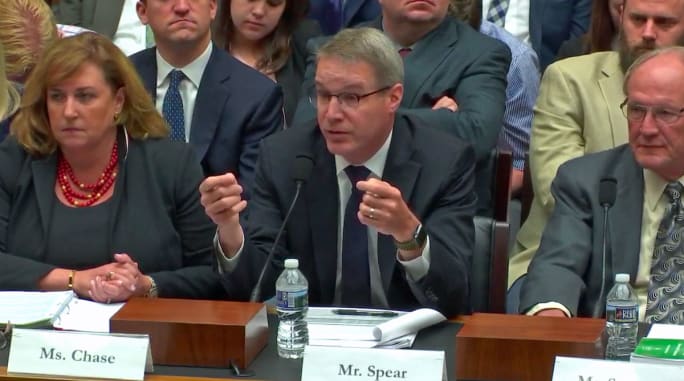
Appearing before the House Transportation and Infrastructure Subcommittee, ATA's Chris Spear said that the group would work with legislators to guide trucking into the future.
Screenshots via House Transportation & Infrastructure Committee live video feed
Testifying before the House Transportation and Infrastructure Committee’s Subcommittee on Highways and Transit on June 12, several trucking stakeholder groups laid out their visions for the future of trucking, making a case for the importance of trucking to the U.S. economy and offering plans on how to improve it.
The subcommittee is tasked with writing the next highway funding bill, which will authorize what the government spends on infrastructure and other transportation concerns over a multiyear period.
At the hearing, which was titled “Under Pressure – The State of Trucking in America," American Trucking Associations President and CEO Chris Spear told members of the committee that the group was committed to working with lawmakers as they begin work on a transportation reauthorization bill. Spear emphasized safety and innovation and said that ATA would work with Congress to write legislation that reflect issues that will face trucking in the future.
ATA Pledges to Work with Congress on Highway Bill
“ATA pledges to help this subcommittee write legislation that takes into consideration the state and future of the trucking industry, looking beyond the hood – 5, 10, 15 years out – and how we can improve safety through innovation; how we can grow a diverse, well-trained workforce that shores up the very real and well-documented shortage of talent; how trucking can generate and invest real money into our decaying infrastructure; and, how trucking can help you shape free and fair trade agreements that make the United States the strongest economy in the world,” Spear said.
He also spoke about the billions of dollars that the trucking industry has invested in safety initiatives, saying that safety anchors the foundation of the industry and shapes its core values and decision-making.
“These investments also include driver safety training, driver safety incentive pay, and compliance with safety regulations,” Spear said, “and while some of these investments are made to meet a myriad of regulatory requirements, many of them are voluntary, progressive safety initiatives adopted by our members and they’re paying dividends in highway safety.”
Trucking Alliance Seeks to Close Safey Loopholes
The Alliance for Driver Safety & Security, known as the Trucking Alliance, submitted a statement to the committee that hit on several key points, including reducing truck crashes, adopting collision-mitigation technology and electronic logging devices, reducing drug use, hiring younger drivers, and limiting truck speeds.
On the issue of ELDs, the Trucking Alliance stated that no segment of trucking should be exempt from installing ELDs, because to do so would allow thousands truckers to effectively operate “off the grid," using paper logs that are easily falsified.
The Trucking Alliance also urged regulators to implement hair-testing guidelines so that they can be included in the pending Department of Transportation Drug and Alcohol Clearinghouse. The group said that testing method was far more reliable than urinalysis alone, and so would prevent drivers who had failed such tests from easily applying for a new truck driving job.
The group also stated it was against reducing the driving age for operating a commercial vehicle in interstate commerce, in favor of a reasonable maximum speed limit on commercial trucks of 65 mph and deploying collision-mitigation technologies.
OOIDA Wants to Fix Broken Trucking Industry
Todd Spencer, president of the Owner-Operators Independent Drivers Association, also testified before the committee. He presented a more alarming picture of the trucking industry, should certain changes not be made.
He called the state of the industry “broken,” but not beyond repair, and emphasized that in his view, the most critical component of the industry is its drivers.
“Large motor carriers are pressuring Congress to enact unsafe policies to combat a fictitious driver shortage, while doing nothing to address their precariously high turnover rates,” said Spencer. “The American economy is stronger than it has been in years, but many drivers are still struggling to make ends meet.”
In his testimony, Spencer painted a bleak picture of the American truck driver, saying that a demanding schedule, low pay and restrictive regulations have made a career in trucking unappealing, unsafe and unsustainable. He said that truckers are the safest drivers on our highways, but costly and burdensome regulations are only hurting their ability to do their jobs in lieu of more effective safety efforts, such as improving driver training requirements.
“If Congress is serious about improving the state of trucking in America – and I believe you are – you must start by helping to make careers in trucking more viable," said Spencer. “To do so, you must work to create a regulatory environment featuring rules that are proven to enhance safety.”
He said Congress should continue to support the Trump administration's efforts to provide truckers with more flexibility by modernizing hours-of-service requirements to reflect the realities of truck driving, instead of adopting a one-size-fits-all policy.
“Until Congress understands the most important component in trucking is the driver, very little will change,” said Spencer. “The next steps you must take are clear: Help make trucking an appealing, safe and sustainable career. OOIDA is eager to work with you.”
More Fleet Management

Sponsored•September 16, 2026
Color Match Smarter: Tools That Restore & Perform
For fleet managers and collision repair professionals keeping heavy-duty trucks on the road, getting the color right the first time isn't just about appearance — it's about efficiency, turnaround time, and bottom-line results. Discover how today's digital color tools are transforming the repair process from guesswork to precision.
Read More →
FMCSA Pauses Biennial-Update Enforcement Amid Motus Transition
Carriers whose updates were due on or after June 1 have more time, while FMCSA works to stabilize its new registration system and warns of phishing sites impersonating its new carrier registration system, Motus.
Read More →
Sponsored•September 14, 2026
2026 Blueprint for Countering Smarter Supply Chain Theft
Cargo theft is no longer just the cost of doing business. It's a multi-billion-dollar criminal enterprise exploiting vulnerabilities across your fleet, drivers, and supply chain.
Read More →


Sponsored•September 1, 2026
How Telematics Improves Visibility, Control, and Performance in Refrigerated Fleets
Explore how telematics help refrigerated fleets improve visibility, uptime, efficiency, compliance, and cargo protection across connected cold chain operations.
Read More →
What the U.S.-Canada Trade War Means for Trucking
Escalating U.S.-Canada tariffs could disrupt cross-border freight, reduce truck volumes, raise costs, and create new uncertainty for carriers on both sides of the border.
Read More →
What Are Trucking’s Top Concerns for 2026?
The American Transportation Research Institute wants to know what's worrying trucking fleet managers, drivers, and other stakeholders in its annual Industry Issues survey.
Read More →
American Trucking Associations Looks for a New Leader
ATA President and CEO Chris Spear abruptly left his job at the association on August 21, at a pivotal time for the trucking industry.
Read More →
Public Wi-Fi Cybersecurity Risks: How Truck Drivers and Fleets Can Protect Their Data
Public Wi-Fi can expose truck drivers and fleets to credential theft, malware, and other cyber threats. Here’s how to reduce the risk on the road.
Read More →
For Nicky Cupp, Fleet Innovation Starts With Frustration
HDT Truck Fleet Innovator Nicky Cupp turns everyday pain points at Fraley & Schilling into opportunities for better technology and smarter processes.
Read More →
Adam Buttgenbach’s Approach to Electric Trucks: Start With Where They Fit
HDT Truck Fleet Innovator Adam Buttgenbach helped PepsiCo build one of North America’s largest EV fleets by focusing on where electric trucks make operational sense.
Read More →