




“Clearly, truckers are entering 2018 in the best negotiating position in many years.”
Trucking Capacity Crunch Leading to Record Freight Rates
There is increasing evidence that the supply of trucks available to move freight is outpacing demand, based on a flurry of recently released reports – but it’s also helping push freight rates higher. What's behind the capacity crunch?

Evan Lockridge・Former Business Contributing Editor
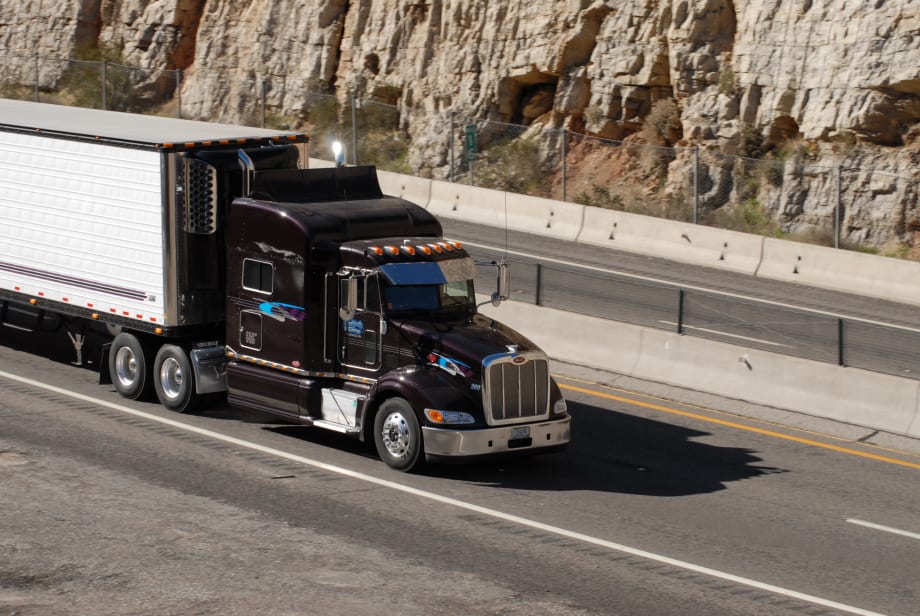
Competition for truck drivers is fierce and one reason for tight capacity. Photo: Jim Park
3 min to read
Competition for truck drivers is fierce and one reason for tight capacity. Photo: Jim Park
There is increasing evidence that the supply of trucks available to move freight is outpacing demand, based on a flurry of recently released reports – but it’s also helping push freight rates higher.
ACT Research reported this week that its For-Hire Trucking Index rose faster than the capacity index in each of the last 12 months, allowing the supply-demand balance to climb to the highest reading this index has ever recorded.
“The wide spread between freight and capacity additions bodes well for continued strength in freight rates into the new year,” said Tim Denoyer, ACT vice president and senior analyst at the truck market research firm. “Clearly, truckers are entering 2018 in the best negotiating position in many years.”
ACT’s survey of trucking companies also found a wide range of productivity effects from the recent severe weather. These centered on a 10% utilization hit in late December and early January for the fleets in the affected areas, but as one trucking executive noted, “the weather hasn’t affected the demand for capacity!” Moderate productivity impacts were felt even in the Southeast.
Shippers Feel the Pinch
Meantime, the Washington Post reported that more and more trucking operations are simply running out of capacity. As evidence, it cited a study that polled 1,600 shippers in late 2017. The big finding? Truck capacity is the trucking industry’s “primary hurdle” this year.
This 2018 State of the North America Supply Chain Survey from Averitt Express also found nearly 1 in 5 respondents had experienced issues with capacity last year. In comparison with 2016, capacity issues nearly doubled for shippers.
Much of the reason for the capacity crunch is the fact that 2017 was a good year for the U.S. economy, as it grew at least at a 3% annual rate in the second and third quarters following a lackluster 1.4% performance in the first quarter. Fourth quarter 2017 and full-year gross domestic product figures are set for release by the U.S. Commerce Department on Friday.
A better economy, however isn’t the only reason trucking capacity has tightened.
Is the ELD Mandate to Blame?
As Lawrence Gross, president of Gross Transportation Consulting, wrote in a piece for the Journal of Commerce this week, “The North American supply chain is now in the teeth of a substantial shortage of truck capacity.”
He said there are several reasons this is happening, following his attendance at a seminar at the University of Denver that brought together both trucking and intermodal executives.
Among the reasons, Gross observed, is the recent electronic logging device mandate that went into effect in December, which he said put the trucking industry “well on the road toward a level playing field where all truckers play by the same rules."
But that’s not the only reason.
Gross noted the capacity shortage has also been affected by the fierce competition among carriers for drivers, as well as more carriers willing to operate at higher levels of capacity utilization.
A separate story, also in the Journal of Commerce, looked at how shippers need to be prepared for what the publication called “record U.S. trucking rates,” due to not only a strong U.S. economy, but also increased global economic activity, according to Economist Donald Ratajczak.
Ratajczak is expecting global trade to grow 4.5% this year and that, he said, will result in one thing for the U.S. “Growth in global trade will fill more U.S. trucks.”
How much this will push freight rates higher this year remains to be seen, but if past performance is any indication, it will be significant.
The Cass Freight Index, which separately measures both shipment volumes and truckload linehaul rates (which is minus fuel surcharges), reported respective increases of 7.2% and 6.2% in December 2017 from a year earlier. On the spot market side of trucking, those rates have jumped too, including for truckload van freight, up some 30% earlier this month from the same time in 2016.
More Fleet Management

Sponsored•September 16, 2026
Color Match Smarter: Tools That Restore & Perform
For fleet managers and collision repair professionals keeping heavy-duty trucks on the road, getting the color right the first time isn't just about appearance — it's about efficiency, turnaround time, and bottom-line results. Discover how today's digital color tools are transforming the repair process from guesswork to precision.
Read More →
FMCSA Pauses Biennial-Update Enforcement Amid Motus Transition
Carriers whose updates were due on or after June 1 have more time, while FMCSA works to stabilize its new registration system and warns of phishing sites impersonating its new carrier registration system, Motus.
Read More →
Sponsored•September 14, 2026
2026 Blueprint for Countering Smarter Supply Chain Theft
Cargo theft is no longer just the cost of doing business. It's a multi-billion-dollar criminal enterprise exploiting vulnerabilities across your fleet, drivers, and supply chain.
Read More →


Sponsored•September 1, 2026
How Telematics Improves Visibility, Control, and Performance in Refrigerated Fleets
Explore how telematics help refrigerated fleets improve visibility, uptime, efficiency, compliance, and cargo protection across connected cold chain operations.
Read More →
What the U.S.-Canada Trade War Means for Trucking
Escalating U.S.-Canada tariffs could disrupt cross-border freight, reduce truck volumes, raise costs, and create new uncertainty for carriers on both sides of the border.
Read More →
What Are Trucking’s Top Concerns for 2026?
The American Transportation Research Institute wants to know what's worrying trucking fleet managers, drivers, and other stakeholders in its annual Industry Issues survey.
Read More →
American Trucking Associations Looks for a New Leader
ATA President and CEO Chris Spear abruptly left his job at the association on August 21, at a pivotal time for the trucking industry.
Read More →
Public Wi-Fi Cybersecurity Risks: How Truck Drivers and Fleets Can Protect Their Data
Public Wi-Fi can expose truck drivers and fleets to credential theft, malware, and other cyber threats. Here’s how to reduce the risk on the road.
Read More →
For Nicky Cupp, Fleet Innovation Starts With Frustration
HDT Truck Fleet Innovator Nicky Cupp turns everyday pain points at Fraley & Schilling into opportunities for better technology and smarter processes.
Read More →
Adam Buttgenbach’s Approach to Electric Trucks: Start With Where They Fit
HDT Truck Fleet Innovator Adam Buttgenbach helped PepsiCo build one of North America’s largest EV fleets by focusing on where electric trucks make operational sense.
Read More →