




Truckers Seek HOS Exemption To Test Fatigue Management Program
Two trucking companies working with well-known sleep scientist William C. Dement have put together a fatigue management program they believe can serve as an alternative to the hours of service rules
Two trucking companies working with well-known sleep scientist William C. Dement have put together a fatigue management program they believe can serve as an alternative to the hours of service rules.
Dart Transit, Eagan, Minn., and Star Transport, Morton, Ill., are asking the Federal Motor Carrier Safety Administration for an exemption from the rules in order to test the program.
The program would train drivers in fatigue management, set up work schedules that ensure adequate rest, and compare the performance of these drivers to drivers who follow the prescriptive hours of service rules. Based on research they have already done, the companies and Dement are convinced that this will prove fatigue management the safer of the two approaches.
The safety agency has indicated that it may be receptive to the idea. In its current proposal to revise the hours of service rules, it said that a pilot program is the best way to test "this promising approach." If the process is to proceed, the next step will be for the agency to publish the proposal and seek comments.
A pilot test can last as long as three years, although the companies expect to demonstrate positive results within three months. Their objective is to show that fatigue management deserves to be an optional alternative to the hours of service rules.
This proposal comes as the agency is considering how it should proceed with its controversial proposal to reform the hours rules. At issue is whether the agency will proceed with part or all of the proposal as it is written, or propose significant changes in the form of a supplemental rule. Sources in the Department of Transportation and elsewhere say that decision probably will not be made until a new FMCSA administrator has been confirmed – which is not likely to happen before Labor Day.
The Details
In the initial phase of the pilot project, 20 drivers from each fleet would to be screened for sleep disorders and treated if necessary. They would be tested for alertness, and undergo intensive training in managing their wake and rest cycles. They would have to sleep eight hours every 24 hours, at times when they can get their best rest – and their sleep would be monitored by a wrist actigraph. They would work according to when they are rested, on a schedule worked out by themselves, company officials and the sleep scientists.
The companies expect to add more drivers throughout the three-year period, as long as the project shows that fatigue management is safer.
A key feature will be a driver alertness test developed by Dement and his colleagues at the Sleep Research Center at Stanford University. The Multiple Sleep Latency Test, which evaluates daytime alertness, has proven to be an effective screening device, according to Dement. In one study, done by the Walter Reed Army Institute of Research and DOT, the test found “pathological” sleepiness in 21 of 66 drivers even though they had slept eight hours on each of the preceding three nights. The scientists expect to encounter a similar percentage of tired drivers in the opening phases of this test.
In addition, the drivers will be tested for alertness on the job using another tool employed by sleep scientists, the Psychomotor Vigilance Task.
Dement’s fatigue management program is built on an intensive training session aimed at changing a driver’s behavior. “The training must be sufficiently intense and unambiguous so that the drivers will completely understand and believe what is being taught,” the proposal says.
Drivers who have been through the training program testify that it has changed their lives. James M. Webb of Benton, Ill., comments in the proposal that after the course, and treatment for apnea, he’s 50% more productive. “Everybody needs this information,” he said. “I am sure a lot of drivers are in danger and don’t know it.”
Tony McMahon, president of the Safety Research Center, which is coordinating the program, acknowledged that fatigue management is not likely to replace hours of service for all companies. The drivers who go through this process will become members of an elite group distinguished by their understanding of fatigue and their commitment to managing it, he said.
More Drivers

Competition Heating Up for Truck Drivers
New report reveals rising driver hiring costs, the return of sign-on bonuses, growing AI advantages, and the operational factors shaping driver retention.
Read More →
How Fraley & Schilling Improved Logbook Compliance by Over 50%
Fraley & Schilling needed a way to close a compliance workflow gap in its ELD system without adding more work from driver training, reminders, and back-office follow-ups. It found the answer in a custom driver app.
Read More →
Volvo Goes Gaming
Volvo has roared into American Truck Simulator with two new flagship trucks.
Read More →
What the Best Fleets to Drive For Teach About Driver Retention
Survey fatigue, AI-powered routing, owner-operator expectations, and the decline of social media all emerged as themes from this year's Best Fleets to Drive For program.
Read More →
Driver Retention Lessons From the Best Fleets to Drive For
What separates trucking's best workplaces from the rest? Jane Jazrawy shares the biggest lessons from this year's Best Fleets to Drive For program on driver retention, communication, AI, and workforce trends on the HDT Talks Trucking podcast.
Read More →
Farewell, CDL: Why I'm Giving Up My Commercial Driver's License
After more than 20 years as a CDL holder, HDT Executive Editor Jack Roberts is letting his commercial license expire. Not because he wants to — but because trucking's nuclear verdict crisis has made the risks of public-road test drives too great for editors, manufacturers, and everyone involved.
Read More →
How Top Trucking Fleets Improve Driver Retention [Video]
What do healthy snacks, optimized routing, and just picking up the phone have in common? They're all strategies the Best Fleets to Drive For are using to retain truck drivers.
Read More →
Trucker Path Adds Verisk CargoNet Theft Data to Navigation Platform
Trucker Path’s new cargo theft risk overlays give drivers and fleets visibility into high-risk areas, stolen commodity trends, and theft hotspots.
Read More →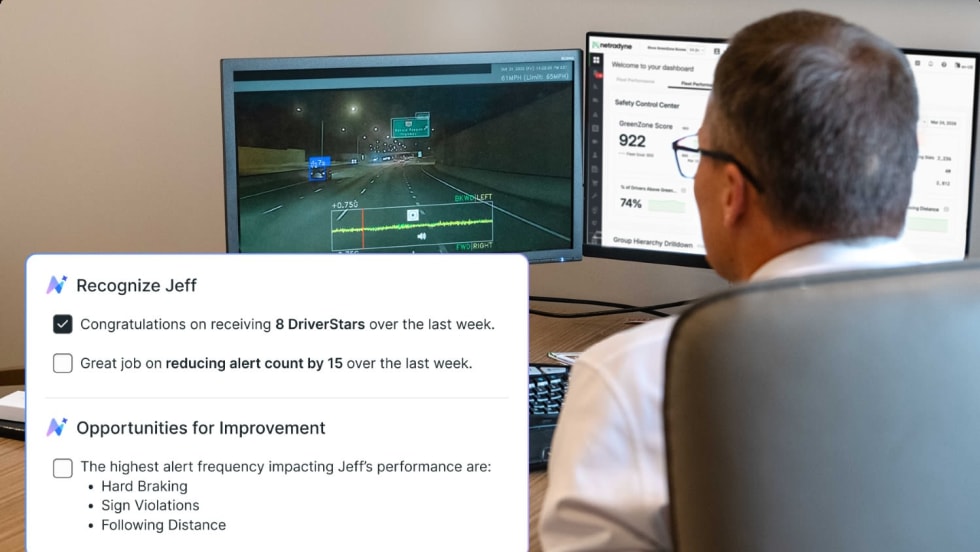
Netradyne Intelligence Uses New AI Agents to Automate Response to In-Cab Camera Data
The company called the next-generation in-cab camera safety platform "a fundamental shift from systems that report on what happened to systems that actively drive what should happen next."
Read More →
Why Truck Detention Keeps Costing Fleets Time and Money
A 2024 ATRI study found detention affects nearly 40% of truckload stops and costs the industry more than $15 billion annually. Despite the toll on drivers, fleets, and supply chains, the problem remains stubbornly persistent.
Read More →