




Truckers on HOS Proposal: Lots of Pain, No Gain
The message at the first public hearing on hours of service rules was as blunt as a tire iron. Truckers don’t like what the Federal Motor Carrier Safety Administration is proposing. In many different ways, truckers all
The message at the first public hearing on hours of service rules was as blunt as a tire iron. Truckers don’t like what the Federal Motor Carrier Safety Administration is proposing.
In many different ways, truckers all say the same thing: The proposal would fundamentally alter the operations and economics of the industry – for the worse. It would force drivers and companies to completely change the way they do business, and vastly increase the difficulty of making a profit. Moreover, many say, the proposal would do nothing to improve safety – and would in fact make them less safe.
There were degrees of opposition among the approximately 65 witnesses who testified at the May 31- June 1 hearing at the Department of Transportation in Washington, D.C. – the first of eight such hearings scheduled across the country during the next month. (See "Hours of Service Hearings Scheduled, May 16).
Most of the truckers, bus lines, utilities and shippers acknowledged the safety agency’s good intentions, but said the proposal simply will not work.
Their key objections:
* Restrictions on daily duty time take away a driver’s flexibility to make professional judgments about whether he should rest or drive.
* Daily restrictions and weekend rest requirements seriously impair productivity. This will force fleets to either cut back on service, or hire more drivers.
* The agency underestimates the number of new drivers that will be needed – and the difficulty of finding those drivers.
* The agency does not account for the increased accident risk from putting more drivers – and inexperienced drivers at that – on the road.
* The weekend rest requirements also would leave drivers stranded on the road for extended periods – without adequate rest areas. This would create an incentive to stretch the limits in order to get home.
* The weekend’s midnight-to-6 a.m. rest requirement will put more drivers on the road during morning rush hour, creating more congestion and higher risk exposure.
* The electronic onboard recorder requirement is demeaning to professional drivers and not necessary.
* Breaking the industry into five types of operations creates confusion for companies whose drivers switch from one category to another.
Witnesses universally applauded the shift to a 24-hour clock, and generally favored the 10-hour minimum rest period.
The only unequivocal support came from the National Sleep Foundation, whose members helped supply the scientific research that FMCSA uses to justify the schedule changes. Alone among the witnesses, Darrel Drobnich of the foundation urged rapid implementation of the rules the way they are written – and asked for another rule requiring all drivers to be screened for sleep disorders as part of the licensing process.
Even safety advocacy groups such as Parents Against Tired Truckers and Advocates for Highway and Auto Safety oppose the proposal – saying it permits too much time for driving.
One trucker went against the grain when he said the rule fails to address a major cause of driver fatigue. Dan Connell, director of safety for truckload carrier Great Coastal Express, Chester, Va., told the agency that mileage pay gives drivers an incentive to drive longer than they should. Acknowledging that his opinion sets him apart from other truckers, Connell said that one key to reducing fatigue is to pay drivers by the hour.
“If transportation costs increase, as they surely will under this current proposal, let’s at least solve the problem in the process,” he said.
Another lone voice came from a major supplier of onboard recording devices. Truckers complained that the agency’s estimate of $1,100 per truck for longhaul and regional truckers to buy and maintain onboard recorders was too low. But Tony Reynolds, product manager for VDO North America, said his company has a digital tachograph that meets the proposal’s standards – for $300 as an OEM installation, or $500 as a retrofit.
Industry interests adamantly urged the agency to grant a 90-day extension for comments. At this point the agency still is declining to give more time, although it has signaled willingness to grant an additional 30 days – and the final decision still is open.
The agency’s acting chief safety officer, Julie Anna Cirillo, acknowledged that some groups may need more time to finish real-world tests of the proposal. Meanwhile, she said, FMCSA will post answers to the many questions it is getting on its web site.
It was apparent from the questions put to witnesses by Cirillo and FMCSA staff that the agency is looking for concrete examples of how the rules will affect a company’s operations – examples preferably backed up with objective data. The agency also wants suggestions for how the details of its proposals can be improved.
Here’s a summary of selected testimony:
* The Commercial Vehicle Safety Alliance, representing enforcement officials and industry safety personnel, praised FMCSA for its hard work. CVSA supports the onboard recorder requirement, but expressed concern about several other aspects of the proposal. It wants, for example, to see better scientific justification for the five categories of drivers. Also, the proposal is difficult to understand – more difficult than the current rules – and therefore would be easier to violate. And the agency “grossly underestimates” the cost of training for compliance.
The complexity also will make it harder for CVSA to maintain its system of uniform inspection standards, and will make it harder for police to enforce the rules, Bridge said.
* American Trucking Associations believes the proposal creates the need for at least 100,000 additional drivers and trucks, said Dave Osiecki, vice president for safety and operations. The safety agency does not take into account the safety risks associated with that many more drivers – or the true additional costs to the industry, Osiecki said.
Further, the safety agency overestimates the role that fatigue plays in truck accidents, he said. FMCSA said fatigue is a factor in 15% of accidents, while its own research shows the percentage really is more like 3% to 6%.
To one informed source who did not wish to be identified, this observation had the ring of truth. As the rule writers were drafting the proposal’s cost-benefit analysis, they came under pressure to find a way to report a higher incidence of fatigue-related accidents, the source said.
ATA also submitted its own suggestions for revising the rules, which include a 14-hour work day compared to the agency’s 12-hour day, allowing drivers to split their 10-hour off-duty time into two periods, and no mandatory requirement for onboard recorders.
* Tim Lynch, president and CEO of the Motor Freight Carriers Assn., illustrated his position with a story: a trucking lobbyist once went to an important senator with just one small request: “Please leave us alone.” The Senator thought deeply, and responded: “I’m sorry but you’re asking for far too much.”
MFCA members, the unionized LTL companies, prefer the status quo. LTL drivers do not need the proposal because they have regular schedules over familiar routes, which allows daily supervision by management, and they have a collective bargaining agreement that requires compliance with all of the rules, Lynch said. He told the agency he will suggest a revision to the proposal that creates an additional operational category that retains the current rules for the unionized LTLs.
* Todd Spencer, executive vice president of the Owner-Operator Independent Drivers Assn., said the proposal will benefit no one. “It will not produce a meaningful or perhaps even measurable improvement in highway safety and it will snuff the spirit and the soul out of hundreds of thousands of hardworking, conscientious, safe truck operators throughout the nation,” Spencer said.
H
More Drivers

Competition Heating Up for Truck Drivers
New report reveals rising driver hiring costs, the return of sign-on bonuses, growing AI advantages, and the operational factors shaping driver retention.
Read More →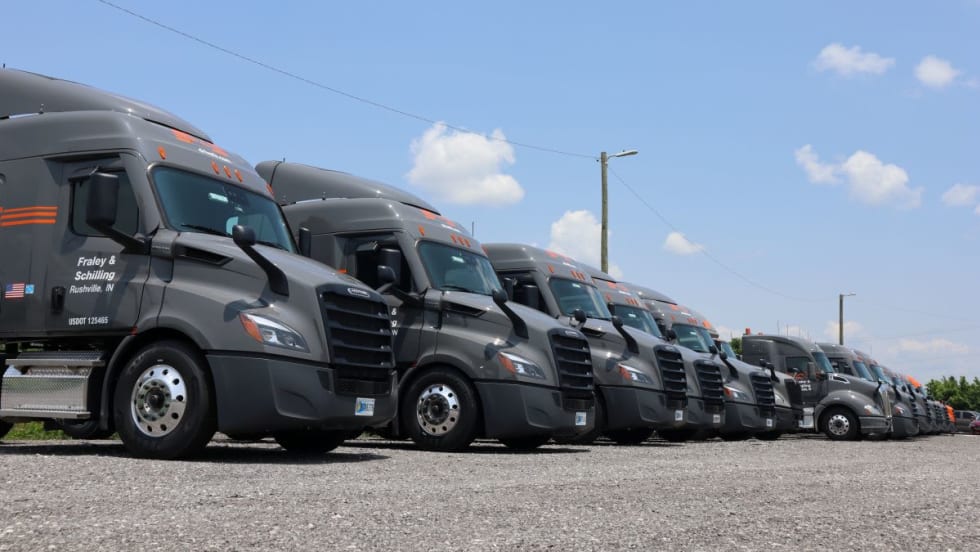
How Fraley & Schilling Improved Logbook Compliance by Over 50%
Fraley & Schilling needed a way to close a compliance workflow gap in its ELD system without adding more work from driver training, reminders, and back-office follow-ups. It found the answer in a custom driver app.
Read More →
Volvo Goes Gaming
Volvo has roared into American Truck Simulator with two new flagship trucks.
Read More →
What the Best Fleets to Drive For Teach About Driver Retention
Survey fatigue, AI-powered routing, owner-operator expectations, and the decline of social media all emerged as themes from this year's Best Fleets to Drive For program.
Read More →
Driver Retention Lessons From the Best Fleets to Drive For
What separates trucking's best workplaces from the rest? Jane Jazrawy shares the biggest lessons from this year's Best Fleets to Drive For program on driver retention, communication, AI, and workforce trends on the HDT Talks Trucking podcast.
Read More →
Farewell, CDL: Why I'm Giving Up My Commercial Driver's License
After more than 20 years as a CDL holder, HDT Executive Editor Jack Roberts is letting his commercial license expire. Not because he wants to — but because trucking's nuclear verdict crisis has made the risks of public-road test drives too great for editors, manufacturers, and everyone involved.
Read More →
How Top Trucking Fleets Improve Driver Retention [Video]
What do healthy snacks, optimized routing, and just picking up the phone have in common? They're all strategies the Best Fleets to Drive For are using to retain truck drivers.
Read More →
Trucker Path Adds Verisk CargoNet Theft Data to Navigation Platform
Trucker Path’s new cargo theft risk overlays give drivers and fleets visibility into high-risk areas, stolen commodity trends, and theft hotspots.
Read More →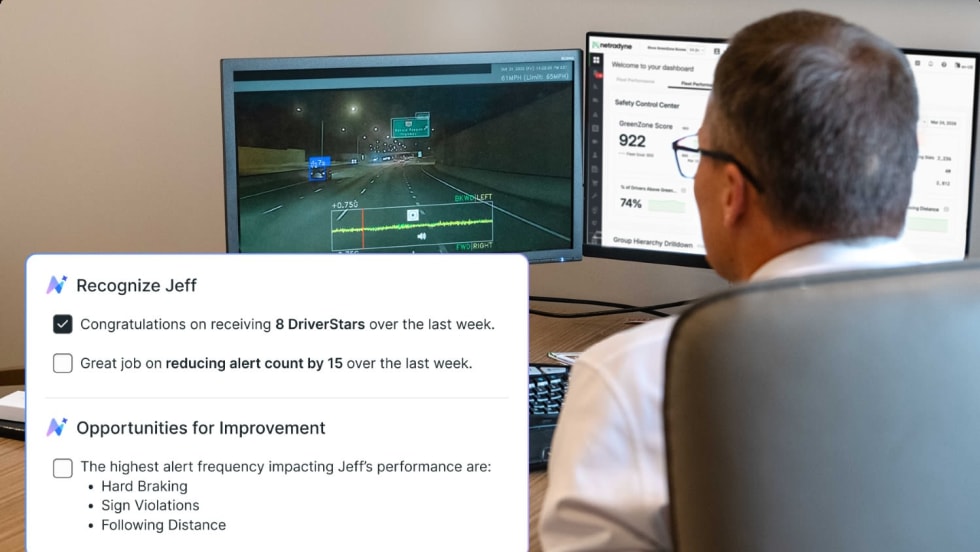
Netradyne Intelligence Uses New AI Agents to Automate Response to In-Cab Camera Data
The company called the next-generation in-cab camera safety platform "a fundamental shift from systems that report on what happened to systems that actively drive what should happen next."
Read More →
Why Truck Detention Keeps Costing Fleets Time and Money
A 2024 ATRI study found detention affects nearly 40% of truckload stops and costs the industry more than $15 billion annually. Despite the toll on drivers, fleets, and supply chains, the problem remains stubbornly persistent.
Read More →