




Truck and Other Highway Fatality Numbers Drop
The number of people killed in large-truck crashes fell 4.4 percent last year, as the number of highway fatalities dropped again to historically low levels
The number of people killed in large-truck crashes fell 4.4 percent last year, as the number of highway fatalities dropped again to historically low levels.
U.S. Transportation Secretary Mary E. Peters announced results from the National Highway Traffic Safety Administration's annual traffic safety assessment. In 2007, the overall number of traffic fatalities fell to 41,059, the lowest number since 1994. In addition, the fatality rate per 100 million vehicle miles traveled was 1.37, the lowest fatality rate on record, she noted.
The number of large-truck crash fatalities fell 4.4 percent, from 5,027 in 2006 to 4,808 in 2007. That number included 802 truck occupants, 502 of those in single-vehicle crashes, numbers virtually identical to last year. However, there were nearly 200 fewer people killed in other vehicles involved in crashes with heavy trucks.
The American Trucking Associations speculates that some of the decline in fatalities may be attributed to trucks using more safety technologies such as collision avoidance, lane departure warning, stability control and brake stroke monitoring systems. ATA is supporting a measure currently under consideration by Congress that would give tax incentives to carriers who adopt these safety technologies.
"The statistics from this most recent study show that the efforts of law enforcement agencies to focus on the most likely causes of crashes, such as speeding and impaired driving, are making our highways safer," said ATA President and CEO Bill Graves. He also noted that this continued safety improvement occurred under the new federal hours-of-service regulations, and the new figures add to the growing evidence that the regulations are working and should be retained.
"While we are pleased that overall fatalities have decreased," Graves added, "we still have room to improve safe driving habits of truck drivers and passenger vehicle drivers."
The number of people injured in highway crashes in 2007 also was the lowest seen since NHTSA Began collecting injury data in 1988 -- 2.49 million.
The DOT collects crash statistics annually from 50 states, the District of Columbia and Puerto Rico to produce annual reports on fatalities and injuries. To view the 2007 report in its entirety, please visit www-nrd.nhtsa.dot.gov/Pubs/811017.PDF.
More Safety & Compliance
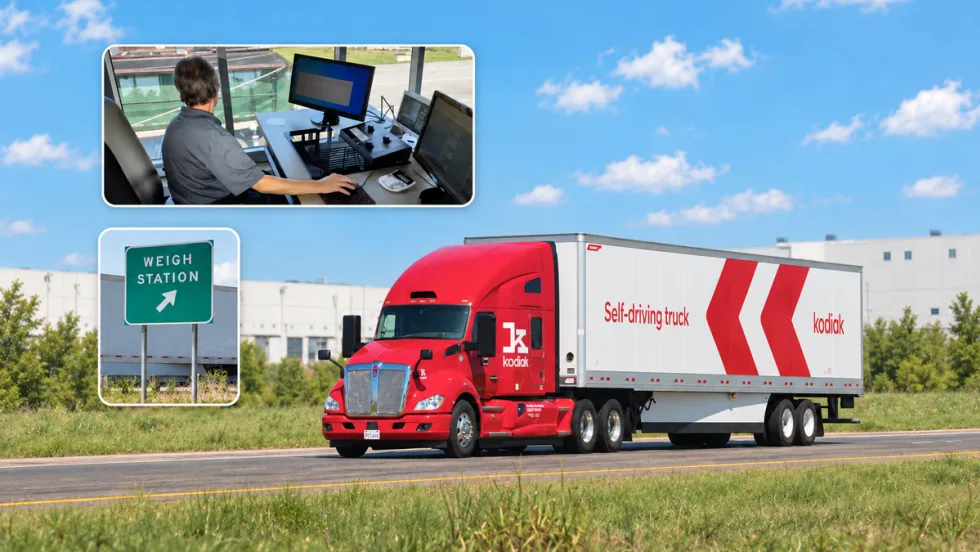
PrePass, Kodiak Connect Driverless Trucks to Roadside Enforcement
The system will allow enforcement agencies to verify Enhanced Inspection information and decide whether Kodiak’s autonomous trucks can bypass roadside screening sites.
Read More →
From One Generation to the Next: How Mentorship Builds Safer Truck Drivers
After three decades in trucking, Harold Perry shares what he's learned about driver safety, mentorship, and helping the next generation build confidence behind the wheel.
Read More →
FMCSA Pauses Biennial-Update Enforcement Amid Motus Transition
Carriers whose updates were due on or after June 1 have more time, while FMCSA works to stabilize its new registration system and warns of phishing sites impersonating its new carrier registration system, Motus.
Read More →
ZF Expands Commercial Vehicle Push in North America
ZF is expanding its North American commercial-vehicle presence with new transmission applications, electrification, trailer technology and autonomous-driving systems.
Read More →
Truck Drivers Need More Than Another Alert
Fleets have more visibility into truck health, safety events, and driver activity than ever. The next challenge is turning all that information into useful guidance for the person who has to decide what to do next.
Read More →
Tesla Wants a Self-Driving Semi. Are Cameras Enough?
Could Tesla’s camera-only autonomous driving technology work on an 80,000-pound Semi? In this commentary, HDT's Deborah Lockridge takes a look at Tesla, Cybercab, and how autonomous trucks see the road.
Read More →
What DOT’s Automated Vehicle Strategy Means for Trucking
The U.S. Department of Transportation issued a new automated-vehicle strategy that outlines plans for driverless-truck regulations, cross-state freight corridors, and federal safety standards.
Read More →
NYC Expands Speed, Pedestrian Safety Tech Across Fleet
New York City is expanding intelligent speed assistance and pedestrian-alert systems across its municipal fleet, moving the technologies from pilot programs into vehicle procurement and retrofit requirements.
Read More →
FMCSA Removes 110 Truck Driver Training Schools from Certified ELDT List
Federal regulators also are targeting more than 160 additional training providers and launching a nationwide audit of third-party CDL skills testers as part of a broader crackdown on trucking fraud.
Read More →
Beyond DOT Compliance: What Makes a Trucking Fleet Truly Safe?
A trucking fleet can follow every rule and still make unsafe decisions. The real test comes when safety conflicts with freight, productivity, or cost.
Read More →