




Tougher Enforcement Coming
Many of the changes in safety enforcement that truckers will see in the coming months are based on a report by DOT Inspector General Kenneth Mead that is extremely critical of the federal safety program
Many of the changes in safety enforcement that truckers will see in the coming months are based on a report by DOT Inspector General Kenneth Mead that is extremely critical of the federal safety program.
Mead’s audit of the Office of Motor Carriers, which was requested by Rep. Frank Wolf, R-VA, and Sen. John McCain, R-AZ, was the centerpiece of congressional hearings on truck safety this year – and it is the heart and soul of the Motor Carrier Safety Improvement Act of 1999. (See "Congress Passes Major Truck Safety Reforms," 11/22/99.)
His support for a separate motor carrier administration was key to getting the Republican Congress to go along with an expansion of the federal bureaucracy. And his recommendations for specific changes in the safety program show up throughout the bill.
He concluded that while most truckers obey the rules, a minority break them over and over again. He also found that OMC does not do a good enough job of enforcement.
Mead recommended that the Department of Transportation get tough in a number of areas. While some of his suggestions have already been adopted by OMC, all of them have become marching orders for the new Federal Motor Carrier Safety Administration:
* Crack down on repeat offenders. Violators will be hit with the maximum possible fines and will not be able to negotiate reduced settlements – and if they do not toe the line they will be placed out of service. These changes arise from Mead’s finding that few safety violations lead to enforcement action – only 11% in 1998 – and when violations actually lead to fines, DOT settles too easily. In 1998, for example, violators paid on average only 46% of the original assessment.
* Impose higher fines. These already are in place: up to $10,000 for a violation that caused or could lead to serious injury or death; up to $3,000 for less serious violations; and $500 per offense for recordkeeping violations – up to $5,000. Click here for details (See "Safety Agency Gets Stricter," 4/30/99).
* Take away operating authority from a trucker who fails to pay his fine within 90 days.
* Figure out how to tell if a trucker poses an “imminent hazard.” Federal officials have the right to take an imminently hazardous trucker off the road immediately, but Mead found that they don’t use that power because they don’t have a clear definition of the term.
* Require DOT to monitor – with follow-up visits – truckers that have a less-than-satisfactory safety rating.
* Require the OMCS state director to explain in writing why a high-risk carrier has not faced a compliance review.
* Set a schedule and procedures for closing enforcement cases. Mead’s report cited almost 1,200 enforcement cases that had been open from six months to eight years.
Congress was specific about what it wants from the higher fines: to ensure “prompt and sustained compliance” with the rules. A major issue that surfaced during hearings earlier this year on the safety program was that fines are seen by some truckers as merely the cost of doing business.
Occasionally “extraordinary circumstances” will justify fines below the minimums – but DOT will have to document those instances, the bill says.
The bill authorizes a heavy penalty for truckers who operate without authority, or beyond the scope of their authority: they can be placed out of service.
Mead also found serious problems with the way DOT is handling the flow of Mexican trucks into the U.S. About 44% of them do not meet U.S. safety standards, he said in his report.
Congress therefore decreed in this bill that DOT must figure out how many inspectors are needed at the border – and put them there. DOT reported in September that since Mead’s report was released, it has tripled the number of federal safety investigators at the U.S.-Mexican border, from 13 to 40.
The border enforcement provisions of the bill also get tough on Mexican truckers who break the rules. Intentional violations can lead to fines of up to $10,000 and a six-month disqualification. The punishment for repeated intentional violations is stiffer: up to $25,000 and permanent disqualification.
The bill closes a border loophole by forbidding Mexican carriers from leasing their trucks to another company while they are disqualified. And it requires all foreign carriers that provide interstate U.S. service to carry proof of registration in the cab.
Tomorrow: Targeting the High-Risk Carriers
More Drivers

Competition Heating Up for Truck Drivers
New report reveals rising driver hiring costs, the return of sign-on bonuses, growing AI advantages, and the operational factors shaping driver retention.
Read More →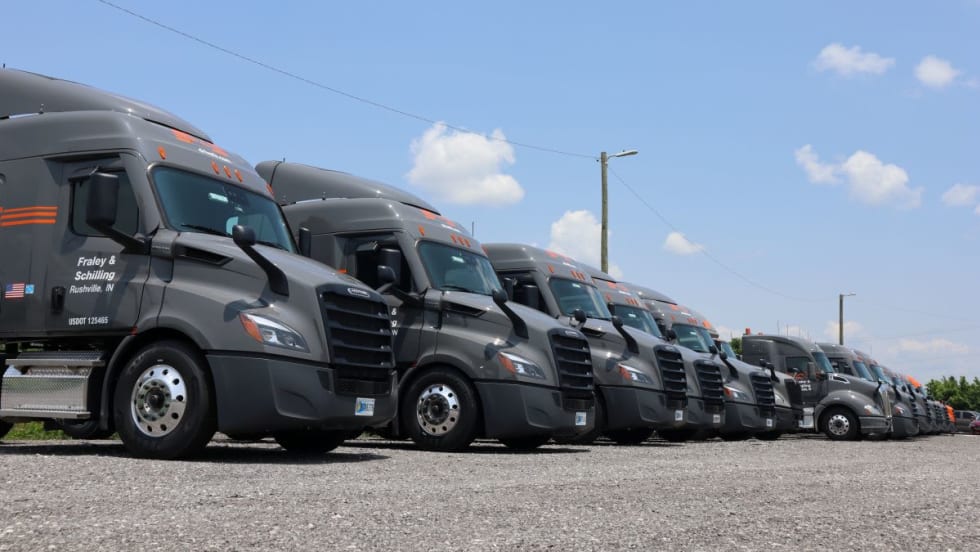
How Fraley & Schilling Improved Logbook Compliance by Over 50%
Fraley & Schilling needed a way to close a compliance workflow gap in its ELD system without adding more work from driver training, reminders, and back-office follow-ups. It found the answer in a custom driver app.
Read More →
Volvo Goes Gaming
Volvo has roared into American Truck Simulator with two new flagship trucks.
Read More →
What the Best Fleets to Drive For Teach About Driver Retention
Survey fatigue, AI-powered routing, owner-operator expectations, and the decline of social media all emerged as themes from this year's Best Fleets to Drive For program.
Read More →
Driver Retention Lessons From the Best Fleets to Drive For
What separates trucking's best workplaces from the rest? Jane Jazrawy shares the biggest lessons from this year's Best Fleets to Drive For program on driver retention, communication, AI, and workforce trends on the HDT Talks Trucking podcast.
Read More →
Farewell, CDL: Why I'm Giving Up My Commercial Driver's License
After more than 20 years as a CDL holder, HDT Executive Editor Jack Roberts is letting his commercial license expire. Not because he wants to — but because trucking's nuclear verdict crisis has made the risks of public-road test drives too great for editors, manufacturers, and everyone involved.
Read More →
How Top Trucking Fleets Improve Driver Retention [Video]
What do healthy snacks, optimized routing, and just picking up the phone have in common? They're all strategies the Best Fleets to Drive For are using to retain truck drivers.
Read More →
Trucker Path Adds Verisk CargoNet Theft Data to Navigation Platform
Trucker Path’s new cargo theft risk overlays give drivers and fleets visibility into high-risk areas, stolen commodity trends, and theft hotspots.
Read More →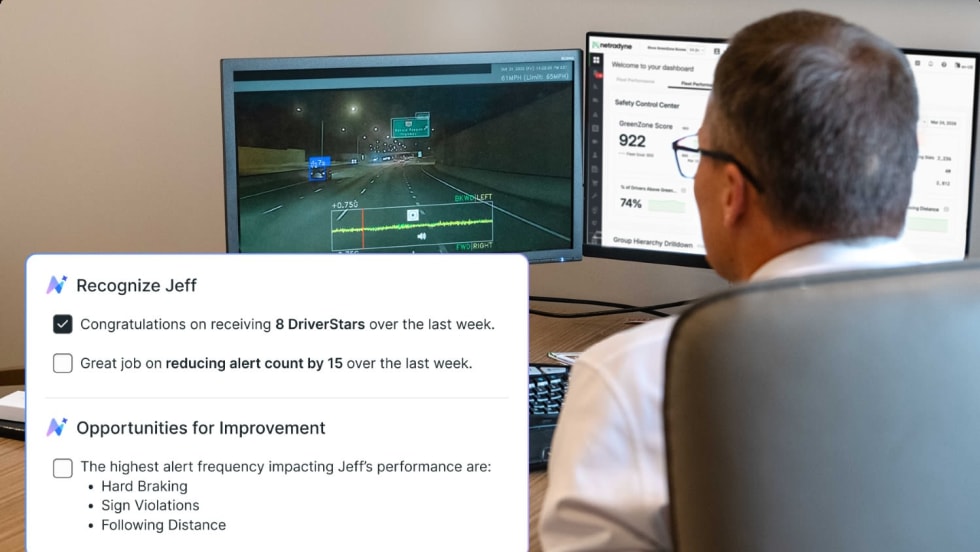
Netradyne Intelligence Uses New AI Agents to Automate Response to In-Cab Camera Data
The company called the next-generation in-cab camera safety platform "a fundamental shift from systems that report on what happened to systems that actively drive what should happen next."
Read More →
Why Truck Detention Keeps Costing Fleets Time and Money
A 2024 ATRI study found detention affects nearly 40% of truckload stops and costs the industry more than $15 billion annually. Despite the toll on drivers, fleets, and supply chains, the problem remains stubbornly persistent.
Read More →