




How the ELD Mandate Impacts Smaller Grocery/Retail Carriers
For the moderately sized retail and grocery fleets that work with third-party logistics provider Zipline Logistics, the effect of the electronic logging device mandate isn’t as significant as the driver shortage.

Graphic: Zipline Logistics
For the moderately sized retail and grocery fleets that work with third-party logistics provider Zipline Logistics, the effect of the electronic logging device mandate isn’t as significant as the driver shortage.
Zipline is a 3PL specializing in retail and grocery transportation. It surveyed more than 150 trucking companies in its network about the impacts of the ELD mandate, which went into effect in December with soft enforcement and has been in full effect for most carriers since April 1.
This survey builds on Zipline’s initial ELD survey report that was released in March. Most of the fleets responding were under 100 trucks. Zipline notes that 90% of its customers deliver into retail and grocery facilities.
Capacity constraints
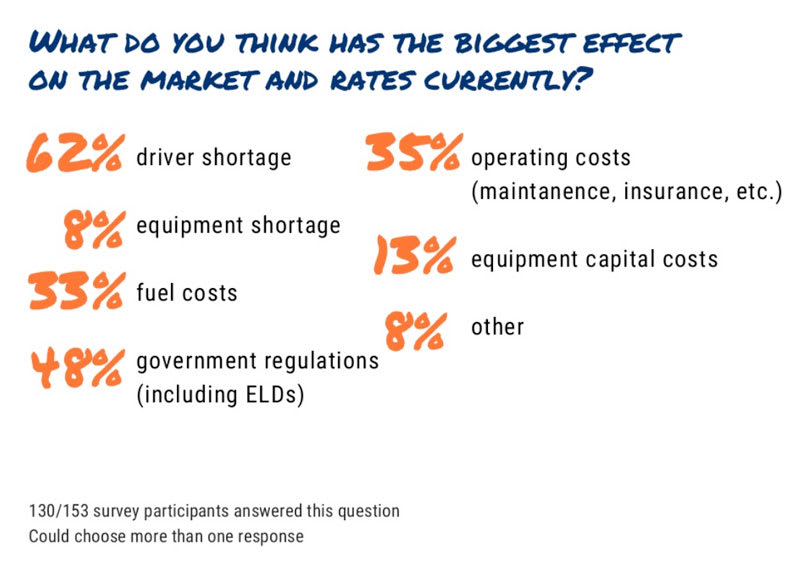
Respondents said the ELD mandate has required them to expand to handle the same level of orders, but they are being held back by the increasing driver shortage. In fact, the driver shortage was listed as the biggest factor affecting the market and rates currently, not ELDs.
Since the ELD mandate, 34% of respondents said they have expanded their fleet and 21% said they plan to do so within the next year.
With tight capacity, fleets are able to be pickier about which customers they serve. Under the mandate, 77% of carriers reported being more selective in the shippers/receivers that they are willing to go to. And 54% said they have changed how long they will wait at a shipper/receiver.
When it comes to rates, 48% of carriers felt that linehaul rates have increased due to ELDs. This is significantly lower than the survey results from March, where 71% of respondents said per-mile rates increased due to ELDs. This difference suggests that carriers have uncovered new efficiencies in the last six months, Zipline noted.
In addition, the driver shortage was listed as the biggest factor that affects the market and rates currently, not ELDs on their own.
ELD Safety Impacts
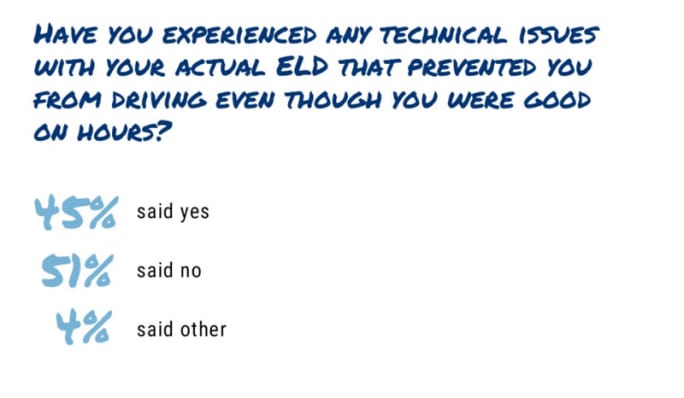
The survey asked drivers and dispatchers if they felt ELDs were doing what they were intended to do; increase safety on the road.
60% of fleets surveyed felt that safety was improving among their drivers. They shared that ELDs were forcing drivers to stop, rest, and run legally.
The other 40% of respondents felt that ELDs were decreasing the safety of drivers and others on the road. They responded that drivers are speeding more and driving recklessly to cover more ground in the time allotted by ELDs and meet strict deadlines. Drivers also mentioned that they are now forced to drive in hazardous weather and when tired so they do not burn their ELD hours after they are already running.
Graphic: Zipline Logistics
More Safety & Compliance

FMCSA Pauses Biennial-Update Enforcement Amid Motus Transition
Carriers whose updates were due on or after June 1 have more time, while FMCSA works to stabilize its new registration system and warns of phishing sites impersonating its new carrier registration system, Motus.
Read More →
ZF Expands Commercial Vehicle Push in North America
ZF is expanding its North American commercial-vehicle presence with new transmission applications, electrification, trailer technology and autonomous-driving systems.
Read More →
Truck Drivers Need More Than Another Alert
Fleets have more visibility into truck health, safety events, and driver activity than ever. The next challenge is turning all that information into useful guidance for the person who has to decide what to do next.
Read More →
Tesla Wants a Self-Driving Semi. Are Cameras Enough?
Could Tesla’s camera-only autonomous driving technology work on an 80,000-pound Semi? In this commentary, HDT's Deborah Lockridge takes a look at Tesla, Cybercab, and how autonomous trucks see the road.
Read More →
What DOT’s Automated Vehicle Strategy Means for Trucking
The U.S. Department of Transportation issued a new automated-vehicle strategy that outlines plans for driverless-truck regulations, cross-state freight corridors, and federal safety standards.
Read More →
NYC Expands Speed, Pedestrian Safety Tech Across Fleet
New York City is expanding intelligent speed assistance and pedestrian-alert systems across its municipal fleet, moving the technologies from pilot programs into vehicle procurement and retrofit requirements.
Read More →
FMCSA Removes 110 Truck Driver Training Schools from Certified ELDT List
Federal regulators also are targeting more than 160 additional training providers and launching a nationwide audit of third-party CDL skills testers as part of a broader crackdown on trucking fraud.
Read More →
Beyond DOT Compliance: What Makes a Trucking Fleet Truly Safe?
A trucking fleet can follow every rule and still make unsafe decisions. The real test comes when safety conflicts with freight, productivity, or cost.
Read More →
Hours of Service Pilot Programs: FMCSA Readies for 2027 Rollout
Two pilot programs could eventually reshape hours-of-service rules, giving truck drivers options to pause their 14-hour clock or use longer split sleeper rest periods.
Read More →
New Guide Offers Pet Safety Tips for Truck Drivers
Hundreds of thousands of pets travel in truck cabs. A new safety guide from Volvo Trucks and the Center for Pet Safety offers practical advice for truck drivers who bring dogs and cats along for the ride.
Read More →