





Related: 14 Things You Need to Know Before ELDs Become Mandatory
Supreme Court Denies Petition to Hear ELD Challenge
Those who were waiting to adopt electronic logging devices hoping the Supreme Court would overturn the ELD mandate as unconstitutional will be disappointed to learn the court has rejected the Owner-Operator Independent Drivers Association's petition.
June 12, 2017
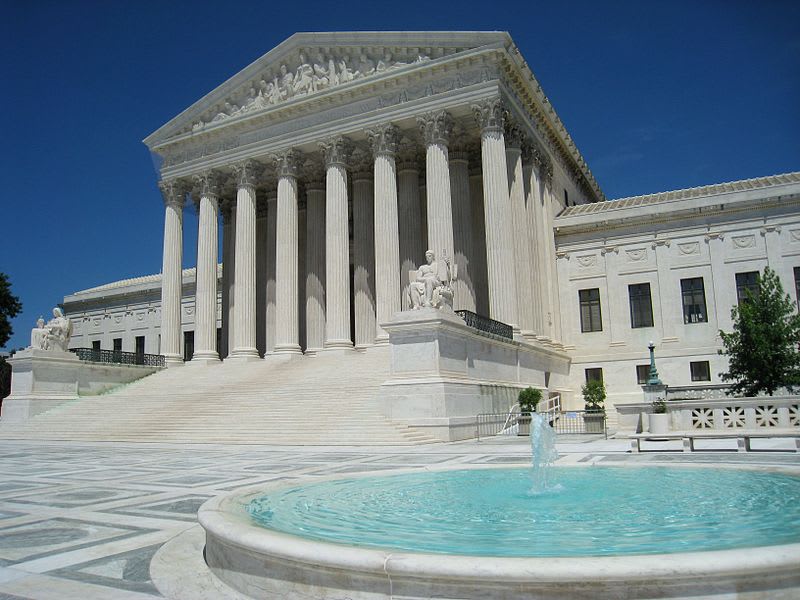
The U.S. Supreme Court will not hear a challenge to the ELD mandate. Photo: Public domain
2 min to read

The U.S. Supreme Court will not hear a challenge to the ELD mandate.Photo: Public domain
The U.S. Supreme Court has denied the Owner-Operator Independent Drivers Association's request to take on the issue of the constitutionality of electronic logging devices.
The June 12 announcement of the court's denial of OOIDA's petition means the court will not hold hearings on whether the regulation violates drivers’ rights to privacy under the Fourth Amendment, which means a lower court ruling upholding the Federal Motor Carrier Safety Administration's ELD mandate stands.
Under the electronic logging device rule, motor carriers and drivers must transition to ELDs by Dec. 17 of this year. Those that were using automatic onboard recording devices prior to Dec. 18, 2017, may continue using AOBRDs through Dec. 16, 2019. Suppliers of ELDs must conform to technical specifications, certify their ELDs, and register them with FMCSA.
Along with the issue of protecting driver privacy, in its petition to the Supreme Court, OOIDA also was seeking a ruling on whether the ELD rule violates the Fourth Amendment by failing to establish a regulatory structure at the state and federal levels that serves as a substitute for a warrant.
When asked to comment on the decision by HDT, OOIDA responded: "We are extremely disappointed that the Supreme Court does not see the merit in reviewing our case with so many questions about its constitutionality. We will continue to pursue the issue on the congressional side, as there are still many questions about the technical specifications and enforcement aspects of the mandate. Until the government is able to answer many fundamental and basic questions about the mandate, they should at least delay its implementation.
"The mandate is the equivalent of warrantless surveillance of truckers and it violates their Fourth Amendment rights. That intrusion on the rights of hard-working Americans cannot be justified. The mandate will not improve safety. It will, however, be another costly regulatory burden heaped upon an already over-regulated industry."
OOIDA has contended in the past that requiring electronic monitoring devices on commercial vehicles “does not advance safety since they are no more reliable than paper logbooks for recording compliance with hours-of-service regulations.”
Updated 6/12/2017 at 11 a.m. EDT to add OOIDA comments.
More Fleet Management

Sponsored•September 16, 2026
Color Match Smarter: Tools That Restore & Perform
For fleet managers and collision repair professionals keeping heavy-duty trucks on the road, getting the color right the first time isn't just about appearance — it's about efficiency, turnaround time, and bottom-line results. Discover how today's digital color tools are transforming the repair process from guesswork to precision.
Read More →
FMCSA Pauses Biennial-Update Enforcement Amid Motus Transition
Carriers whose updates were due on or after June 1 have more time, while FMCSA works to stabilize its new registration system and warns of phishing sites impersonating its new carrier registration system, Motus.
Read More →
Sponsored•September 14, 2026
2026 Blueprint for Countering Smarter Supply Chain Theft
Cargo theft is no longer just the cost of doing business. It's a multi-billion-dollar criminal enterprise exploiting vulnerabilities across your fleet, drivers, and supply chain.
Read More →


Sponsored•September 1, 2026
How Telematics Improves Visibility, Control, and Performance in Refrigerated Fleets
Explore how telematics help refrigerated fleets improve visibility, uptime, efficiency, compliance, and cargo protection across connected cold chain operations.
Read More →
What the U.S.-Canada Trade War Means for Trucking
Escalating U.S.-Canada tariffs could disrupt cross-border freight, reduce truck volumes, raise costs, and create new uncertainty for carriers on both sides of the border.
Read More →
What Are Trucking’s Top Concerns for 2026?
The American Transportation Research Institute wants to know what's worrying trucking fleet managers, drivers, and other stakeholders in its annual Industry Issues survey.
Read More →
American Trucking Associations Looks for a New Leader
ATA President and CEO Chris Spear abruptly left his job at the association on August 21, at a pivotal time for the trucking industry.
Read More →
Public Wi-Fi Cybersecurity Risks: How Truck Drivers and Fleets Can Protect Their Data
Public Wi-Fi can expose truck drivers and fleets to credential theft, malware, and other cyber threats. Here’s how to reduce the risk on the road.
Read More →
For Nicky Cupp, Fleet Innovation Starts With Frustration
HDT Truck Fleet Innovator Nicky Cupp turns everyday pain points at Fraley & Schilling into opportunities for better technology and smarter processes.
Read More →
Adam Buttgenbach’s Approach to Electric Trucks: Start With Where They Fit
HDT Truck Fleet Innovator Adam Buttgenbach helped PepsiCo build one of North America’s largest EV fleets by focusing on where electric trucks make operational sense.
Read More →