





Related: IIHS Developing Ratings for Advanced Driver Assistance Systems
Study Highlights Limitations of Electronic Safety Systems
A new study by the Insurance Institute for Highway Safety has found that while electronic safety systems such as advanced cruise control, collision mitigation, and lanekeeping can help save lives, improper use can lead to fatal accidents.
August 9, 2018
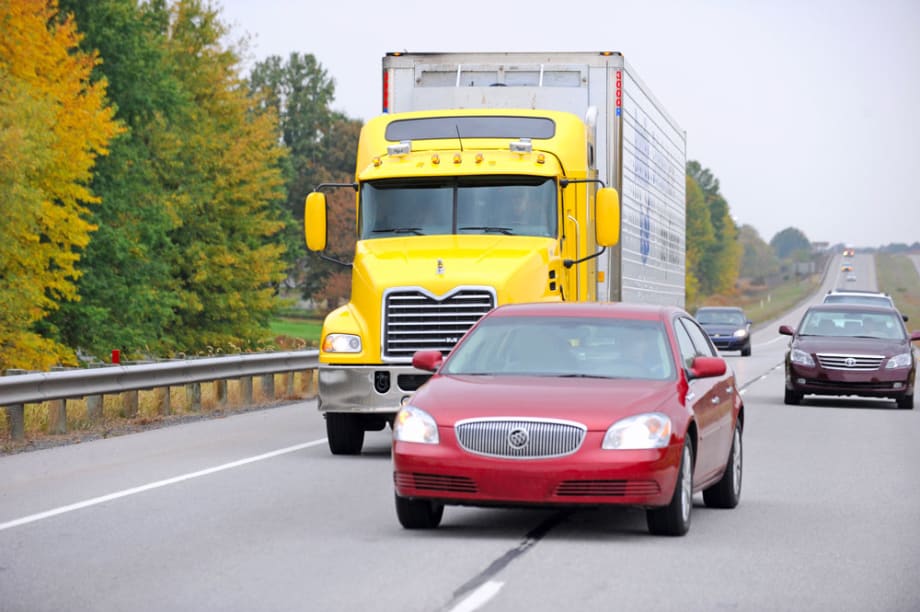
While the study focused on advanced semi-automated safety systems in passenger vehicles, it points to the importance of proper training for truck drivers on this technology as well.
Photo courtesy Bendix
4 min to read
A new study by the Insurance Institute for Highway Safety found that electronic driver-assist systems in cars and trucks, such as advanced cruise control, collision mitigation, and lanekeeping, may not see stopped vehicles and could even steer a vehicle into a crash if drivers aren't monitoring the situation as they should.
That’s the conclusion detailed in the study, entitled “Reality Check,” which the group issued on Aug. 7 after testing electronic safety systems from Tesla, Mercedes, BMW, and Volvo on both a closed track and public roads.
The study is not dismissive of electronic safety systems and acknowledges they could very well save the lives of motorists. However, the study warns, the systems can fail under many circumstances – and that points to the importance of drivers understanding the limitations of these systems, whether they're behind the wheel of a car or a commercial truck.
“We have found situations where the vehicles under semi-automated control may do things that can put you and your passengers at risk, and so you really need to be on top of it to prevent that from happening,” said David Zuby, the institute’s chief research officer.
In one instance, the Virginia-based institute tested the electronic safety systems in in two Tesla vehicles, a Model S and a Model 3. When tested with the adaptive cruise-control turned off, but automatic braking on, at 31 mph, both Teslas braked and mitigated a crash but still hit a stationary balloon. They were the only two models that failed to stop in time during tests on a track.
Yet when the adaptive cruise control, which keeps a set distance from cars in front, is activated, the Teslas braked earlier and gentler and avoided the balloon, the agency said.
On the road, the institute’s engineers found that all the vehicles but Tesla’s Model 3 failed to respond to stopped vehicles ahead of them.
The systems tested in the Teslas, BMW’s 5-Series, the Volvo S-90, and the Mercedes E-Class, are among the best available and have been rated “superior” by the Institute in IIHS tests. Zuby said the systems do increase safety, but the tests show they are not 100% reliable.
Many of the scenarios discovered by IIHS are covered in the vehicles’ owner’s manuals, which tell drivers they have to pay attention. But Zuby noted that not many consumers read their owner’s manuals in detail. Even though the systems have names like Tesla’s “Autopilot” or Volvo’s “Pilot Assist,” they are not self-driving vehicles, Zuby said. “They will help you with some steering or speed control, but you really better be paying attention, because they don’t always get it right,” he said.
Many of the cars’ lane-centering systems failed, especially on curves or hills. The BMW, Model S and Volvo “steered toward or across the lane line regularly,” requiring driver intervention, the study found.
The institute, which in the past has developed tests that made the auto industry strengthen vehicle structures, also said the California crash of a Tesla Model X SUV in March that killed a man shows the limits of the technology and the tendency of some drivers to misuse it.
Implications for Commercial Vehicles
Although the study focused on passenger cars, there are obvious similarities with electronic safety systems being increasingly spec’d on commercial vehicles. Fred Andersky, director of government relations for Bendix, told HDT in an interview that the study shows how hype concerning the advent of a driverless future is creating unrealistic expectations among consumers as to how these systems work, and what their capabilities are.
“As great as these systems are today, most consumers don’t realize they are still only Level 1, or maybe Level 2 [automated] systems that still require active driver involvement,” Andersky said. “And – I hate to say this – but the marketing names that many of these systems are given, such as ‘Autopilot,’ or ‘AutoDriver,’ or things like that, add to the perception in the public’s mind that these are true autonomous vehicle systems, when they are not.”
Andersky doesn’t believe this is as big of an issue in the commercial vehicle space, because professional drivers receive much more initial training and updates on the state of technology. “This is exactly the reason that at Bendix, we’ve recently stepped up our efforts to educate both fleet executives and drivers even more on what these new technologies can do, and – just as importantly – what they are not capable of doing,” he noted. “To its credit, I understand Tesla spends about an hour briefing new customers on the safety features on their new cars. But it appears this may not be enough. And while the information is contained in an owner’s manual, very few people actually read them.”
Dan Williams, director, ADAS and Autonomy, Commercial Vehicle Technologies for ZF, echoed Andersky’s sentiments, telling HDT, "When looking at this topic, it is important to distinguish between driver assistance systems that are designed to work with the driver to improve safety, and automated systems that are designed to relieve the driver of the driving task.”
More Safety & Compliance

FMCSA Pauses Biennial-Update Enforcement Amid Motus Transition
Carriers whose updates were due on or after June 1 have more time, while FMCSA works to stabilize its new registration system and warns of phishing sites impersonating its new carrier registration system, Motus.
Read More →
ZF Expands Commercial Vehicle Push in North America
ZF is expanding its North American commercial-vehicle presence with new transmission applications, electrification, trailer technology and autonomous-driving systems.
Read More →
Truck Drivers Need More Than Another Alert
Fleets have more visibility into truck health, safety events, and driver activity than ever. The next challenge is turning all that information into useful guidance for the person who has to decide what to do next.
Read More →
Tesla Wants a Self-Driving Semi. Are Cameras Enough?
Could Tesla’s camera-only autonomous driving technology work on an 80,000-pound Semi? In this commentary, HDT's Deborah Lockridge takes a look at Tesla, Cybercab, and how autonomous trucks see the road.
Read More →
What DOT’s Automated Vehicle Strategy Means for Trucking
The U.S. Department of Transportation issued a new automated-vehicle strategy that outlines plans for driverless-truck regulations, cross-state freight corridors, and federal safety standards.
Read More →
NYC Expands Speed, Pedestrian Safety Tech Across Fleet
New York City is expanding intelligent speed assistance and pedestrian-alert systems across its municipal fleet, moving the technologies from pilot programs into vehicle procurement and retrofit requirements.
Read More →
FMCSA Removes 110 Truck Driver Training Schools from Certified ELDT List
Federal regulators also are targeting more than 160 additional training providers and launching a nationwide audit of third-party CDL skills testers as part of a broader crackdown on trucking fraud.
Read More →
Beyond DOT Compliance: What Makes a Trucking Fleet Truly Safe?
A trucking fleet can follow every rule and still make unsafe decisions. The real test comes when safety conflicts with freight, productivity, or cost.
Read More →
Hours of Service Pilot Programs: FMCSA Readies for 2027 Rollout
Two pilot programs could eventually reshape hours-of-service rules, giving truck drivers options to pause their 14-hour clock or use longer split sleeper rest periods.
Read More →
New Guide Offers Pet Safety Tips for Truck Drivers
Hundreds of thousands of pets travel in truck cabs. A new safety guide from Volvo Trucks and the Center for Pet Safety offers practical advice for truck drivers who bring dogs and cats along for the ride.
Read More →