




ATA: Keep NAFTA’s Mexican Truck Proviso to Curb Border Congestion
UPDATED: In no uncertain terms, the American Trucking Associations has made it clear it continues to support the provision within the North American Free Trade Agreement that allows approved Mexico-based motor carriers to operate in the U.S.


Photo: México Secretaría de Comunicaciones y Transportes
UPDATED: In no uncertain terms, the American Trucking Associations has made it clear it continues to support the provision within the North American Free Trade Agreement that allows approved Mexico-based motor carriers to operate in the U.S.
ATA Chief Economist and Senior Vice President Robert Costello stated in a Sept. 29 letter to United States Trade Representative Robert Lighthizer that the trucking lobby supports the Mexican truck program because it has helped reduce congestion at U.S.-Mexico ports of entry.
“Congestion increases without NAFTA’s trucking provisions because trailers often return empty after delivering freight across the border,” he wrote. “Sometimes ‘Bobtails’ (tractors without trailers) deliver a trailer only one-way across the border and return solo; and, bobtails and empties are also required to be inspected at the port of entry just like loaded trailers.
“The additional unnecessary equipment increases congestion, delays, ‘overhandling’ of shipments, costs, and the potential for lost and damaged freight,” he added. “As the industry looks well into the future, this provision will be more important as trade increases. It would be shortsighted to end the program now.”
Costello indicated that ATA was stressing its support for the program now because “there are groups fearmongering about Mexican trucks driving beyond the commercial border zone.” He said this is “not an open door policy” as Mexican carriers undergo a case-by-case review before the U.S Department of Transportation grants them authority to operate here.
He also advised out that “the largest Mexican-domiciled carrier in the program, representing over half of all the Mexican drivers permitted to drive beyond the commercial trade zone, is actually owned by an American trucking company.”
Costello added that Mexican carriers operating beyond the commercial border zones have an excellent safety record. “They are operating equipment similar to U.S. motor carriers and must adhere to all U.S. laws and regulations,” he stated. “If North America is going to compete with Asia, South America, and Europe in the world economy, we must have an integrated supply chain and that includes a safe and efficient transportation system to support it.”
Of course, not everyone agrees with that assessment. As pointed out in Politico’s Morning Transportation blog, individual Members of Congress and the International Brotherhood of Teamsters have pushed Ambassador Lighthizer to scrap the Mexican carrier provision during the ongoing renegotiation of the NAFTA treaty.
In an op-ed published in The Detroit News on Oct. 4, Teamsters President James Hoffa said that at the top of the union's agenda is "fixing the mistake of including long-haul trucking in the original NAFTA. The Teamsters have briefed U.S. and Canadian officials on suggested language that would provide a level playing field, improve truck safety and boost working conditions and wages for Mexican drivers."
Hoffa added that the Teamsters contend that this issue must be addressed. "Not only do truckers stand to benefit, but American lives are at stake. Old and unsafe trucks put our highways at risk and pollute our air, putting the public’s health in jeopardy. That’s not a price people should pay for bad policy."
The Teamsters have long held that “notoriously dangerous” Mexican trucks should be prevented from “driving anywhere on U.S. highways.”
A lawsuit filed by the labor union in 2015 charged that DOT did not produce enough inspection data during its three-year (2011-14) cross-border pilot program to determine if Mexican carriers were safe enough to operate in the U.S. The Owner-Operator Independent Drivers Association joined the Teamsters in that suit.
In June, the Ninth Circuit Court of Appeals ruled that, regardless of any such data findings, the Federal Motor Carrier Safety Administration holds the law-given discretion to grant operating authority and so the program has continued.
Editor's Note: Updated on Oct. 5 to include comments quoted from a newspaper op-ed written by Teamsters President James Hoffa.
More Fleet Management

How Telematics Improves Visibility, Control, and Performance in Refrigerated Fleets
Explore how telematics help refrigerated fleets improve visibility, uptime, efficiency, compliance, and cargo protection across connected cold chain operations.
Read More →
What the U.S.-Canada Trade War Means for Trucking
Escalating U.S.-Canada tariffs could disrupt cross-border freight, reduce truck volumes, raise costs, and create new uncertainty for carriers on both sides of the border.
Read More →
What Are Trucking’s Top Concerns for 2026?
The American Transportation Research Institute wants to know what's worrying trucking fleet managers, drivers, and other stakeholders in its annual Industry Issues survey.
Read More →

American Trucking Associations Looks for a New Leader
ATA President and CEO Chris Spear abruptly left his job at the association on August 21, at a pivotal time for the trucking industry.
Read More →
Public Wi-Fi Cybersecurity Risks: How Truck Drivers and Fleets Can Protect Their Data
Public Wi-Fi can expose truck drivers and fleets to credential theft, malware, and other cyber threats. Here’s how to reduce the risk on the road.
Read More →
For Nicky Cupp, Fleet Innovation Starts With Frustration
HDT Truck Fleet Innovator Nicky Cupp turns everyday pain points at Fraley & Schilling into opportunities for better technology and smarter processes.
Read More →
Adam Buttgenbach’s Approach to Electric Trucks: Start With Where They Fit
HDT Truck Fleet Innovator Adam Buttgenbach helped PepsiCo build one of North America’s largest EV fleets by focusing on where electric trucks make operational sense.
Read More →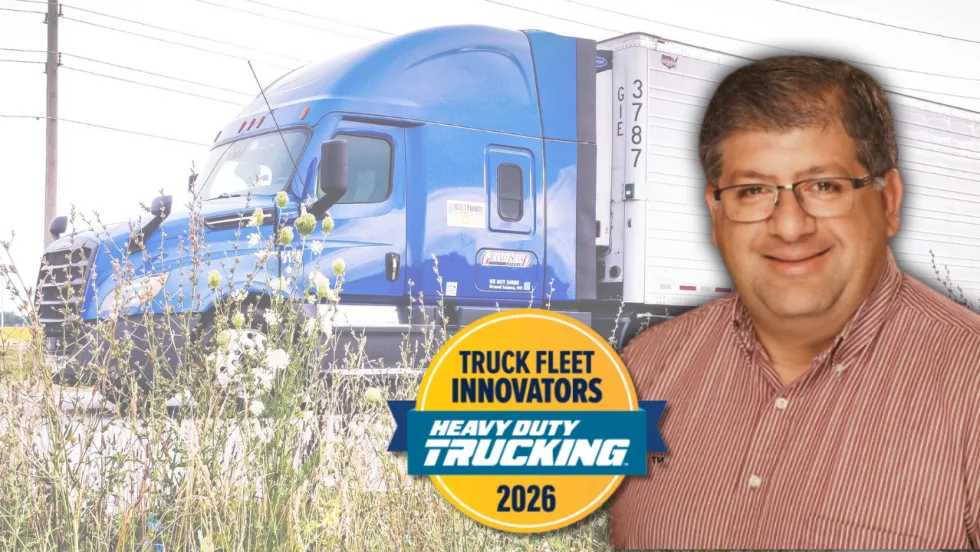
Deen Albert: Let Automation Do the Math, People Make the Decisions
HDT Truck Fleet Innovator Deen Albert makes sure people are still at the heart of operations at Grand Island Express, even while adopting artificial intelligence tools. AI-assisted dispatch helped boost revenue 25% with the same number of trucks.
Read More →
Trimble’s New AI Agent Takes Aim at Fleet Back-Office Busywork
Arc Agent works across Trimble TMS products to automate repetitive tasks such as freight orders, maintenance, invoices, fuel costs and more.
Read More →
How HDT’s 2026 Truck Fleet Innovators Are Rethinking Fleet Operations
Meet five trucking leaders who are challenging assumptions, solving operational problems, and putting innovative ideas to work.
Read More →