




State Truck Fleet Benefits from Clean Diesel
The introduction of new technology clean diesel truck engines and emissions control systems into Pennsylvania's trucking fleet over the last five years is now at a 35% level, yielding significant emission reductions and substantial fuel savings, according to new research commissioned by the Diesel Technology Forum.

Image courtesy of Diesel Technology Forum
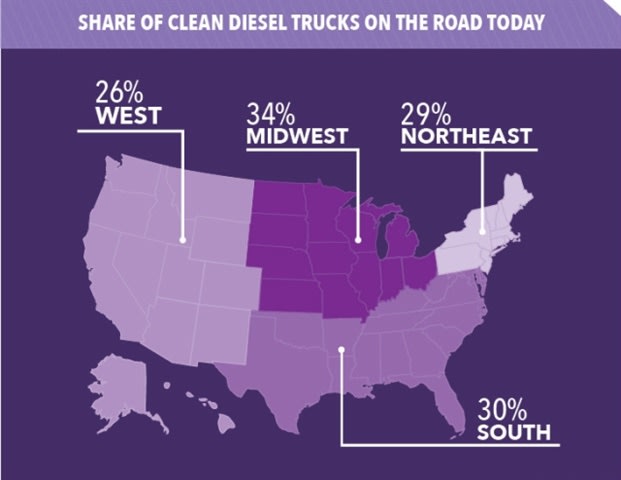
Image courtesy of Diesel Technology Forum
The introduction of new technology clean diesel truck engines and emissions control systems into Pennsylvania's trucking fleet over the last five years is now at a 35% level, yielding significant emission reductions and substantial fuel savings, according to new research commissioned by the Diesel Technology Forum.
"Almost 3 million heavy-duty diesel commercial vehicles introduced in the U.S. from 2011 through 2016 now on the road powered by the latest generation clean diesel engines, and these trucks have delivered important benefits in the form of cleaner air, fewer carbon dioxide emissions, and dramatic fuel savings. Over a five year period, the newest generation commercial vehicles have saved 4.2 billion gallons of diesel fuel, and reduced 43 million tons of carbon dioxide (CO2), 21 million tons of oxides of nitrogen (NOx), and 1.2 million tons of particulate matter," said Allen Schaeffer, executive director of the Diesel Technology Forum.
"Because diesel overwhelmingly dominates the heavy-duty truck sector and is also the number one power source for medium-duty vehicles, the transition to newer generations of clean diesel technology (2011 and later MY) is significant. The 30% national average is up from just 25.7% last year. The research also estimated that significant further benefits will accrue to communities across the country as more of these newer generation clean diesel trucks enter into service.
"Pennsylvania, with 35% of commercial trucks equipped with the latest generation clean diesel technology ranks sixth and exceeds the national average adoption rate of 30%. These new technology clean diesel trucks have saved 222 million gallons of diesel fuel, resulting in 2.2 million fewer tons of C02 while slashing 900,000 tons of NOx emissions. If the penetration rate of new technology clean diesel trucks in Pennsylvania were to accelerate to that of leading states (Indiana, 51%), an additional 34 million gallons of fuel and 340,000 tons of greenhouse gas emissions could be saved while eliminating an additional 46,000 tons of oxides NOx. Getting more clean diesel trucks on the road will bring cleaner air faster to all Pennsylvania communities than any other strategies," said Schaeffer.
The benefits research was conducted by IHS Markit, a global technical marketing research firm. State rankings data is based on Diesel Technology Forum (DTF) analysis of IHS vehicles in operation in operation data representing Class 3-8 diesel trucks from Model Year 2011 through 2016 in all 50 states and the District of Columbia through December 31, 2016.
"The U.S. trucking fleet is transitioning to newer clean diesel technology which means immediate fuel savings, lower greenhouse gas emissions, and cleaner air. This newest generation of clean diesel trucks have NOx emissions that are 99% lower than previous generations along with 98% fewer emissions of particulate matter, resulting in significant clean air benefits throughout the U.S. Beginning in 2011, all heavy-duty diesel trucks sold had to meet NOx emissions of no more than 0.20 grams per brake horse-power hour (g/BHP-hr.). This is in addition to particulate emissions levels of no more than 0.01 grams per brake horse-power hour (g/HP-hr.) established in 2007.
"Achieving these substantial emissions reductions and efficiency advancements were, in part, the result of the collaboration of the nation's leading truck and engine manufacturers working with the Department of Energy and 21st Century Truck Partnership's 'Super Truck' program," Schaeffer said. "While the intent of this valuable program is to push the margins of research engineering efficiency, it is clear that demand is leading many of these strategies to be integrated into the commercial truck fleet and contributing to real-world emissions reductions and fuel savings."
In addition to these substantial societal benefits, a Class 8 tractor-trailer sized vehicle powered by the latest generation clean diesel engine will save the owner 960 gallons of fuel each year, relative to the previous generation of technology. When these benefits are compounded over the entire population of the clean diesel fleet, the 4.2 billion gallons of fuel saved between 2011 and 2016 is equivalent to almost 40% of the strategic petroleum reserve," Schaeffer said.
More Fuel Smarts

How Volvo Updated Its D13 for EPA 2027 [Watch]
Volvo’s updated D13 promises lower emissions without sacrificing performance or fuel economy. Take a closer look at what changed inside the engine in this HDT Spotlight video.
Read More →
Diesel Price Spike Shortens Payback for Natural Gas Trucks, Report Says
Energy Vision estimates fleets could recover the higher purchase price of an RNG-fueled Class 8 tractor in 1.3 to 2.8 years under current fuel-price scenarios.
Read More →
Calstart Becomes Catalyst Mobility, Reflecting Broader Focus
Calstart is now Catalyst Mobility, reflecting the nonprofit’s growing national role in clean transportation, including zero-emission trucks, infrastructure and incentive programs.
Read More →

Record Diesel Prices Squeeze Trucking Fleets
Average U.S. diesel prices have climbed to nearly $6 a gallon, surpassing the 2022 record as tight refinery capacity and Middle East disruptions keep fuel costs elevated.
Read More →
How Fuel Delivery Shapes Engine Performance
Fuel delivery depends on more than what happens at the injector. For fleet, maintenance and technical professionals, looking at the full path from pump to injector can provide useful context for understanding engine performance.
Read More →
East Coast Port Launches $45M Electric Truck Push
The Port Authority of New York and New Jersey announced millions in incentives for zero-emission drayage trucks, yard tractors, and new charging hubs near the port.
Read More →
California Bill Could Shed Light on Electric Truck Prices
Why do battery-electric Class 8 trucks remain so expensive? A California bill headed to Gov. Gavin Newsom would give fleets and state agencies more visibility into what manufacturers charge.
Read More →
Detroit Opens Orders for EPA 2027 Engines
Detroit isn’t starting from scratch to meet EPA 2027 diesel emissions standards. Its Gen 6 DD13 and DD15 engines keep much of today’s platform while updating the fuel and aftertreatment systems.
Read More →
Zero-Emission Truck Corridor Planned for West Coast
California, Oregon, Washington, British Columbia and Baja California are coordinating plans for truck charging and hydrogen fueling from Canada to Mexico.
Read More →
A Closer Look at Kenworth’s Electric T880E Vocational Truck [Video]
Learn more about Kenworth's T880E battery-electric vocational truck at the Paccar Technical Center, including its range, applications, upfitting considerations, and PTO options, in this HDT Spotlight video.
Read More →