




Salem Police, ODOT Target Bad Driving Around Trucks
Law enforcement officials are cracking down on aggressive car and truck drivers on Interstate 5 in the Salem area this week
Law enforcement officials are cracking down on aggressive car and truck drivers on Interstate 5 in the Salem area this week.
Oregon is continuing its new safety campaign targeting unsafe driving. The Ticket Aggressive Cars and Trucks campaign, or TACT, is designed to reduce truck crashes through education and enforcement. Specifically, TACT focuses on aggressive driving in the vicinity of large trucks.
On Aug. 18, the Salem Police Department and Oregon Department of Transportation's Motor Carrier Division are doing a TACT enforcement exercise on Interstate 5 in the Salem area. Law enforcement officers will be riding in semi-truck supplied by ODOT looking for car and truck drivers who engage in risky driving behavior such as speeding, tailgating, and changing lanes unsafely.
"It is more than just an enforcement effort, TACT also involves educating drivers about how to stay out of trouble," said Sgt. Tony Moore with Salem Police Department, who is coordinating law enforcement participation in the campaign. "The bottom line objective is to reduce truck crashes, particularly those in which the car driver is at-fault, and reduce the number of people injured or killed on Oregon highways."
One key TACT campaign message motorists will see over and over again is, "Leave More Space." In fact, people in the Salem area have probably noticed the signs with that message along I-5 and may have seen advertisements with that message in movie theaters. There is even a video on YouTube about safely maneuvering around big rigs.
Here are the key messages that the TACT campaign will emphasize:
* Don't cut off trucks. For safety's sake, it's recommended that car drivers maintain one car length for every 10 miles per hour of speed.
* Don't tailgate. Unlike cars, trucks have large blind spots behind them. Also, car drivers who tailgate trucks can't see traffic ahead. If the truck brakes suddenly, the car driver has no time to react and no place to go.
* Allow trucks plenty of room. Both car and truck drivers must be especially careful when entering a highway or merging with traffic.
* Don't speed. Speed is a leading factor in fatal crashes in Oregon.
Research shows that most truck vs. car crashes could be avoided if drivers knew how to steer clear of unsafe situations. With this campaign, ODOT and Salem Police Department hope to increase awareness, encourage safer driving practices, and make a positive change in the risky driving behaviors of motorists.
The Oregon TACT campaign is modeled after a successful operation conducted in Washington.
More Safety & Compliance
A Camera Isn't a Safety Program. Here's What Brokers Are Screening for Now
Footage alone may not be enough to pass broker vetting processes. Here's what counts as a defensible safety program now.
Read More →
Marijuana and Trucking’s Drug-Testing Dilemma
Marijuana is getting stronger, laws are changing, and drug tests still can’t reliably establish impairment. What does that mean for truck drivers and the fleets that employ them?
Read More →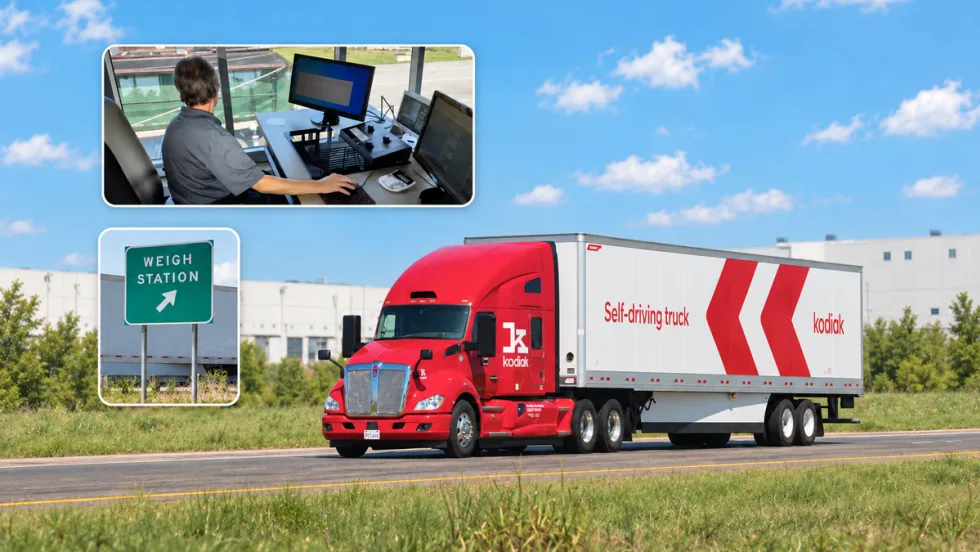
PrePass, Kodiak Connect Driverless Trucks to Roadside Enforcement
The system will allow enforcement agencies to verify Enhanced Inspection information and decide whether Kodiak’s autonomous trucks can bypass roadside screening sites.
Read More →

From One Generation to the Next: How Mentorship Builds Safer Truck Drivers
After three decades in trucking, Harold Perry shares what he's learned about driver safety, mentorship, and helping the next generation build confidence behind the wheel.
Read More →
FMCSA Pauses Biennial-Update Enforcement Amid Motus Transition
Carriers whose updates were due on or after June 1 have more time, while FMCSA works to stabilize its new registration system and warns of phishing sites impersonating its new carrier registration system, Motus.
Read More →
ZF Expands Commercial Vehicle Push in North America
ZF is expanding its North American commercial-vehicle presence with new transmission applications, electrification, trailer technology and autonomous-driving systems.
Read More →
Truck Drivers Need More Than Another Alert
Fleets have more visibility into truck health, safety events, and driver activity than ever. The next challenge is turning all that information into useful guidance for the person who has to decide what to do next.
Read More →
Tesla Wants a Self-Driving Semi. Are Cameras Enough?
Could Tesla’s camera-only autonomous driving technology work on an 80,000-pound Semi? In this commentary, HDT's Deborah Lockridge takes a look at Tesla, Cybercab, and how autonomous trucks see the road.
Read More →
What DOT’s Automated Vehicle Strategy Means for Trucking
The U.S. Department of Transportation issued a new automated-vehicle strategy that outlines plans for driverless-truck regulations, cross-state freight corridors, and federal safety standards.
Read More →
NYC Expands Speed, Pedestrian Safety Tech Across Fleet
New York City is expanding intelligent speed assistance and pedestrian-alert systems across its municipal fleet, moving the technologies from pilot programs into vehicle procurement and retrofit requirements.
Read More →