





Related: The Ethics of Autonomous Vehicles
SAE International Clarifies Levels of Driving Automation
SAE International has updated its chart outlining the six levels of automation for the vehicle industry to make it simpler to understand for consumers.
December 13, 2018
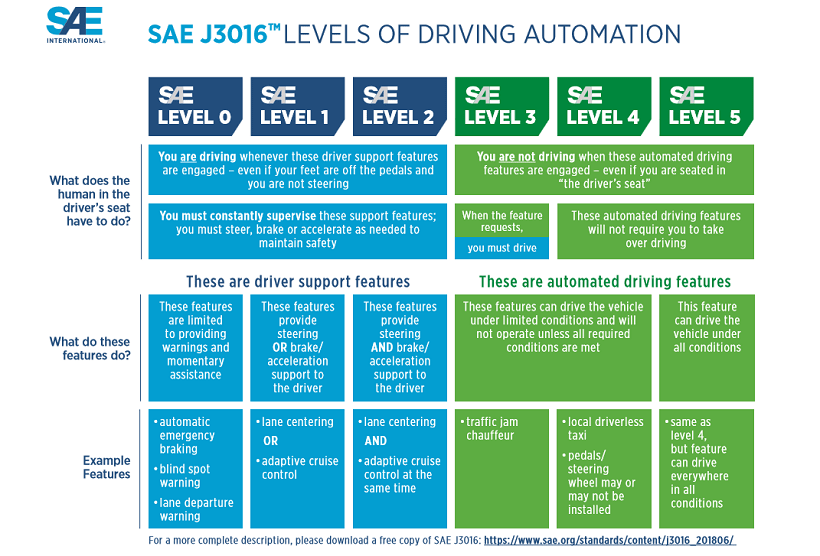
SAE International has updated its chart outlining the six levels of automation for the vehicle industry to make it simpler to understand for consumers.
Source: SAE International
2 min to read
SAE International, an organization that develops standards for engineers in various industries, has released a new visual chart for its J3016TM "Levels of Driving Automation" standard that defines the six levels of driving automation.
The new chart is designed to be easier to understand, using consumer-friendly terms and definitions to describe the levels of automation from no automation to full automation.
When new technologies are described as being autonomous vehicles or self-driving, they often have differing real-world capabilities. Some may only be able to stay in a lane and maintain speed, but still require a driver while more complex systems can manage every part of driving without assistance at any point.
The SAEJ3016 guidelines were issued in part to help with forming a regulatory framework and best practices for manufacturers and other entities to follow to ensure safe design, development, testing and deployment of highly automated vehicles.
The six levels of automation are divided into two categories, designating technologies that do require human superivsion and those that don't The new chart uses blue and green colors to visualize that key distinction. Under each level is a short description of the capabilities of each category as well as examples.
The U.S. Senate is currently trying to pass legislation that would create a regulatory framework for self-driving vehicles. As it stands today, the U.S. Department of Transportation uses J3016's six levels of automation for on-road motor vehicles in its "Federal Automated Vehicles Policy", making the document the de facto global standard adopted by stakeholders in the automated vehicle technology.
More Safety & Compliance

Kodiak Lines Up Fleets for Driverless Trucking
An agreement for 75 trucks, a new Texas freight lane, and progress on safety validation move Kodiak closer to its planned driverless highway launch.
Read More →
More Trailer Data Through the Same Seven-Way [Video]
Can trucking’s standard seven-way connector handle more cameras and trailer data? Grote’s Adam Slade shows HDT how the company is using new technology with its 4See trailer system, not only to add a new backup camera but also to expand other capabilities — without adding another connection.
Read More →
PrePass Intelligence Mines Fleet Bypass, Toll and Safety Data
PrePass Intelligence helps fleets measure bypass savings, flag potential toll overcharges, and spot suspicious transactions by combining data from separate systems.
Read More →
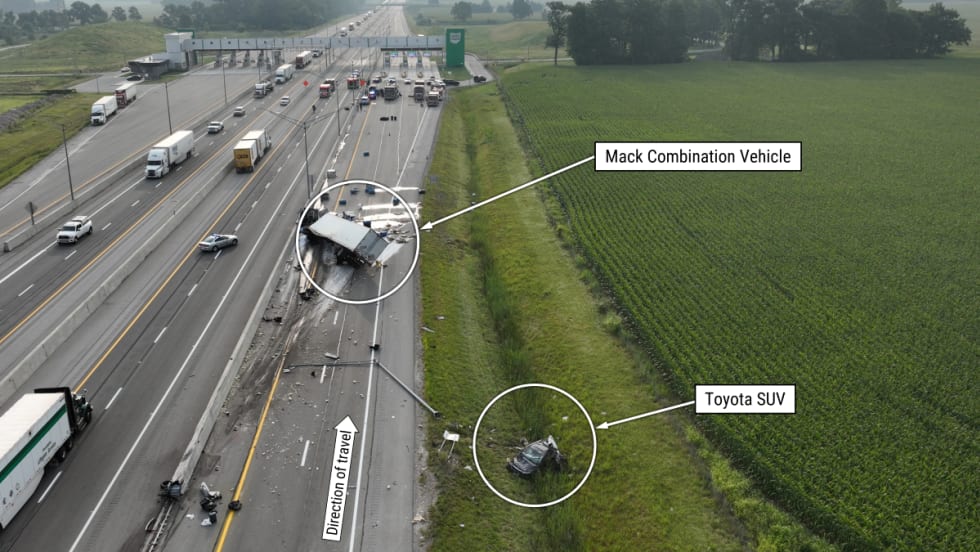
Fatal Crash Exposes Toll Plaza Risks
An NTSB investigation found that last-minute lane changes and large speed differences at an Ohio toll plaza created a hazard the truck driver couldn't avoid in time.
Read More →
When Language Stops the Truck: The Return of ELP Out-of-Service Orders
English language proficiency rules for commercial drivers aren’t new, but renewed out-of-service enforcement has raised the stakes. Here’s what carriers need to know before a driver reaches a roadside inspection.
Read More →
Sponsored•October 6, 2026
A Camera Isn't a Safety Program. Here's What Brokers Are Screening for Now
Footage alone may not be enough to pass broker vetting processes. Here's what counts as a defensible safety program now.
Read More →
Marijuana and Trucking’s Drug-Testing Dilemma
Marijuana is getting stronger, laws are changing, and drug tests still can’t reliably establish impairment. What does that mean for truck drivers and the fleets that employ them?
Read More →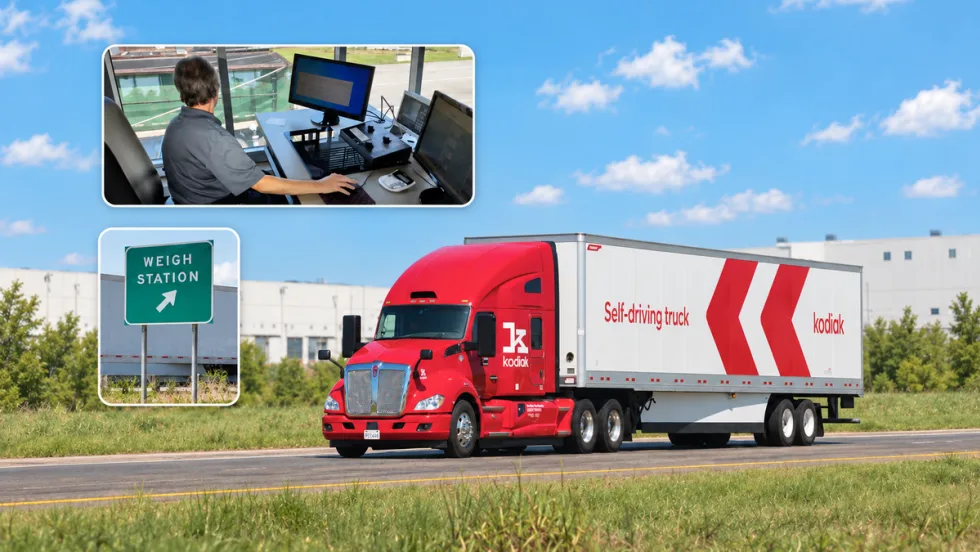
PrePass, Kodiak Connect Driverless Trucks to Roadside Enforcement
The system will allow enforcement agencies to verify Enhanced Inspection information and decide whether Kodiak’s autonomous trucks can bypass roadside screening sites.
Read More →
From One Generation to the Next: How Mentorship Builds Safer Truck Drivers
After three decades in trucking, Harold Perry shares what he's learned about driver safety, mentorship, and helping the next generation build confidence behind the wheel.
Read More →
FMCSA Pauses Biennial-Update Enforcement Amid Motus Transition
Carriers whose updates were due on or after June 1 have more time, while FMCSA works to stabilize its new registration system and warns of phishing sites impersonating its new carrier registration system, Motus.
Read More →