




Russian Truck Show Highlights Fast-Growing Market
During five days in September, the commercial vehicle show COMTRANS in Russian capital Moscow displayed all possible offerings in this rapidly emerging market from Russian, Western, Japanese and even Chinese manufacturers
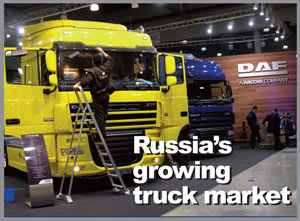
Paccar subsidiary DAF, shown here at COMTRANS, is establishing itself on the Russian market with a new office in Moscow, just opened.
During five days in September, the commercial vehicle show COMTRANS in Russian capital Moscow displayed all possible offerings in this rapidly emerging market from Russian, Western, Japanese and even Chinese manufacturers.
The exhibition included heavy and light duty trucks for most applications, buses and coaches, trailers and bodies, vans, special vehicles, components and systems as well as various services for the transport and commercial vehicle industry. Wabco, for instance, unveiled its electronic tire pressure monitoring technology.
This was the 11th time for the show. The 450,000 square feet of exhibition space had doubled from last year, while the number of exhibitors grew by 70%, with more than 320 companies participating. These numbers clearly show the growth of the commercial vehicle market in Russia and make COMTRANS the biggest truck- and transportation show in Europe for 2011.
It took place on Moscow's most modern trade fairground, the Crocus Exhibition Center, which was completed in 2006.
Of course the domestic Russian OEMs were there, such as Daimler joint-venture partner Kamaz, GAZ Group, Amo Zil, Nefaz, Tagaz, Maz and others. So were more well-known names to the Western world, including Volvo, Scania, Mercedes-Benz, Renault, Ford, Iveco, Fiat, Hino, Isuzu and Hyundai. And from China, Dong Feng, FAW (First Auto Works) and Foton had trucks displayed.
The Russian market
For the first six months of 2011, Russia produced 92,795 trucks, which is 46% more than for the same period the previous year. Truck sales for the first six months of 2011 increased by 86% to 142,400.
The most rapidly growing segment was import of new trucks, which increased 2.7 times to 52,630 trucks - which extended a market share to 37 percent. Sales of imported second-hand vehicles rose by 52.6 percent to 7,110 while this part decreased by 1.1 point - to 5%. Because of a special custom duty implemented a few years ago, the used truck import has decreased dramatically.
Presently Euro 3 is the norm, but Euro 4 will be the standard of new vehicles by January 1, 2012. Western Europe at that time starts moving from Euro 5 to Euro 6 - which is very close to EPA 2010.
All western OEMs with a presence on the Russian market have or are about to start local production due to the high custom duties on imported trucks.
Daimler has a joint venture (15% stake) with the biggest domestic OEM Kamaz. The new Kamaz-5490 tractor displayed at the show features for instance a cab sourced from Mercedes Axor. The Actor and the Unimog from Daimler are built in Naberezhnye Chelny.
Volvo
Volvo's presence in Russia goes back to 1969, when the brand was officially registered in the then-USSR. There are currently some 60,000 Volvo trucks in Russia.
In 1973, Volvo Trucks delivered 100 tractors to USSR for international transports. That was the first delivery of such a large amount of western trucks. In 2003 a Volvo factory in Zelenograd opened for CKD-assembly (assembly of "completely knocked down" kits.) 2008 was a record year in sales with 5,800 new Volvo trucks sold.
In January 2009, in spite of financial unrest, the company inaugurated its plant in Kaluga as the first foreign full-scale truck factory in Russia. Annual capacity is 10,000 Volvo trucks.
At COMTRANS, Volvo displayed seven models, all with Russian names of winds like Taifun, Uragan, Briz, Kasatka, Vikhr and Ocean. It also showed off its most powerful Volvo FH16, which produces 750 horsepower, with torque of slightly over 2,618 pounds-feet.
Scania
Scania had 12 vehicles, eight inside and four outside, among them an interesting 6x4 dump truck with a 23 square-meter body. The P420's legal GVV is 32 ton, increased to 40 ton when running in a mine etc. It has twin steering axles.
Scania runs a truck plant in St. Petersburg, formerly Leningrad. The company has delivered vehicles to this part of the world for more that 100 years. This year Scania may become the market leader in sales of new heavy trucks in Russia with already in August more than 4,000 trucks delivered to customers. That is some 31% of the market.
Paccar
Paccar's subsidiary DAF of Netherlands recently opened a Moscow office to further expand the make's presence on the Russian market. Together with its dealers Van Hulle (VH) from Moscow and Lengo from Saint Petersburg, DAF exhibited the CF85 tractor for regional applications, as well as the XF105 models for long-distance haulage.
MAN Trucks
In the first eight months of 2011, MAN (like Scania a part of the Volkswagen Group) delivered 4,282 trucks over 6 tons and 152 coaches to Russia. The number of units sold in the full year 2011 is set to be about twice as high as in 2010. This will make Russia the second largest market for MAN Truck & Bus after Germany. MAN is currently setting up a truck production plant in St. Petersburg. As early as 2012 a quarter of the trucks it sells in Russia are expected to be produced locally
GAZ
The Ural "crew bus" from the vast GAZ-group (headed by the Swede Bo Inge Andersson - a former General Motors VP) is a 6x6, cab-over-engine, YaMZ-2362 engine designed for the eternal tundra on the Siberian oil fields in temperatures ranging from 50 below to 104 degrees on all types of roads and terrain. Its 412-horsepower, six-cylinder YaMZ-650 Euro-4 diesel engine is produced under a Renault-Trucks license. The main components, such as powertrain, transmission, three-circuit brake system with ABS, lighting and others, are supplied by leading West European manufacturers to ensure high reliability.
Summary
Russia has come a long way from the Wild West/Gangland era that characterized the initial post-collapse years of the former Soviet Union. Still, a very large part of the truck population is very old. And the traffic density in and around Moscow is terrible.
So modernizing the country and building the economy will take lots of new commercial trucks and vans to get goods and services to the market. But as one western CEO expressed in his presentation: Everything takes a bit longer here.
More Equipment

Electric Yard Tractors Move Beyond Pilots
Operating-cost savings have overtaken sustainability goals as the leading reason surveyed fleets are adopting battery-electric terminal tractors, according to new NACFE research.
Read More →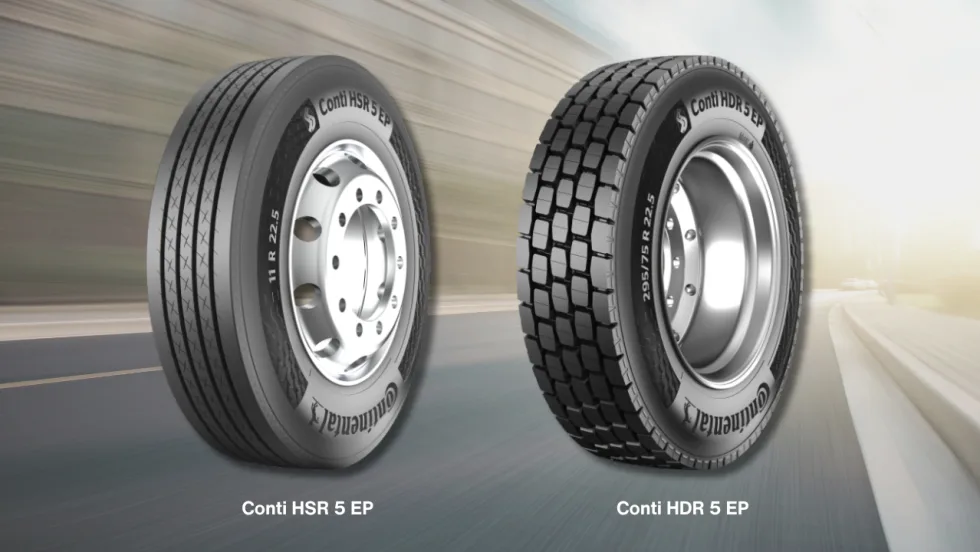
Continental Introduces New Regional Truck Tires
Continental says its new Generation 5 steer and drive tires for regional operations offer longer tread life, with estimated mileage gains of 22% and 19%, respectively.
Read More →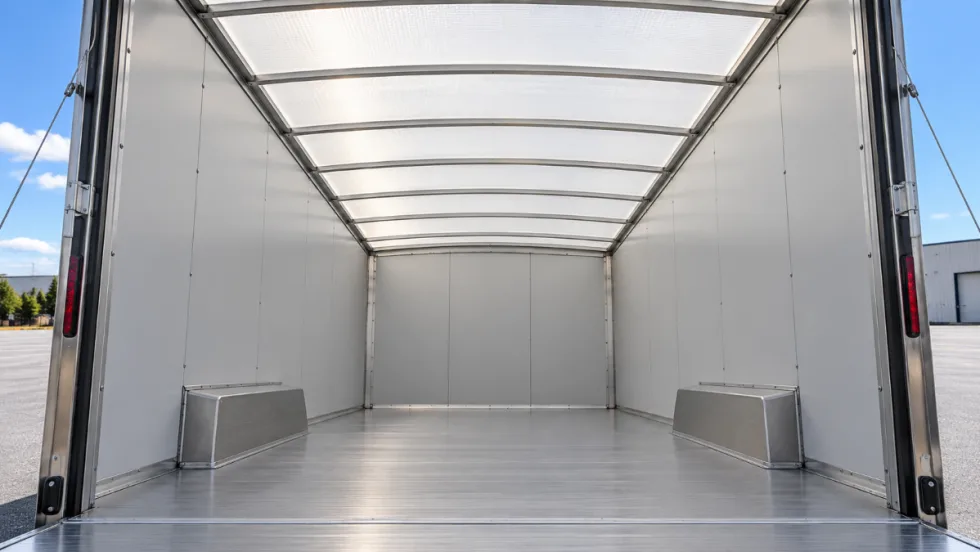
Tekmodo Introduces CargoBright Brand for Translucent Trailer Roofs
CargoBright is designed to diffuse daylight across the cargo area while performing as a working vehicle roof.
Read More →
Fleet Economics Shape Electric Truck Outlook
ACT Research expects costs, charging infrastructure, and technology improvements to drive zero-emission commercial vehicle adoption as federal regulations and incentives retreat.
Read More →
Kodiak Targets Dallas–Houston for Driverless Trucks
The company says its autonomous trucks are completing the I-45 run without a safety observer taking control. It plans to remove the observer by the end of 2026.
Read More →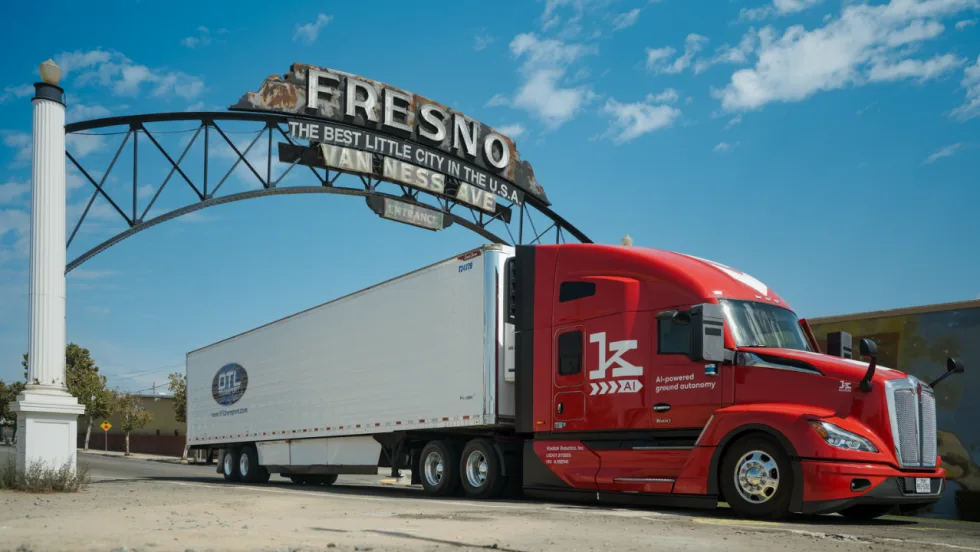
Kodiak Hauls Produce in California Autonomous Truck Pilot
Kodiak AI and DTL Transport have begun hauling produce between Fresno and Los Angeles under California’s new rules for testing heavy-duty autonomous trucks. A safety driver remains behind the wheel.
Read More →
Used-Truck Remarketing Math Is Changing
Used-truck value is no longer just a concern at trade-in. Decisions made throughout a truck’s first life can influence what it’s worth years later.
Read More →
How Volvo Updated Its D13 for EPA 2027 [Watch]
Volvo’s updated D13 promises lower emissions without sacrificing performance or fuel economy. Take a closer look at what changed inside the engine in this HDT Spotlight video.
Read More →
Michelin Tire Improves Efficiency and Durability for Regional Fleets
The Michelin X Multi Energy D2 is a regional haul drive tire engineered to help fleets improve fuel efficiency, durability and traction in demanding stop-and-go operations.
Read More →
ZF Expands Commercial Vehicle Push in North America
ZF is expanding its North American commercial-vehicle presence with new transmission applications, electrification, trailer technology and autonomous-driving systems.
Read More →