




Rules Author Speaks: The Thinking Behind The HOS Rules
The current proposal to revise the hours of service regulations probably is the most controversial undertaking in the history of truck safety rules. The demand for reform, which could not be denied, was based more on anecdotal
The current proposal to revise the hours of service regulations probably is the most controversial undertaking in the history of truck safety rules.
The demand for reform, which could not be denied, was based more on anecdotal evidence than on an objective analysis. But the anecdotal evidence was quite persuasive.
Four teenagers are slaughtered in their car as they sit stalled on the shoulder of a highway – because the driver of an 18-wheeler is asleep while his vehicle careens off the road. A mother and her young daughter are killed as they wait in line at a toll booth – because the sleeping driver of a tractor-trailer has not noticed the slowing traffic and overrides their van at full speed. When these and other hair-raising incidents occur, the people devastated by the loss of these innocents rightly demand protection for other users of the highway lest they suffer the same consequences.
Issues are raised. Is it possible for government to exercise the kind of behavioral control over truck operators to substantially reduce the risks, particularly when there is such a broad mix of people and equipment on the road? Is it practical to separate commercial traffic from other traffic? But these issues are secondary. Something has to be done to cure the problem of commercial drivers asleep at the wheel.
The hours of service rules have become so ingrained in companies and drivers that they are part of the culture. That does not mean there is anywhere near full compliance. Unfortunately, the culture also accepts avoidance when compliance is inconvenient.
Virtually everyone with any interest in the trucking industry has some criticism of the existing rules, but there is anything but unanimity about what should replace them. Working under the assumption that everyone would find some fault in any new proposal, we focused on a plan whose main components would be generally accepted, so differences over particulars could be resolved in a less hysterical environment.
For that reason we began the new proposal with an analysis of the history of the existing rules, as well as current knowledge and practical realities. We prepared a history of the rules dating back to 1935, digested the exhaustive compilation of research and analytical studies related to driver fatigue and alertness, and pored through the comments we received in response to an advanced notice of proposed rulemaking published in November of 1996.
Much of this material can be found in the preamble to the proposed rules, which is quite lengthy. Its length should not discourage anyone – the point is to assure everyone that we gave full consideration to a multitude of related issues.
The preamble provides a full analysis of the problem, including the data on fatigue-related, truck-involved crashes. And it sheds some light on a pivotal 1962 amendment, the only really significant change in over 60 years, which is at the heart of one of the basic flaws in the existing rule – the 18-hour cycle.
The preamble also describes how we developed the proposal, and provides a detailed analysis of each section. Volumes could be written about the benefit-cost analysis presented in the preamble, and I won’t attempt to describe it here. Suffice it to say, this is a numbers-crunching exercise required by both law and executive order to safeguard the proposal from an economic attack.
Because of a particularly controversial element of the proposal – the requirement for electronic onboard recorders – we devoted considerable attention to the issue of compliance verification. A previous proposal related to the use of supporting documents for verification purposes is included in this proposal.
Our objective was to gain general acceptance of the basic premise of the proposal by assuring that its safety goal is irrefutable. There has to be an obvious and logical link between the causes of the problem and the solutions.
Simply stated: many crashes occur as a result of driver error; driver error often is the by-product of inattention; inattention can easily be linked to fatigue; the fatigue which causes inattention frequently stems from sleep deprivation; and sleep deprivation obviously can be related to working conditions of drivers. Therefore, the proposal basically aims to create a work environment that gives drivers the opportunity to obtain the sleep they need to avoid the consequences of sleep deprivation.
To be generally accepted, the proposal has to be supported by the known science on fatigue. Therefore, we developed options based on our own interpretation of the multitude of scientific studies we had collected. We also asked a panel of recognized experts in sleep research to review the various options we had under consideration. This proved to be a very valuable investment. The panel developed a list of criteria against which to evaluate the options.
The proposal also has to make sense. There has been so much criticism of the existing rules, justifiable or not, that insistence on compliance was made to appear foolhardy. Not only do the rules have to make sense – the logic of them has to be apparent to the carriers and the drivers. The rules will not be effective unless people live by them.
Nor does it make sense to compel every type of operation in the broad industry to comply with the same set of rules, or to have two sets of limitations – one on driving and one on working.
The science clearly suggests that sleep deprivation, including lack of sleep in the principal circadian trough – midnight to 6:00 AM – is the principal cause of drowsiness. Of course, we are more concerned about the drowsiness occurring when the driver is behind the wheel, so the greater exposure to risk is accounted for in the proposed rules. We attempted to link similar operations and to provide a sensible set of rules for each category. This should get rid of the need for most of the present exceptions, and better demonstrate the relationship of the rules to the risks inherent in the different operations.
Finally, the rules have to be enforceable. They must be conducive to compliance. They must help us verify compliance. And they must provide a better way to identify the kinds of violations that readily contribute to accidents.
The rules allow for a shift from what sometimes may have appeared to be an obsession with accurate records to identification of substantive violations.
Perhaps the most ambitious objective of the proposed rules is the empowerment of drivers to play a much stronger role in enforcement. There are several provisions that contribute to that objective, the most important being an outline of their responsibilities and the remedies available to them if they are pressured to violate the rules.
Paul Brennan, former Director of Research and Standards at the Office of Motor Carriers, is the principal author of the hours of service proposal. He retired from the Department of Transportation at the end of last year. This is the first of two essays by Brennan on DOT’s just-released proposal. Click here for Part II.
More Drivers

Competition Heating Up for Truck Drivers
New report reveals rising driver hiring costs, the return of sign-on bonuses, growing AI advantages, and the operational factors shaping driver retention.
Read More →
How Fraley & Schilling Improved Logbook Compliance by Over 50%
Fraley & Schilling needed a way to close a compliance workflow gap in its ELD system without adding more work from driver training, reminders, and back-office follow-ups. It found the answer in a custom driver app.
Read More →
Volvo Goes Gaming
Volvo has roared into American Truck Simulator with two new flagship trucks.
Read More →
What the Best Fleets to Drive For Teach About Driver Retention
Survey fatigue, AI-powered routing, owner-operator expectations, and the decline of social media all emerged as themes from this year's Best Fleets to Drive For program.
Read More →
Driver Retention Lessons From the Best Fleets to Drive For
What separates trucking's best workplaces from the rest? Jane Jazrawy shares the biggest lessons from this year's Best Fleets to Drive For program on driver retention, communication, AI, and workforce trends on the HDT Talks Trucking podcast.
Read More →
Farewell, CDL: Why I'm Giving Up My Commercial Driver's License
After more than 20 years as a CDL holder, HDT Executive Editor Jack Roberts is letting his commercial license expire. Not because he wants to — but because trucking's nuclear verdict crisis has made the risks of public-road test drives too great for editors, manufacturers, and everyone involved.
Read More →
How Top Trucking Fleets Improve Driver Retention [Video]
What do healthy snacks, optimized routing, and just picking up the phone have in common? They're all strategies the Best Fleets to Drive For are using to retain truck drivers.
Read More →
Trucker Path Adds Verisk CargoNet Theft Data to Navigation Platform
Trucker Path’s new cargo theft risk overlays give drivers and fleets visibility into high-risk areas, stolen commodity trends, and theft hotspots.
Read More →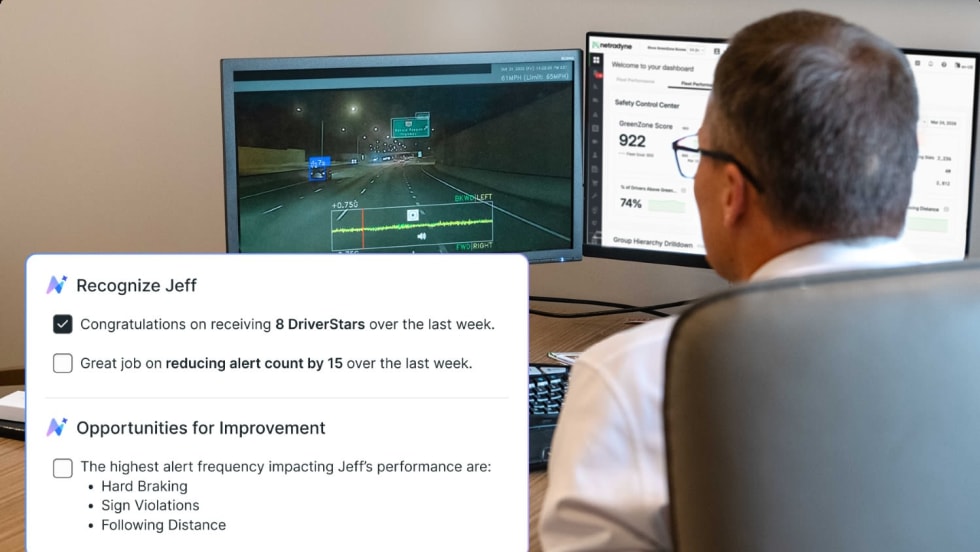
Netradyne Intelligence Uses New AI Agents to Automate Response to In-Cab Camera Data
The company called the next-generation in-cab camera safety platform "a fundamental shift from systems that report on what happened to systems that actively drive what should happen next."
Read More →
Why Truck Detention Keeps Costing Fleets Time and Money
A 2024 ATRI study found detention affects nearly 40% of truckload stops and costs the industry more than $15 billion annually. Despite the toll on drivers, fleets, and supply chains, the problem remains stubbornly persistent.
Read More →