




REG, J.B. Hunt Discuss Renewable Diesel, Biodiesel Strategies
During a webinar hosted by Renewable Energy Group, industry experts outlined the reasons fleets should consider switching to renewable diesel and biodiesel fuels.

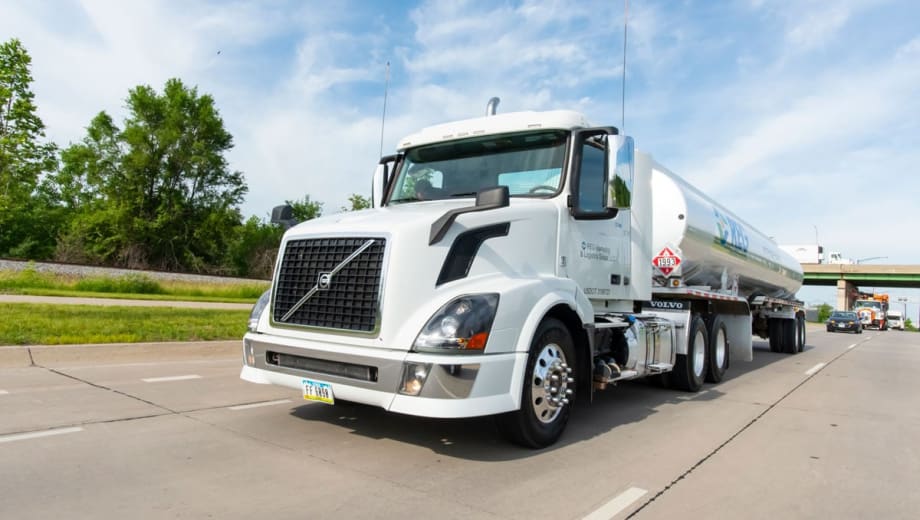
REG launched a new EnDura Fuels line of five bio-based diesel fuels.
File Photo: REG
Cleaner-burning and lower-emission fuels, such as biodiesel and renewable diesel, are helping transportation industries, including trucking and rail, meet their sustainability targets, explained Cynthia Warner, president and CEO of Renewable Energy Group, in a March 30 webinar.
“With advances in policy and increasing consumer awareness and demand for carbon reduction, fuels like biodiesel, renewable diesel and other renewable fuels are an important element of business strategy for every fuel-dependent entity,” Warner said, adding that a recent study revealed that 91% of fleet leaders feel significant pressure to set and meet aggressive sustainability goals.
The webinar, titled “Fueling a Sustainable Future,” featured speakers from various industries and was presented in conjunction with the launch of REG’s new EnDura Fuels line of five bio-based diesel fuels. These include PuriD, a next-generation biodiesel that REG said exceeds industry quality standards and enables customers to blend PuriD into renewable diesel at virtually any level and use higher biodiesel blends with petroleum diesel year-round.
“At REG, we’re helping to redefine what’s possible with the cleaner fuel solutions that we are unveiling, which allow us to immediately serve our customers and the world as the clean energy transition partner of choice,” Warner said. “Bio-based diesel can play an essential role in helping the entire transport industry reduce carbon emissions, and our customers are already seeing great success with our line of fuels, including our latest fuel innovation, PuriD, and our flagship product Ultra Clean BlenD.”

Cynthia Warner, president and CEO of the Renewable Energy Group gives opening remarks during a webinar on adopting renewable diesel and biodiesel fuel on March 30.
Screenshot
Even with many promising new fuel-saving and emissions-reduction technologies in development today, various transportation industries around the globe are calling for more consistent supplies of cleaner fuels now, Warner said.
“The need for renewable diesel and biodiesel is obvious and immediate,” she said. “While there are new technologies under development that can offer alternative, green, transportation in the future, the fact is that many of them are decades away from being produced at true scale and cannot deliver the emissions solutions we need today.”
How Trucking and Rail Companies Use Biodiesel, Renewable Diesel
The transportation industry is responsible for 29% of all U.S. carbon emissions, with trucking the largest contributor, noted REG Vice President of Sales and Marketing Bob Kenyon. He said biodiesel and renewable diesel generate the greatest reduction in fossil carbon emissions — up to 100% — when compared with other alternatives in the transportation sector.
To outline how leading transportation companies were using biodiesel and renewable diesel, Kenyon introduced Francois Belanger, director of the carbon transition team for Canadian National Railway, and Craig Harper, chief sustainability officer and executive vice president of J.B. Hunt.
Harper, who has over 30 years’ experience with J.B. Hunt, said that one of the most important steps the carrier has made in recent years to decrease its carbon footprint was its conversion to intermodal logistics, which he said is two-and-a-half times more efficient that conventional, long-haul fleet operations.
“Moreover, we maintain a new fleet,” Harper added. “The average age of our equipment is two-and-a-half years old. This insures we have the latest technology in our fleet which to reduce emissions and maximize fuel economy. Other J.B. Hunt initiatives, like our J.B. Hunt 360 freight-matching software, help us maximize overall fleet efficiency by reducing empty miles run by our trucks.”
Belanger said that long-haul freight transport by rail instead of trucks can reduce carbon emissions by up to 75%.
“That’s a good place to start,” he said. “And from that, Canadian National Railway is looking forward to a target of reducing our emissions by 40% by 2030. And renewable diesel fuel is a big building block toward helping us reach that goal.”
Belanger added that renewable diesel and biodiesel make a lot of sense from the railroad perspective because locomotives are such long-lived assets.
“We’ll be using these locomotives for many years to come,” he said. “And right now, we don’t know the impact these fuels will have on their performance in general and in inclement weather – which is a very real issue in Canada. So, we are currently conducting testing with these fuels to understand their long-term impact on our locomotives in general and their performance out in extreme conditions.”
Belanger added that these fuel trials began in February of this year and said the results so far have been promising.
Asked what advice he had for fleets considering moving toward greener diesel fuels, Harper was straightforward: “You have to get started,” he stressed. “You need to define and disclose what specific metrics you want to achieve with that shift, and then measure progress and set clearly defined goals toward them.”
Additionally, Harper said, education for employees and customers alike was vital.
“You need to make everyone involved aware of the current landscape and plan now for the advances that will offered by new technology in the future,” he added. “The bottom line is that you want to get started today, so you’re not playing catch-up when emissions crunch-time finally hits.”
More Fuel Smarts

How Volvo Updated Its D13 for EPA 2027 [Watch]
Volvo’s updated D13 promises lower emissions without sacrificing performance or fuel economy. Take a closer look at what changed inside the engine in this HDT Spotlight video.
Read More →
Diesel Price Spike Shortens Payback for Natural Gas Trucks, Report Says
Energy Vision estimates fleets could recover the higher purchase price of an RNG-fueled Class 8 tractor in 1.3 to 2.8 years under current fuel-price scenarios.
Read More →
Calstart Becomes Catalyst Mobility, Reflecting Broader Focus
Calstart is now Catalyst Mobility, reflecting the nonprofit’s growing national role in clean transportation, including zero-emission trucks, infrastructure and incentive programs.
Read More →

Record Diesel Prices Squeeze Trucking Fleets
Average U.S. diesel prices have climbed to nearly $6 a gallon, surpassing the 2022 record as tight refinery capacity and Middle East disruptions keep fuel costs elevated.
Read More →
How Fuel Delivery Shapes Engine Performance
Fuel delivery depends on more than what happens at the injector. For fleet, maintenance and technical professionals, looking at the full path from pump to injector can provide useful context for understanding engine performance.
Read More →
East Coast Port Launches $45M Electric Truck Push
The Port Authority of New York and New Jersey announced millions in incentives for zero-emission drayage trucks, yard tractors, and new charging hubs near the port.
Read More →
California Bill Could Shed Light on Electric Truck Prices
Why do battery-electric Class 8 trucks remain so expensive? A California bill headed to Gov. Gavin Newsom would give fleets and state agencies more visibility into what manufacturers charge.
Read More →
Detroit Opens Orders for EPA 2027 Engines
Detroit isn’t starting from scratch to meet EPA 2027 diesel emissions standards. Its Gen 6 DD13 and DD15 engines keep much of today’s platform while updating the fuel and aftertreatment systems.
Read More →
Zero-Emission Truck Corridor Planned for West Coast
California, Oregon, Washington, British Columbia and Baja California are coordinating plans for truck charging and hydrogen fueling from Canada to Mexico.
Read More →
A Closer Look at Kenworth’s Electric T880E Vocational Truck [Video]
Learn more about Kenworth's T880E battery-electric vocational truck at the Paccar Technical Center, including its range, applications, upfitting considerations, and PTO options, in this HDT Spotlight video.
Read More →