




QuikSkope Launches Freight Theft and Fraud Protection Tool
QuikSkope has launched a fraud protection tool that it says uses a five-step process that combines real-time information cross-referencing, pre-pickup load-level verification, geofencing and photo verification, efficient scanner technology, and reliable partner authentication.

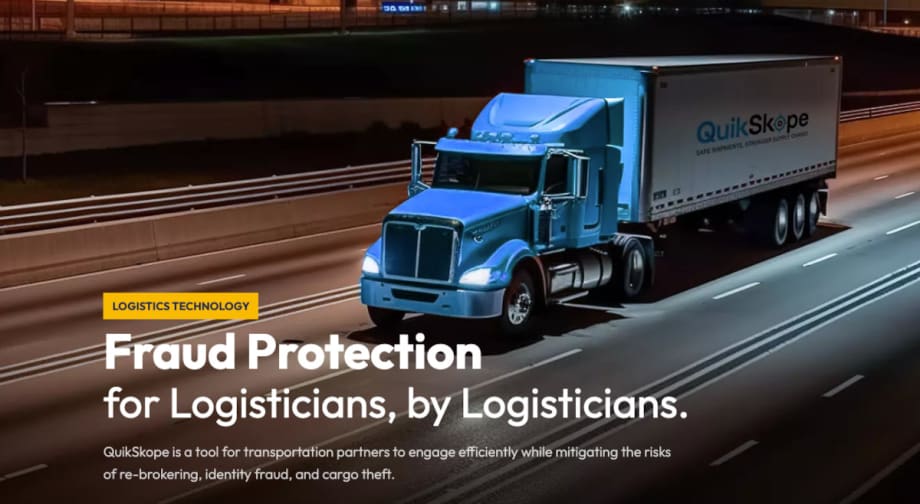
QuikScope is a new tool designed to mitigate the risk of identity fraud and cargo theft.
Photo: QuikSkope
QuikSkope, a new fraud protection tool, provides real-time, load-level verification using a simple link to ensure a secure chain of custody between all parties. The company said it is uniquely designed to provide real-time, load-level verification, and security protocols to combat fraud and criminal activity.
The company was launched by a group of logistics industry veterans with a combined 75 years of industry experience.
“Our goal with QuikSkope was to make it as simple as possible for drivers to navigate the verification process and for brokers and shippers to respond. Clicking a text message link and uploading a quick photo encourages compliance by eliminating the need to download and employ yet another application and ultimately secures the full chain of custody,” said Michael Fullam, QuikSkope founder.
QuikSkope uses a five-step process that combines real-time information cross-referencing, pre-pickup load-level verification, geofencing and photo verification, efficient scanner technology, and reliable partner authentication ensuring that every load is being moved by the correct individuals.
Driver Verification
QuikSkope said that using geofencing and photo verification allows shippers and brokers to confirm that a driver associated with the carrier hired is physically on-site at the pickup location before a pickup number is released.
In addition to QuikSkope’s verification process, if fraud is detected or verification fails, the company said it will not release the pickup number and customers will be notified via email.
The customer then can see the photo provided and intervene by manually approving the pickup number release or calling the carrier and notifying them they need to be replaced for failure to verify their identity. Bad actors will be reported and documented in real-time, the company said.
Double Brokering
As the logistics landscape undergoes transformational shifts, freight fraud has spread across the supply chain as new technology has made it easier for double-brokering to thrive, added QuikSkope.
A DAT Freight and Analytics study found that 16% of carriers reported being double-brokered in 2022. According to the Transportation Intermediaries Association, that accounts for about $800 million in losses each year for brokers, carriers, shippers, and consumers.
Individual Load Security
The company explained many of today’s supply chain verification tools are focused on vetting carriers before they are hired to verify that their identities are correct and they have the proper authority to operate.
QuikSkope said its goal is not to replace that process, but to add another layer of security at the individual load level to ensure the carrier and driver hired are the ones that are executing the load, reducing double brokering.
QuikSkope can be deployed on a per-load basis or through a subscription plan.
More Fleet Management

Color Match Smarter: Tools That Restore & Perform
For fleet managers and collision repair professionals keeping heavy-duty trucks on the road, getting the color right the first time isn't just about appearance — it's about efficiency, turnaround time, and bottom-line results. Discover how today's digital color tools are transforming the repair process from guesswork to precision.
Read More →
FMCSA Pauses Biennial-Update Enforcement Amid Motus Transition
Carriers whose updates were due on or after June 1 have more time, while FMCSA works to stabilize its new registration system and warns of phishing sites impersonating its new carrier registration system, Motus.
Read More →
2026 Blueprint for Countering Smarter Supply Chain Theft
Cargo theft is no longer just the cost of doing business. It's a multi-billion-dollar criminal enterprise exploiting vulnerabilities across your fleet, drivers, and supply chain.
Read More →


How Telematics Improves Visibility, Control, and Performance in Refrigerated Fleets
Explore how telematics help refrigerated fleets improve visibility, uptime, efficiency, compliance, and cargo protection across connected cold chain operations.
Read More →
What the U.S.-Canada Trade War Means for Trucking
Escalating U.S.-Canada tariffs could disrupt cross-border freight, reduce truck volumes, raise costs, and create new uncertainty for carriers on both sides of the border.
Read More →
What Are Trucking’s Top Concerns for 2026?
The American Transportation Research Institute wants to know what's worrying trucking fleet managers, drivers, and other stakeholders in its annual Industry Issues survey.
Read More →
American Trucking Associations Looks for a New Leader
ATA President and CEO Chris Spear abruptly left his job at the association on August 21, at a pivotal time for the trucking industry.
Read More →
Public Wi-Fi Cybersecurity Risks: How Truck Drivers and Fleets Can Protect Their Data
Public Wi-Fi can expose truck drivers and fleets to credential theft, malware, and other cyber threats. Here’s how to reduce the risk on the road.
Read More →
For Nicky Cupp, Fleet Innovation Starts With Frustration
HDT Truck Fleet Innovator Nicky Cupp turns everyday pain points at Fraley & Schilling into opportunities for better technology and smarter processes.
Read More →
Adam Buttgenbach’s Approach to Electric Trucks: Start With Where They Fit
HDT Truck Fleet Innovator Adam Buttgenbach helped PepsiCo build one of North America’s largest EV fleets by focusing on where electric trucks make operational sense.
Read More →