




Proterra EV Charging Solutions Enable Full Fleet Electrification for Commercial Vehicles
Developed in partnership with Power Electronics, the new Proterra charging systems offer transit agencies and fleet operators a customizable vehicle charging solution.
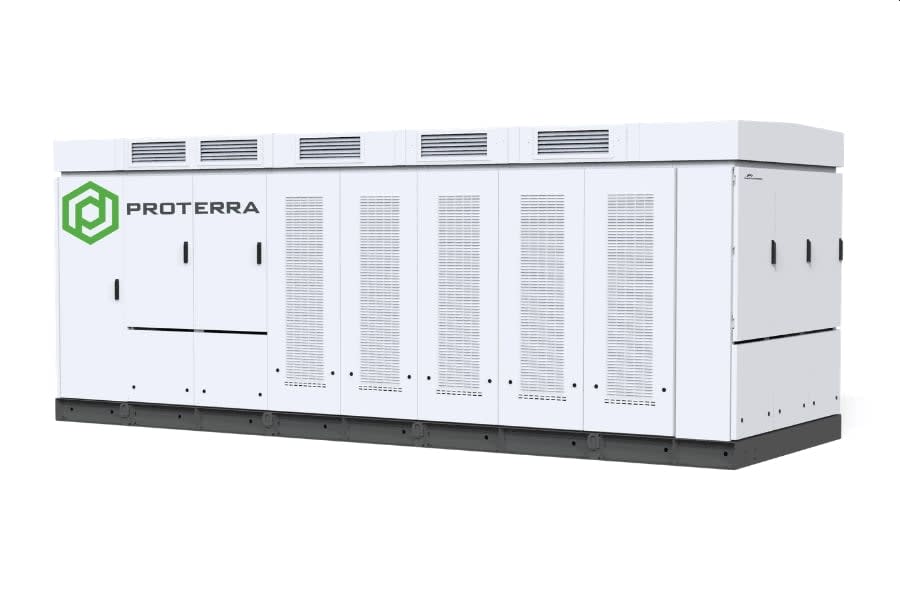
With more fleet operators transitioning to full battery-electric vehicles, charging solutions that can efficiently and cost-effectively power large fleets of vehicles will play a critical role in transportation electrification.
Proterra
Proterra unveiled its new, high-powered charging solution designed to enable the electrification of large-scale vehicle fleets.
Developed in partnership with Power Electronics, the new Proterra charging systems offers fleet operators and transit agencies a customizable vehicle charging solution.
Proterra’s new charging systems can be configured at a broad range of power levels. For large fleets of vehicles, where customers need to address the challenge of charging dozens or hundreds of vehicles in a single fleet yard, Proterra’s new charging systems can be configured with up to 1.5 megawatts to power up to 20 vehicles simultaneously. The new Proterra 1.5 megawatt fleet-scale charging system can also tie directly into higher voltage utility power lines (up to 35kV), which avoids the footprint and complication of costly switchgear.
The chargers will also be able to meet the needs of smaller electric vehicle fleets, with 75 kilowatt, 150 kilowatt, 250 kilowatt, and 500 kilowatt power levels.
The new chargers utilize interoperable, universal charging technology and are equipped to power a diverse range of 100% battery-electric vehicles, including battery-electric transit buses, school buses, delivery vans, coach buses, and other commercial vehicles. The chargers are also capable of powering personal passenger electric vehicles.
“Cities, states, schools, airports, and many more are going all-in on zero-emission transportation. Large-scale charging infrastructure will play a vital role in achieving important transportation electrification goals. Proterra is excited to work with Power Electronics to help fuel this transition with our new, next generation charging systems,” said Proterra CEO Jack Allen.
Power Electronics is a leader in power systems design and brings more than 30 years of experience in the design, development, manufacturing, and service of power conversion technology.
The new chargers are available as both overhead and plug-in options, offering greater flexibility and optionality for customers. In addition, the systems feature bi-directional power flow that enables chargers to be smart-grid ready for vehicle-to-grid applications. All Proterra systems can incorporate multi-dispensers which can reduce the overall space, cost, and aggregate power levels needed by a fleet yard. When coupled with the 1.5 megawatt charging system, the multi-dispenser capability enables up to 40 vehicles to charge sequentially, one after the other at full power.
Leveraging Power Electronics’ technology, the new chargers have the capability to interconnect with stationary storage and solar to provide fleet operators with a clean, resilient source of power for their vehicles.
Originally posted on Metro
More Fuel Smarts

How Volvo Updated Its D13 for EPA 2027 [Watch]
Volvo’s updated D13 promises lower emissions without sacrificing performance or fuel economy. Take a closer look at what changed inside the engine in this HDT Spotlight video.
Read More →
Diesel Price Spike Shortens Payback for Natural Gas Trucks, Report Says
Energy Vision estimates fleets could recover the higher purchase price of an RNG-fueled Class 8 tractor in 1.3 to 2.8 years under current fuel-price scenarios.
Read More →
Calstart Becomes Catalyst Mobility, Reflecting Broader Focus
Calstart is now Catalyst Mobility, reflecting the nonprofit’s growing national role in clean transportation, including zero-emission trucks, infrastructure and incentive programs.
Read More →

Record Diesel Prices Squeeze Trucking Fleets
Average U.S. diesel prices have climbed to nearly $6 a gallon, surpassing the 2022 record as tight refinery capacity and Middle East disruptions keep fuel costs elevated.
Read More →
How Fuel Delivery Shapes Engine Performance
Fuel delivery depends on more than what happens at the injector. For fleet, maintenance and technical professionals, looking at the full path from pump to injector can provide useful context for understanding engine performance.
Read More →
East Coast Port Launches $45M Electric Truck Push
The Port Authority of New York and New Jersey announced millions in incentives for zero-emission drayage trucks, yard tractors, and new charging hubs near the port.
Read More →
California Bill Could Shed Light on Electric Truck Prices
Why do battery-electric Class 8 trucks remain so expensive? A California bill headed to Gov. Gavin Newsom would give fleets and state agencies more visibility into what manufacturers charge.
Read More →
Detroit Opens Orders for EPA 2027 Engines
Detroit isn’t starting from scratch to meet EPA 2027 diesel emissions standards. Its Gen 6 DD13 and DD15 engines keep much of today’s platform while updating the fuel and aftertreatment systems.
Read More →
Zero-Emission Truck Corridor Planned for West Coast
California, Oregon, Washington, British Columbia and Baja California are coordinating plans for truck charging and hydrogen fueling from Canada to Mexico.
Read More →
A Closer Look at Kenworth’s Electric T880E Vocational Truck [Video]
Learn more about Kenworth's T880E battery-electric vocational truck at the Paccar Technical Center, including its range, applications, upfitting considerations, and PTO options, in this HDT Spotlight video.
Read More →