




Port Drivers Strike Again Over Misclassification Issue
This week, truck drivers went on strike at the Ports of Los Angeles and Long Beach over employee misclassification and wage theft.

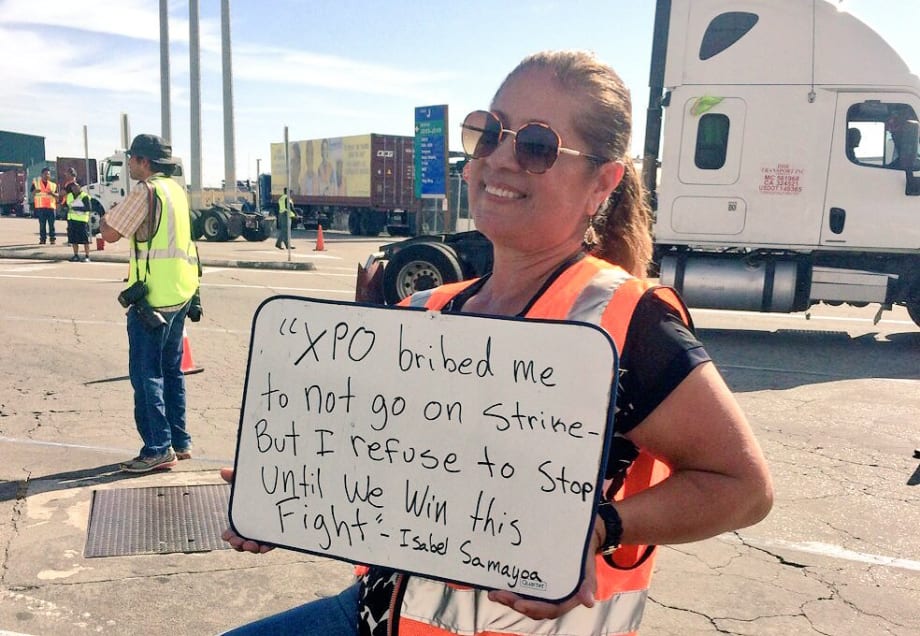
Photo: Justice for Port Truck Drivers

Truck drivers servicing the Ports of Los Angeles and Long Beach began a new “Unfair Labor Practice” strike on Oct. 26 over the issue of being "misclassified" as independent contractors.
Supported by the Teamsters Union, drivers from carriers including XPO Logistics and Pacific 9 Transportation are accusing their carriers of wage theft as a result of being misclassified as independent contractors instead of as full employees. They claim that this misclassification robs workers of certain employee rights such as health insurance, unemployment compensation, workers compensation and the right to form unions and collectively bargain things like wages.
This is not the first time the issue has come up at the Ports of Los Angeles and Long Beach and is part of a year there that has been defined by work stoppages. As the largest port complex in the United States, unrest and delays at these ports can have widespread effects.
Speaking at the demonstrations on Tuesday, Teamsters General President Jim Hoffa encouraged the striking drivers, telling them that they “have the support of 1.4 million Teamster members.”
During his visit, the union announced that drivers from the Chinese-owned trucking company Intermodal Bridge Transport were joining the strike. The Teamsters also rallied support for warehouse workers from Cal Cartage who intended to strike on Oct. 28.
"Wage theft isn't just about misclassification,” said Fred Potter, Teamsters vice president. “It's about workers who are supposed be paid a living wage – and they're not. And that is happening right here on port property.”
The Harbor Trucking Association, which represents the interests of trucking companies that service the ports, says it would like to see the demonstrations moved away from the port complex. The strikers, which started protesting at the truck yards of the individual trucking companies involved, threatened to move to the port if demands are not met.
“When they start to have demonstrations at the terminals it impacts the wider community,” said Weston LaBar, executive director of HTA. “When you engage in activities at somebody’s yard or facility it’s isolated and it’s not as widespread a problem.”
He also felt that the Teamsters were setting a bad precedent by targeting certain companies and holding demonstrations at the complex when there wasn’t enough police presence available to prevent it from disrupting normal activities. In some cases it could prevent other companies that aren’t being targeted from conducting business at the terminals.
“Basically, the Brotherhood of Teamsters are picking whatever companies they want to target, and who’s to say that they don’t pick five or 10 more companies next week,” said LaBar. “Are we going to have to lock out all of those companies as well?”
As for the job misclassification issue at the heart of the demonstrations, LaBar said at this point in time drivers have many opportunities to work in whatever capacity they choose, whether union or non-union employees or independent-contractors. The real problem, as the HTA sees it, is that the Labor Commission has mishandled the misclassification issue.
He stated that the Labor Commission rubber-stamps every case related to misclassification without properly examining it to see if it meets the criteria. In some cases, drivers who work as legitimate independent-contractors were filing misclassification claims against multiple companies they contract work from, claiming to be employees of those companies, he said.
“We have an issue with the process at this point in time, but the process is what it is,” said LaBar. “If they want to engage in activities, that’s their perogative, but we really feel like they should be doing that at the facilities of the companies that they have an issue with, not at the port complex affecting the entire supply chain.”
More Drivers

Trump Administration Looks to Put More Veterans Behind the Wheel
The Freedom Haulers program pulls together existing and expanded programs at several federal agencies to recruit veterans to drive commercial heavy-duty trucks and cut the red tape for them to get a CDL, training, and employment.
Read More →
Putting Mack’s Command Steer to the Test
A test drive of Mack’s Command Steer active steering system evaluates how it can make truck driving easier and less tiring.
Read More →
Competition Heating Up for Truck Drivers
New report reveals rising driver hiring costs, the return of sign-on bonuses, growing AI advantages, and the operational factors shaping driver retention.
Read More →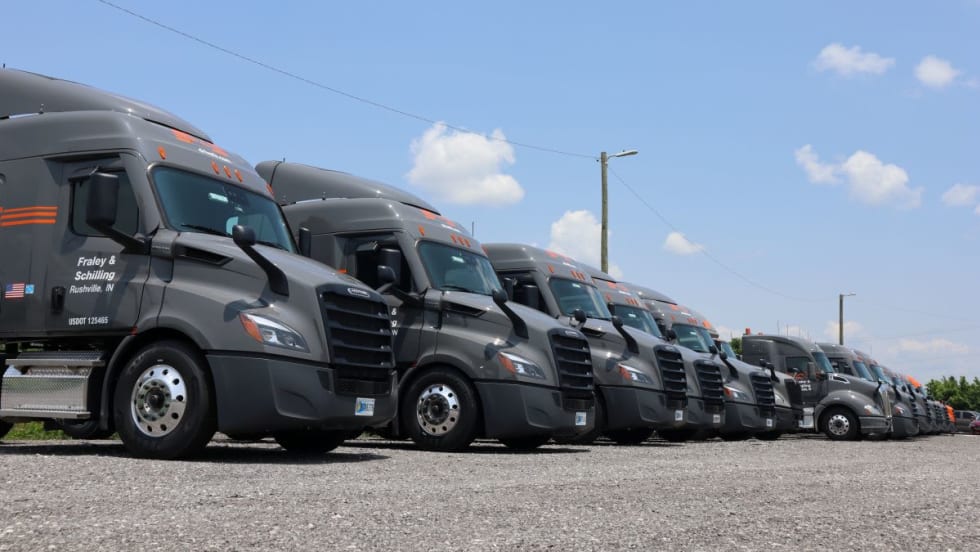
How Fraley & Schilling Improved Logbook Compliance by Over 50%
Fraley & Schilling needed a way to close a compliance workflow gap in its ELD system without adding more work from driver training, reminders, and back-office follow-ups. It found the answer in a custom driver app.
Read More →
Volvo Goes Gaming
Volvo has roared into American Truck Simulator with two new flagship trucks.
Read More →
What the Best Fleets to Drive For Teach About Driver Retention
Survey fatigue, AI-powered routing, owner-operator expectations, and the decline of social media all emerged as themes from this year's Best Fleets to Drive For program.
Read More →
Driver Retention Lessons From the Best Fleets to Drive For
What separates trucking's best workplaces from the rest? Jane Jazrawy shares the biggest lessons from this year's Best Fleets to Drive For program on driver retention, communication, AI, and workforce trends on the HDT Talks Trucking podcast.
Read More →
Farewell, CDL: Why I'm Giving Up My Commercial Driver's License
After more than 20 years as a CDL holder, HDT Executive Editor Jack Roberts is letting his commercial license expire. Not because he wants to — but because trucking's nuclear verdict crisis has made the risks of public-road test drives too great for editors, manufacturers, and everyone involved.
Read More →
How Top Trucking Fleets Improve Driver Retention [Video]
What do healthy snacks, optimized routing, and just picking up the phone have in common? They're all strategies the Best Fleets to Drive For are using to retain truck drivers.
Read More →
Trucker Path Adds Verisk CargoNet Theft Data to Navigation Platform
Trucker Path’s new cargo theft risk overlays give drivers and fleets visibility into high-risk areas, stolen commodity trends, and theft hotspots.
Read More →