




Related: California Rules Seven Port Truckers Wrongly Classified as Independents
Port Truckers Strike Over Job Misclassification
Hundreds of truckers from companies servicing the Ports of Los Angeles and Long Beach have walked off the job to protest what they say are unfair labor practices due to improper employee classification.

Steven Martinez・Web Editor
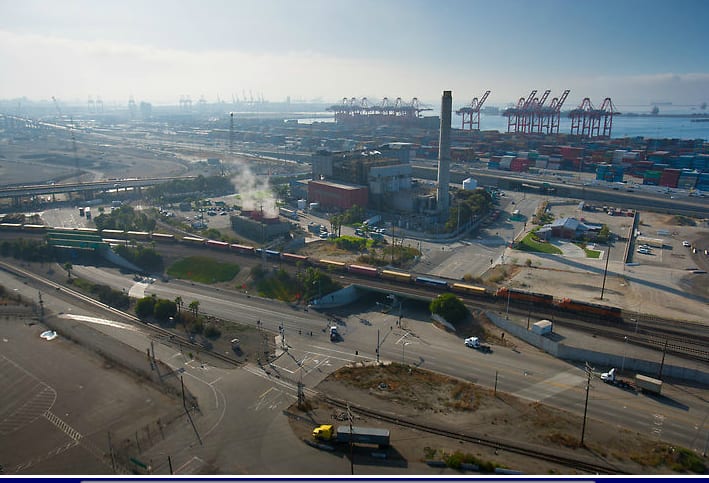
Photo via Port of Long Beach
3 min to read
Photo via Port of Long Beach
UPDATED — Hundreds of truckers represented by the Teamsters Union from companies servicing the Ports of Los Angeles and Long Beach have walked off the job to protest what they say are unfair labor practices due to improper employee classification.
The drivers are claiming wage theft on part of their employers due to being misclassified. Despite being labeled independent contract workers, the drivers are driving trucks owned by the trucking companies and working exclusively for them without being able to negotiate rates, refuse loads or take work from competitors.
Striking drivers are picketing Intermodal Bridge Transport, Pacific 9 Transportation, Pacer Cartage, and Harbor Rail Transport. A fifth company, Green Fleet Systems, avoided a strike, choosing to enter into a bargaining agreement with its drivers.
Additionally, drivers and their supporters are picketing company trucks as they enter marine terminals at the Ports of Los Angeles and Long Beach, rail yards throughout the region, and customer warehouses as far east as Mira Loma and as far south as the U.S. Mexico border, according to the Teamsters.
Some of the drivers have filed claims for the job misclassification with the U.S. Department of Labor and the California Department of Labor, while others have filed individual and class action lawsuits, according to a Teamsters Union representative.
In April of last year, seven port truck drivers misclassified as independent contractors employed by Pacer Cartage were awarded $2.2 million for unlawful deductions, reimbursable business expenses, interest and waiting time penalties by the California Labor Commissioner Division of Labor Standards Enforcement.
“In every case that has been adjudicated so far, the courts for the regulatory agencies have determined that they are, in fact, employees, not independent contractors,” Barb Maynard, spokesperson for the Teamsters Union, told Truckinginfo.
Many of the drivers involved in these lawsuits also claim that they are being harassed by their employers for their participation, she said.
“They are being harassed, they are being intimidated – it’s just relentless,” said Maynard. “They are under attack by these company owners – that attacking is illegal.”
Last year, drivers for Southern California ports protested over the same issue, claiming unfair treatment thanks to not being officially labeled full-time employees.
“This is an unfair labor practice strike,” said Maynard. “What it’s all about is that they’re being misclassified as independent contractors and they want the wage theft to stop.”
This strike comes on the heels of recent labor contract disputes between the longshoremen and the Pacific Maritime Association which crippled West Coast ports for weeks, the repercussions of which are still being felt long after being settled.
"I believe now is a horrible time to introduce any slow-downs to the supply chain," Weston LaBar, executive director of the Harbor Trucking Association, said in a statement late last week. "If they want to be a part of the real solution perhaps they should suspend these efforts until we get closer to a normal flow of cargo in the San Pedro Bay. We don't want to put any more jobs in our region in jeopardy."
For more, NBC Los Angeles has reports from the port.
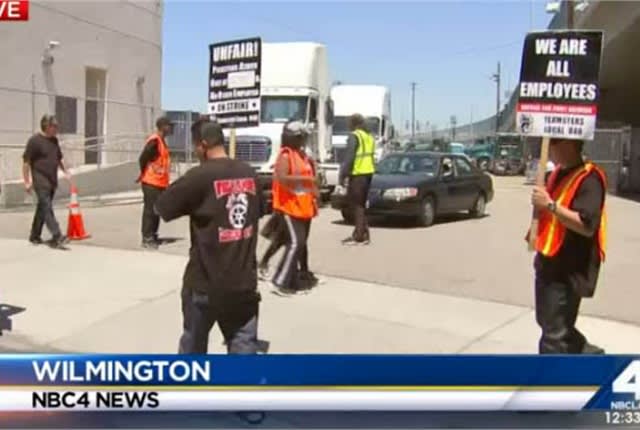
Updated to include information on the fleets involved including the Green Fleet Systems agreement.
More Drivers

Truck Drivers Need More Than Another Alert
Fleets have more visibility into truck health, safety events, and driver activity than ever. The next challenge is turning all that information into useful guidance for the person who has to decide what to do next.
Read More →
FMCSA Removes 110 Truck Driver Training Schools from Certified ELDT List
Federal regulators also are targeting more than 160 additional training providers and launching a nationwide audit of third-party CDL skills testers as part of a broader crackdown on trucking fraud.
Read More →
Hours of Service Pilot Programs: FMCSA Readies for 2027 Rollout
Two pilot programs could eventually reshape hours-of-service rules, giving truck drivers options to pause their 14-hour clock or use longer split sleeper rest periods.
Read More →
Medical Cards, English Proficiency Reshape Roadcheck Violations
Medical-card violations jumped to the top of the driver out-of-service list during CVSA’s 2026 International Roadcheck, while English-language proficiency violations appeared among the leading violations for the first time.
Read More →
Driver Trust Can Make or Break the Success of Fleet Safety Technology
New Teletrac Navman research suggests that onboarding, transparency about driver data, and positive feedback can play a significant role in how commercial drivers respond to safety and coaching technology.
Read More →
EEOC Sues KLLM Over Alleged Sex Discrimination in Driver Training
KLLM is facing a federal sex-discrimination lawsuit over policies the EEOC alleges put female truck driver trainees at a disadvantage.
Read More →
FMCSA Moves to Codify English Language Requirements for Commercial Drivers
By changing regulations on English-language proficiency requirements for commercial drivers, rather than relying on a guidance memo, the FMCSA said future administrations won't be able to walk back the Trump administration's stricter enforcement with just a memo.
Read More →
Drivers Put Western Star Trucks to the Test at Star Nation Experience
Watch to get an inside look at the Western Star trucks, technology, and community behind the Star Nation Experience 2026!
Read More →
Trump Administration Looks to Put More Veterans Behind the Wheel
The Freedom Haulers program pulls together existing and expanded programs at several federal agencies to recruit veterans to drive commercial heavy-duty trucks and cut the red tape for them to get a CDL, training, and employment.
Read More →
Putting Mack’s Command Steer to the Test
A test drive of Mack’s Command Steer active steering system evaluates how it can make truck driving easier and less tiring.
Read More →