




Related: Teamsters to Assist Truckers if So Cal Ports Shutdown
California Port Carrier Feeling Lockout's Pinch
Shippers Transport Express works from the Ports of Long Beach and Los Angeles, but in the midst of stalled labor negotiations and shutdowns, all the fleet can do is wait.

Steven Martinez・Web Editor
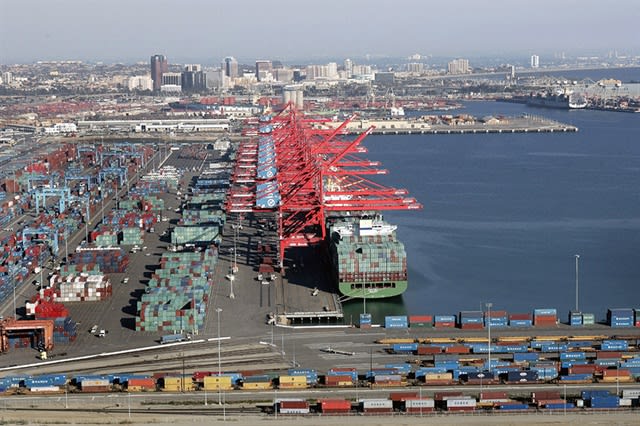
Photo via Port of Long Beach.
3 min to read
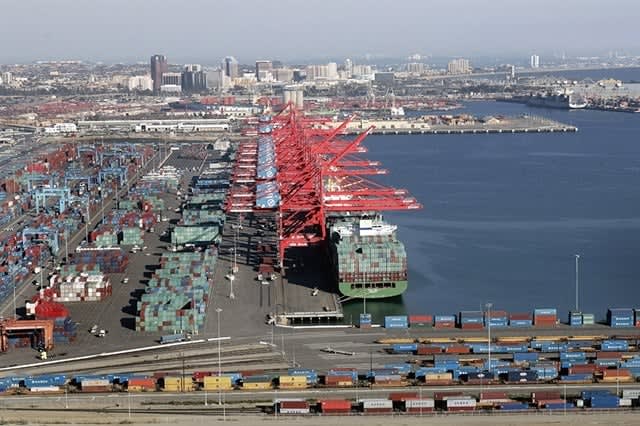
Photo via Port of Long Beach.
Shippers Transport Express works from the Ports of Long Beach and Los Angeles, but in the midst of stalled labor negotiations and shutdowns, all the fleet can do is wait.
The Obama administration's top labor official has called for a resolution to a labor dispute that has halted the flow of goods at the nation's busiest port complex.
U.S. Secretary of Labor Thomas Perez has set a Feb. 20 deadline to finish contract negotiations between longshoremen and the Pacific Maritime Association. If the deadline is not met, Perez will force the talks to move to Washington D.C., reports the Los Angeles Times.
The recent slowdowns and shutdowns of the Ports of Long Beach and Los Angeles have caused trucking fleets servicing these ports, such as Carson, Calif.,-based Shippers Transport Express, to feel the pinch. The situation is growing more dire every day, according to Maria Medrano, operations manager at Shippers Transport Express.
“We have to cancel the drivers and we have to call them by seniority because we don’t have enough work to give everybody,” Medrano told HDT.
Shippers Transport Express employs 138 drivers with plans to take on 20 more, but because of the trickle of work coming out of the ports, the company has been sending 50% to 75% of drivers home each day. Currently, she says, ships are not able to offload their cargo at ports, and the only work available is what is already sitting on the shipping yard.
“This has been the worst,” said Medrano, who was also in the industry during a similar shutdown in 2002. “I have been in this industry for 20-something years and this is the worst I’ve seen it.”
Medrano estimated that as many as 10 loaded ships were waiting outside the harbors that haven’t been touched. While the longshoremen have been without a labor contract since last July, Medrano said the conflict has been affecting her business since January and as work has been slowing each week, it squeezes her fleet a little more.
“Honestly, to me it’s just nonsense,” she said. “It’s costing billions of dollars of damage across the whole industry and to me it’s ridiculous what they’re asking for.”
Shippers Transport Express recently had to resolve its own labor negotiations with about 100 of its full-time and part-time drivers after they were reclassified as employees. The company came to an agreement after only three days of bargaining, and the drivers, who were previously independent contractors, were given benefits such as overtime and medical insurance. As a result, the cost of employing drivers has increased for the company, which makes the slowdown in profits that much harder to take.
“We need to get back in business ASAP,” Medrano said. “We need the profit and we need to keep our drivers working.”
For fleets like Shippers Transport Express who are largely left in the dark about the specifics of labor negotiations between longshoremen and the ports, waiting in uncertainty is difficult.
“We're hoping it gets resolved within at least a couple of weeks,” said Medrano. “We’re hoping, but who knows.”
The Ports of Long Beach and Los Angeles are the two busiest ports in the U.S., moving a combined 15.1 million containers of cargo in 2014. The Port of Los Angeles alone moved cargo worth more than $238 billion 2007.
More Fleet Management

Sponsored•September 16, 2026
Color Match Smarter: Tools That Restore & Perform
For fleet managers and collision repair professionals keeping heavy-duty trucks on the road, getting the color right the first time isn't just about appearance — it's about efficiency, turnaround time, and bottom-line results. Discover how today's digital color tools are transforming the repair process from guesswork to precision.
Read More →
FMCSA Pauses Biennial-Update Enforcement Amid Motus Transition
Carriers whose updates were due on or after June 1 have more time, while FMCSA works to stabilize its new registration system and warns of phishing sites impersonating its new carrier registration system, Motus.
Read More →
Sponsored•September 14, 2026
2026 Blueprint for Countering Smarter Supply Chain Theft
Cargo theft is no longer just the cost of doing business. It's a multi-billion-dollar criminal enterprise exploiting vulnerabilities across your fleet, drivers, and supply chain.
Read More →


Sponsored•September 1, 2026
How Telematics Improves Visibility, Control, and Performance in Refrigerated Fleets
Explore how telematics help refrigerated fleets improve visibility, uptime, efficiency, compliance, and cargo protection across connected cold chain operations.
Read More →
What the U.S.-Canada Trade War Means for Trucking
Escalating U.S.-Canada tariffs could disrupt cross-border freight, reduce truck volumes, raise costs, and create new uncertainty for carriers on both sides of the border.
Read More →
What Are Trucking’s Top Concerns for 2026?
The American Transportation Research Institute wants to know what's worrying trucking fleet managers, drivers, and other stakeholders in its annual Industry Issues survey.
Read More →
American Trucking Associations Looks for a New Leader
ATA President and CEO Chris Spear abruptly left his job at the association on August 21, at a pivotal time for the trucking industry.
Read More →
Public Wi-Fi Cybersecurity Risks: How Truck Drivers and Fleets Can Protect Their Data
Public Wi-Fi can expose truck drivers and fleets to credential theft, malware, and other cyber threats. Here’s how to reduce the risk on the road.
Read More →
For Nicky Cupp, Fleet Innovation Starts With Frustration
HDT Truck Fleet Innovator Nicky Cupp turns everyday pain points at Fraley & Schilling into opportunities for better technology and smarter processes.
Read More →
Adam Buttgenbach’s Approach to Electric Trucks: Start With Where They Fit
HDT Truck Fleet Innovator Adam Buttgenbach helped PepsiCo build one of North America’s largest EV fleets by focusing on where electric trucks make operational sense.
Read More →