




The phone call triggered mixed emotions. I was excited by the opportunity to get training that helps me understand trucking so I can do a better job of reporting. But I was also going to have to demonstrate my skills before a group of truckers - many of them with considerably more experience.
I showed up at the designated warehouse early one Sunday morning for the training. So did 24 other truckers, all of us with Circle City Personnel. Ohio-based Circle City specializes in leasing truck drivers, warehouse workers and dispatchers, and I drive for them on a part-time basis, when time allows.
The purpose of the event was to undergo new Occupational Safety & Health Administration-mandated training and get us certified as PIT operators. A recent federal government acronym, PIT stands for powered industrial truck, defined as a "mobile power propelled truck used to carry, push, pull, lift, stack or tier materials." In other words, forklifts, pallet jacks, high-lift riders and the like.
As we settled into the folding chairs, Sharon Thomas, operations supervisor for Circle City Personnel's Baltimore branch, welcomed us and explained: "The OSHA rule requires that employees who use PITs must be trained in the vehicles' use. You're going through the training because the rule covers truckers who only use PITs occasionally, even if they're operating PITs at a shipper's or receiver's place of business."
She told us the PIT certification requires formal classroom instruction, practical (hands-on) training, successful completion of a written or oral test and a skills demonstration on PITs.
I glanced around the warehouse and noticed a coned-off PIT course, an electric pallet jack and a forklift. My hand went up. "Question," I found myself saying. "Will we have a chance to practice with the jack and forklift?" It had been some time since I had operated either type. "No," was the answer. I immediately perked up, ready to be a sponge and absorb as much instruction as I could.
Thomas then introduced our instructor, Glenn Beares, an OSHA-certified PIT trainer. He gave us an overview of what he would cover. Among the topics: common forklift accidents; safety procedures for picking up loads, traveling with loads and stacking or dropping loads; lift truck capacity, load center and center of gravity; lift truck classifications and general safe operating procedures.
Beares lectured us, demonstrated key points with a model of a forklift and interspersed his presentations with an excellent training video.
One of the things he told us early on in the presentation is stuck in my mind, and it made all of us pay closer attention. "PITs, especially forklifts, are dangerous," Beares warned. "Last year 95,000 people were injured -- many of them seriously, and 100 were killed. The most common type of accident is a rollover. Injuries happen because the operator tries to jump free and is crushed."
The classroom training lasted several hours and concluded with a written test. You could only miss six out of the 20 questions, or you had to take the test over.
After turning in our completed tests, we got in line for the operational part of the certification. First, we had to do a safety check of the electric pallet jack, walk it through a course and then stand on it and drive it back through the course.
Next, we had to safety check a forklift, pick up a load, maneuver through a coned-out serpentine route (complete with planted obstructions), stack the load, pick the load back up, return through the maze and drop the load.
What made all of this all the more challenging was that everyone watched as you performed. And I'll tell you what: Maneuvering a forklift around obstacles while other truckers are observing you is a lot like backing a rig into a tight spot with others watching. Even though you've done it plenty of times before, the degree of difficulty you have increases proportionally to the number of people watching.
I reduced this difficulty degree by getting in the back of the line. By the time my turn came, about three-fourths of the group had completed their certification and left.
I'm happy to report that I passed all of my operational tests without running into anything. I passed my written test, the first time, with only one wrong answer.
I'm proud to say that I'm now a certified PIT operator. Certification lasts for three years.
With my new confidence in operating PITs, I am looking forward to my next delivery where the dock manager tells me: "There's a forklift. You take it off!"
Performing On A Forklift
The phone call triggered mixed emotions. I was excited by the opportunity to get training that helps me understand trucking so I can do a better job of reporting. But I was also going to have
More Safety & Compliance

Nominations Open for HDT Truck Fleet Innovators 2026
Heavy Duty Trucking is searching for forward-looking leaders at trucking fleets as nominations for HDT’s Truck Fleet Innovators 2026. Deadline is May 15.
Read More →
Freightliner Expands Detroit Assurance with New Intersection and Turning Safety Tech
Detroit’s next-generation ABA6 safety system adds cross-traffic detection and enhanced side guard assist with left-turn protection, targeting high-risk urban scenarios.
Read More →
'Beyond Compliance,' Regulations, Driver Coaching on ATRI’s 2026 Research List
The American Transportation Research Institute will examine driver coaching, regulatory impacts — including the "Beyond Compliance" concept —and weather disruptions that shape trucking operations.
Read More →
FMCSA Revamps DataQs to Improve Fairness, Speed of Reviews
New requirements add firm deadlines and independent review steps, addressing long-standing complaints about inconsistent rulings and slow response times.
Read More →
FMCSA Extends Paper Medical Card Exemption … Again
Five states still aren't ready to accept commercial driver medical exam information directly from the medical examiner's registry.
Read More →
HDT Honors the Best New Products of 2025 at TMC [Photos]
Heavy Duty Trucking's Top 20 Products awards recognize the best new products and technologies. Check out the award presentations at the 2026 Technology & Maintenance Council annual meeting.
Read More →
Detroit Engines: Trusted Performance, Built for What's Next
The Detroit® Gen 6 engine platform proves that real progress doesn’t require a complete redesign. Built on 20 years of trusted technology, these engines are designed for efficiency, stronger performance, and greater reliability than before. And they do it all while complying with 2027 EPA standards on every mile.
Read More →
Aperia Expands Halo Platform with Steer-Tire Inflation System, Fifth-Wheel Integration
Aperia Technologies introduced a new automatic tire inflation system for steer axles and a partnership with Fontaine Fifth Wheel to integrate coupling status into its Halo Connect platform.
Read More →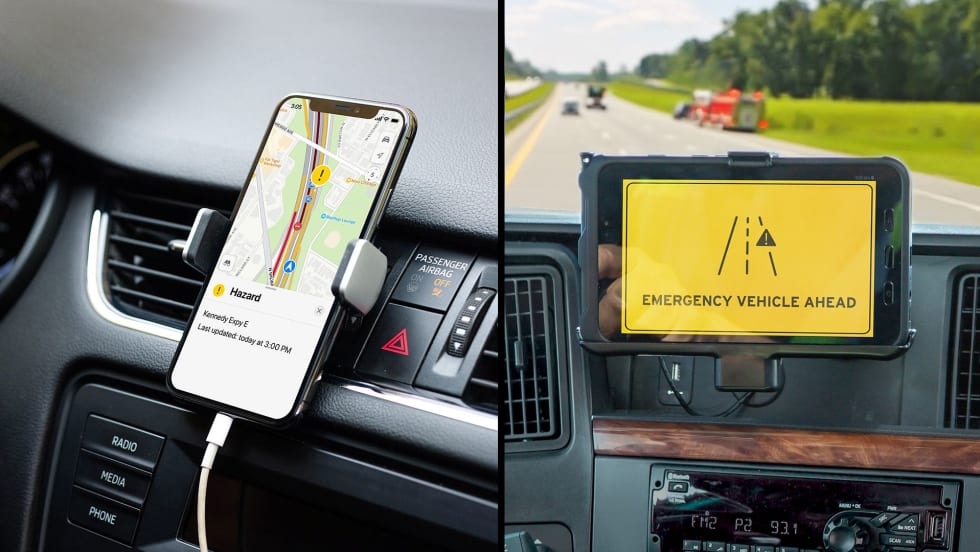
Fleetworthy and HAAS Alert Expand Partnership Stopped Truck Protection Alerts
Fleetworthy and HAAS Alert expanded their partnership to deliver real-time digital alerts that warn motorists when commercial trucks are stopped roadside and notify truck drivers when approaching emergency responders.
Read More →
New Entrants, Chameleon Carriers, and Safety: Is It Too Easy to Start a Trucking Company?
More than 100,000 new trucking companies enter the industry each year, but regulators manage to audit only a fraction of them. That churn creates opportunities for inexperienced startups — and for “chameleon carriers” that shut down after safety violations and reappear under new identities. Read more from Deborah Lockridge in this commentary.
Read More →