





Electric-Truck Adoption Connected to Charging Infrastructure Development
Paccar Parts Introduces Charging Stations for All Electric Vehicles
Paccar Parts is introducing new electric vehicle charging stations to support the global launch of electric vehicles.
January 8, 2021
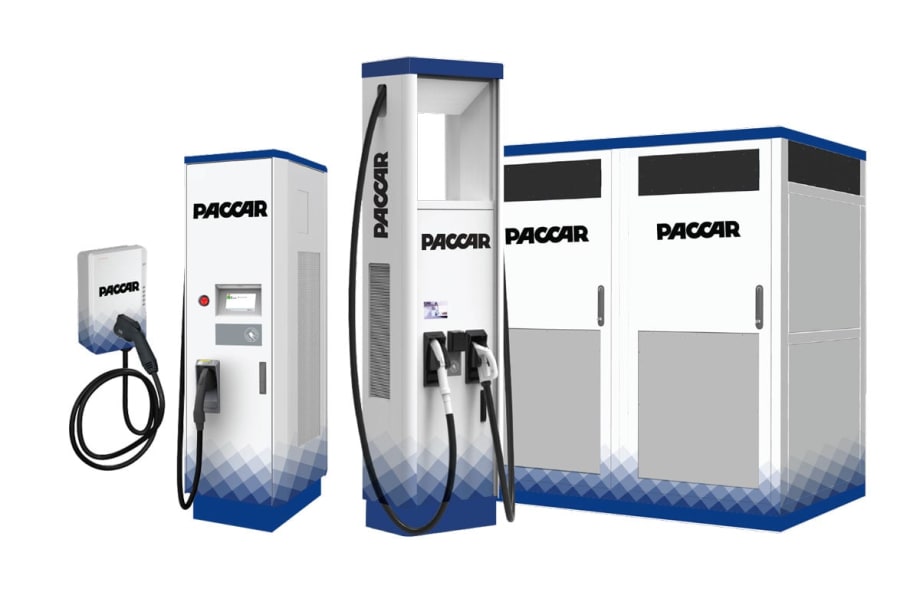
Paccar Parts' new electric vehicle charging stations maximize coverage over a wide range of electric vehicles.
Photo: Paccar Parts
2 min to read
Paccar Parts is introducing new electric vehicle charging stations to support the global launch of electric vehicles. The chargers are designed to be not only compatible with Kenworth, Peterbilt, and DAF electric trucks, but also to work for other electric commercial vehicles.
According to the company, customers can purchase the chargers from Kenworth, Peterbilt and DAF dealers and TRP store locations worldwide, choosing from multiple DC fast chargers rated up to 920V DC. These electric vehicle charging stations maximize coverage over a wide range of EVs, including trucks, vans, buses and other commercial vehicles.
“We offer a tailored approach to charging solutions that include best-fit options with charging levels from 20 kilowatts (kW) up to 350 kilowatts charging power,” said Chris Scheel, Paccar Parts senior director of marketing.
The 20 kW charger option is a UL-certified DC Wallbox and the perfect charger for commercial parking and fleet or dealership service facilities. The low power DC charger is easy to install and ideal for vehicles with extended dwell times.
The 50 kW model supports the daily operations of an individual truck for medium- and heavy-duty fleets. The charger has superior usability and reliability, Paccar said, as well as integrated connected services for remote monitoring, diagnostics, statistics and firmware updates.
Designed for convenient fast charging of all electric vehicles, the 120 and 180 kW chargers are for fleets operating multiple routes or even multiple shifts. The compact size makes it ideal for urban use, said the company, and the 180 kW unit has enough power to charge most trucks in less than four hours.
For EV fleet operators, the 350 kW charger is an ultra-fast power cabinet that can charge one vehicle at full rated power or share power between two vehicles simultaneously.
The full line of electric vehicle charging stations is backed by a two-year warranty. The chargers include an RFID reader for user authentication and a cellular connection with a two-year cellular service plan. A two-year service level agreement is included with the chargers.
More Fuel Smarts

How Volvo Updated Its D13 for EPA 2027 [Watch]
Volvo’s updated D13 promises lower emissions without sacrificing performance or fuel economy. Take a closer look at what changed inside the engine in this HDT Spotlight video.
Read More →
Diesel Price Spike Shortens Payback for Natural Gas Trucks, Report Says
Energy Vision estimates fleets could recover the higher purchase price of an RNG-fueled Class 8 tractor in 1.3 to 2.8 years under current fuel-price scenarios.
Read More →
Calstart Becomes Catalyst Mobility, Reflecting Broader Focus
Calstart is now Catalyst Mobility, reflecting the nonprofit’s growing national role in clean transportation, including zero-emission trucks, infrastructure and incentive programs.
Read More →

Record Diesel Prices Squeeze Trucking Fleets
Average U.S. diesel prices have climbed to nearly $6 a gallon, surpassing the 2022 record as tight refinery capacity and Middle East disruptions keep fuel costs elevated.
Read More →
Sponsored•September 9, 2026
How Fuel Delivery Shapes Engine Performance
Fuel delivery depends on more than what happens at the injector. For fleet, maintenance and technical professionals, looking at the full path from pump to injector can provide useful context for understanding engine performance.
Read More →
East Coast Port Launches $45M Electric Truck Push
The Port Authority of New York and New Jersey announced millions in incentives for zero-emission drayage trucks, yard tractors, and new charging hubs near the port.
Read More →
California Bill Could Shed Light on Electric Truck Prices
Why do battery-electric Class 8 trucks remain so expensive? A California bill headed to Gov. Gavin Newsom would give fleets and state agencies more visibility into what manufacturers charge.
Read More →
Detroit Opens Orders for EPA 2027 Engines
Detroit isn’t starting from scratch to meet EPA 2027 diesel emissions standards. Its Gen 6 DD13 and DD15 engines keep much of today’s platform while updating the fuel and aftertreatment systems.
Read More →
Zero-Emission Truck Corridor Planned for West Coast
California, Oregon, Washington, British Columbia and Baja California are coordinating plans for truck charging and hydrogen fueling from Canada to Mexico.
Read More →
A Closer Look at Kenworth’s Electric T880E Vocational Truck [Video]
Learn more about Kenworth's T880E battery-electric vocational truck at the Paccar Technical Center, including its range, applications, upfitting considerations, and PTO options, in this HDT Spotlight video.
Read More →