




Operation Safe Driver finds Speeding Cars Outnumber Trucks Nearly 3 to 1
Data collected during the Commercial Vehicle Safety Alliance's fall Operation Safe Driver campaign showed car drivers show an alarming propensity for speeding around big trucks
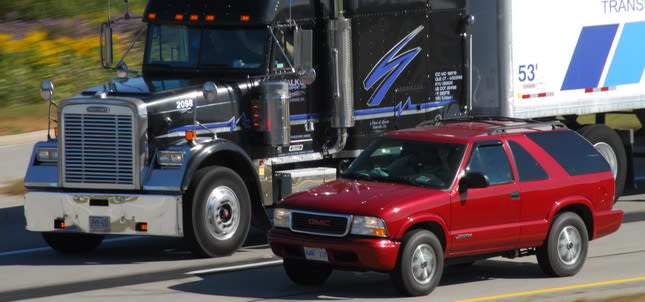
Law enforcement officers issued more than 8,300 warnings and citations to speeding car drivers, and 1,600 warnings and citations to speeding truck drivers.
Data collected during the Commercial Vehicle Safety Alliance's fall Operation Safe Driver campaign showed car drivers show an alarming propensity for speeding around big trucks.
During the mid-October blitz, law enforcement officers issued 4,363 warnings and 3,970 citations to speeding car drivers, and 1,434 warnings and 1,195 citations to speeding truck drivers.
Speeding topped the violation list, followed by failure to obey a traffic control device and failure to wear a seatbelt. Violation rates between car and truck drivers were similar in these categories. Law enforcement officers pulled over nearly 53,000 commercial and passenger vehicle drivers between Oct. 17 and 23, 2010.
"CVSA's Operation Safe Driver is targeting each and every driver, whether they drive a passenger car or a CMV, and alerting offenders that their poor driving behaviors result in lives lost," said Stephen A. Keppler, CVSA's executive director. "We will continue to emphasize this point, through both education and enforcement tactics, until we eliminate those driver behaviors that are specifically linked to causing crashes."
Of the warnings issued to CMV drivers, 20.3% were for speeding (versus 61.2% for passenger car drivers); 4.2% were for failure to obey traffic control devices (compared to 5.8% for passenger car drivers); and, 2.6% were issued for failing to use a seat belt while operating their vehicle (compared to 2.8% for passenger car counterparts).
Of the citations issued to CMV drivers, 13.7% were for speeding (versus 51.6% for passenger car drivers); 4.6% were for failure to obey traffic control devices (compared to 1.5% for passenger car drivers); and, 10% were issued for failing to use a seat belt while operating their vehicle (compared to 8.0% for passenger car counterparts). CMV drivers were issued significantly more warnings and citations in 2010 for failing to buckle up (1,055) versus in 2009 (672).
Operation Safe Driver 2010 results include:
* 39,784 CMV Roadside Inspections (5.3% resulted in the driver being placed out-of-service; 27.4% of the Level I Inspections resulted in the vehicle(s) being placed out of service. In 2009, there were 30,294 inspections conducted and a driver OOS rate of 5.3%, vehicle Level I OOS rate of 26.1%;
* For Drivers: 0.44 violations per roadside inspection (0.44 in 2009); 0.08 OOS violations per roadside inspection (same in 2009); 0.04 citations per roadside inspection (0.04 in 2009);
* For Vehicles: 1.04 violations per roadside inspection (1.12 in 2009); 0.23 OOS violations per roadside inspection (0.19 in 2009); 0.08 citations per roadside inspection (0.05 in 2009);
* 21,555 CMV Driver Traffic Enforcement Contacts: 7,062 warnings were issued (0.33 per contact); 8,724 citations were issued (0.40 per contact); In 2009, there were 20,198 contacts, which resulted in 6,887 warnings (0.34 per contact) and 8,067 citations (0.40 per contact);
* 12,926 Non-CMV Driver Traffic Enforcement Contacts: 7,126 warnings were issued (0.55 per contact); 7,700 citations were issued (0.60 per contact); In 2009, there were 10,917 contacts, which resulted in 3,818 warnings (0.35 per contact) and 10,365 citations (0.95 per contact);
* 31,737 CMV Driver License checks (27,903 in 2009) and 9,878 Non-CMV Driver License checks (8,577 in 2009); and,
More info: www.cvsa.org
More Safety & Compliance
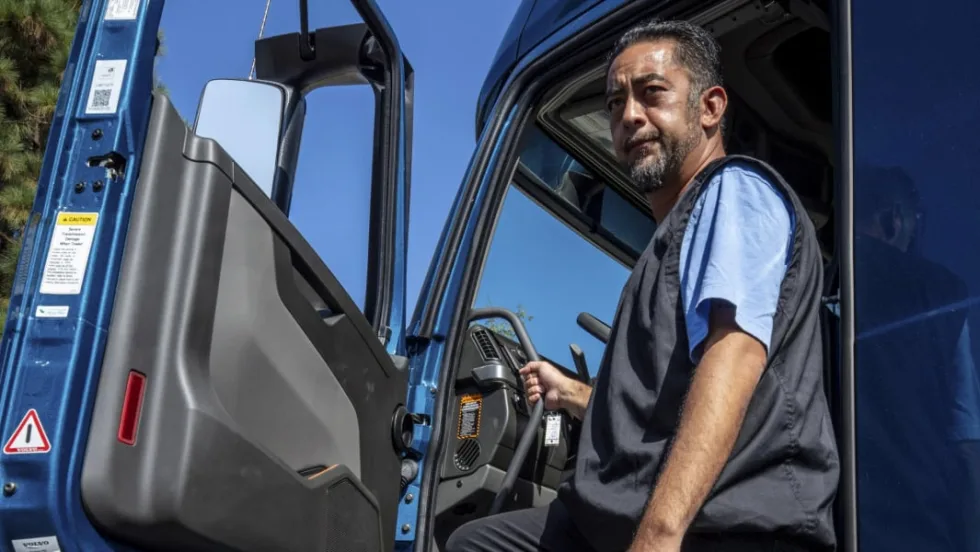
A Camera Isn't a Safety Program. Here's What Brokers Are Screening for Now
Footage alone may not be enough to pass broker vetting processes. Here's what counts as a defensible safety program now.
Read More →
Marijuana and Trucking’s Drug-Testing Dilemma
Marijuana is getting stronger, laws are changing, and drug tests still can’t reliably establish impairment. What does that mean for truck drivers and the fleets that employ them?
Read More →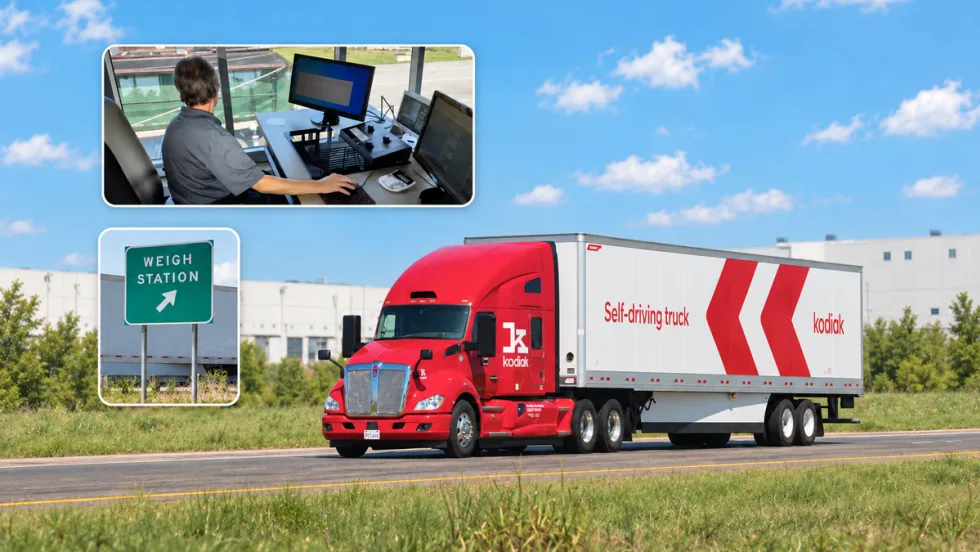
PrePass, Kodiak Connect Driverless Trucks to Roadside Enforcement
The system will allow enforcement agencies to verify Enhanced Inspection information and decide whether Kodiak’s autonomous trucks can bypass roadside screening sites.
Read More →

From One Generation to the Next: How Mentorship Builds Safer Truck Drivers
After three decades in trucking, Harold Perry shares what he's learned about driver safety, mentorship, and helping the next generation build confidence behind the wheel.
Read More →
FMCSA Pauses Biennial-Update Enforcement Amid Motus Transition
Carriers whose updates were due on or after June 1 have more time, while FMCSA works to stabilize its new registration system and warns of phishing sites impersonating its new carrier registration system, Motus.
Read More →
ZF Expands Commercial Vehicle Push in North America
ZF is expanding its North American commercial-vehicle presence with new transmission applications, electrification, trailer technology and autonomous-driving systems.
Read More →
Truck Drivers Need More Than Another Alert
Fleets have more visibility into truck health, safety events, and driver activity than ever. The next challenge is turning all that information into useful guidance for the person who has to decide what to do next.
Read More →
Tesla Wants a Self-Driving Semi. Are Cameras Enough?
Could Tesla’s camera-only autonomous driving technology work on an 80,000-pound Semi? In this commentary, HDT's Deborah Lockridge takes a look at Tesla, Cybercab, and how autonomous trucks see the road.
Read More →
What DOT’s Automated Vehicle Strategy Means for Trucking
The U.S. Department of Transportation issued a new automated-vehicle strategy that outlines plans for driverless-truck regulations, cross-state freight corridors, and federal safety standards.
Read More →
NYC Expands Speed, Pedestrian Safety Tech Across Fleet
New York City is expanding intelligent speed assistance and pedestrian-alert systems across its municipal fleet, moving the technologies from pilot programs into vehicle procurement and retrofit requirements.
Read More →