




NTSB Says Driver Inattention, Bad Brakes Led to Amtrak-Truck Collision
An inattentive driver and poorly maintained brakes, including antilock brakes that had been rendered inoperable, were the probable cause of a commercial truck hitting an Amtrak passenger train in the Nevada desert last summer, killing six and injuring 16, the National Transportation Safety Board said Tuesday
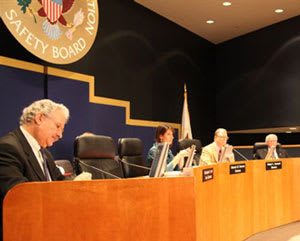
The National Transportation Safety Board blamed bad brakes, driver inattention for deadly train-truck crash.
An inattentive driver and poorly maintained brakes, including antilock brakes that had been rendered inoperable, were the probable cause of a commercial truck hitting an Amtrak passenger train in the Nevada desert last summer, killing six and injuring 16, the National Transportation Safety Board said Tuesday.
On Friday, June 24, 2011, at 11:19 a.m. PDT, a 2008 Peterbilt truck-tractor pulling two empty trailers on northbound U.S. 95 struck the left side of an Amtrak train that was passing through a grade crossing en route from Chicago to Emeryville, Calif.
The collision, which destroyed the truck-tractor and several passenger railcars, also ignited a fire that engulfed two railcars and part of a third. The accident killed the truck driver, the train conductor, and four train passengers; 15 train passengers and one crewmember were injured.
When the grade crossing signals activated, the truck, traveling at least 58 mph, was still more than 2,300 feet from the tracks, however, investigators found no evidence that the truck driver began braking until the front of the truck was less than 300 feet from the crossing.
"Although we'll never know the exact cause of the truck driver's inattention, we do know that if John Davis Trucking had provided its driver with a safe and properly maintained vehicle, this accident could have been avoided," said NTSB Chairman Deborah Hersman.
Reconstruction of the accident using a recording from a forward-facing video camera mounted on the front of the train as well as physical evidence helped investigators to determine that the truck struck the crew car of the train at 26-30 mph.
The investigation revealed that nine of the 16 brakes on the truck were either out-of-adjustment or inoperative. In addition, the antilock brake systems of both trailers were not functional. Wires to missing sensors were cut and zip-tied and wires to malfunction indicator lights had been disconnected, raising serious questions about the maintenance practices of the trucking company, NTSB said.
Several months after the collision, NTSB investigators returned to the accident site and conducted a series of tests with a truck in which the braking system was in proper working order. Test results showed that if the accident truck been able to decelerate as well as the test vehicle, the accident would have been avoided, with the accident truck coming to a stop 15-67 feet short of the rail tracks.
Investigators also found that the driver, who had an erratic employment history with as many as 30 jobs over the 10 years prior to the accident, had been cited for more than a dozen moving violations, had at least three accidents, and had his driver's license suspended or revoked at least four times.
When he applied to work at John Davis Trucking, he omitted information and misrepresented parts of his employment history. The board concluded that since the process in place to obtain a full employment and driver license history was inadequate, John Davis Trucking did not have sufficient information to make an informed hiring decision when considering the driver's application.
As a result of the investigation, the NTSB made a total of 20 safety recommendations to John Davis Trucking, the Federal Motor Carrier Safety Administration, the National Highway Traffic Safety Administration, the Federal Highway Administration, the Federal Railroad Administration, the Nevada Highway Patrol, the Commercial Vehicle Safety Alliance, the American Trucking Associations, The Owner-Operator Independent Drivers Association, the Towing and Recovery Association of America, the American Bus Association, and the United Motorcoach Association.
A synopsis of the NTSB report, including the probable cause, findings, and a complete list of the safety recommendations, is available at http://go.usa.gov/gUtG.
An animation of the accident reconstruction:
More Safety & Compliance
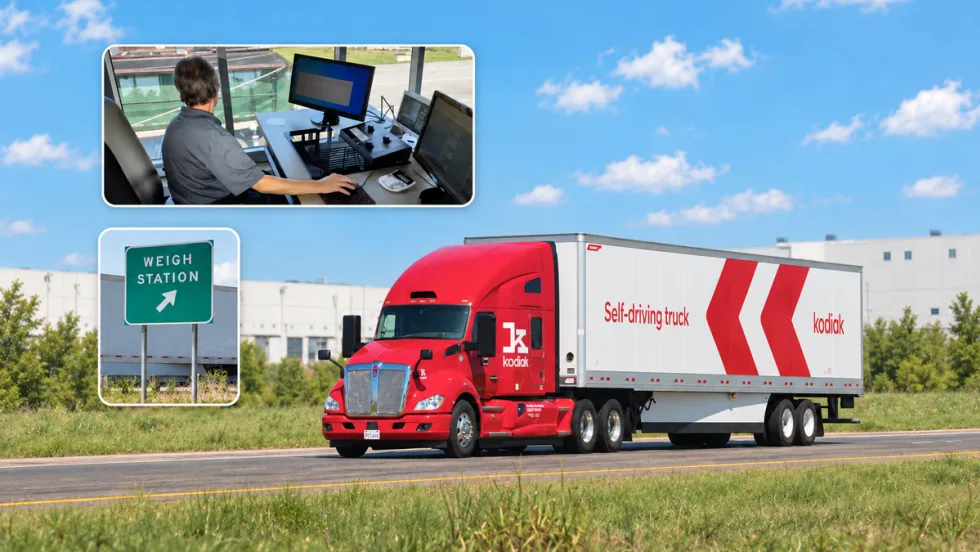
PrePass, Kodiak Connect Driverless Trucks to Roadside Enforcement
The system will allow enforcement agencies to verify Enhanced Inspection information and decide whether Kodiak’s autonomous trucks can bypass roadside screening sites.
Read More →
From One Generation to the Next: How Mentorship Builds Safer Truck Drivers
After three decades in trucking, Harold Perry shares what he's learned about driver safety, mentorship, and helping the next generation build confidence behind the wheel.
Read More →
FMCSA Pauses Biennial-Update Enforcement Amid Motus Transition
Carriers whose updates were due on or after June 1 have more time, while FMCSA works to stabilize its new registration system and warns of phishing sites impersonating its new carrier registration system, Motus.
Read More →
ZF Expands Commercial Vehicle Push in North America
ZF is expanding its North American commercial-vehicle presence with new transmission applications, electrification, trailer technology and autonomous-driving systems.
Read More →
Truck Drivers Need More Than Another Alert
Fleets have more visibility into truck health, safety events, and driver activity than ever. The next challenge is turning all that information into useful guidance for the person who has to decide what to do next.
Read More →
Tesla Wants a Self-Driving Semi. Are Cameras Enough?
Could Tesla’s camera-only autonomous driving technology work on an 80,000-pound Semi? In this commentary, HDT's Deborah Lockridge takes a look at Tesla, Cybercab, and how autonomous trucks see the road.
Read More →
What DOT’s Automated Vehicle Strategy Means for Trucking
The U.S. Department of Transportation issued a new automated-vehicle strategy that outlines plans for driverless-truck regulations, cross-state freight corridors, and federal safety standards.
Read More →
NYC Expands Speed, Pedestrian Safety Tech Across Fleet
New York City is expanding intelligent speed assistance and pedestrian-alert systems across its municipal fleet, moving the technologies from pilot programs into vehicle procurement and retrofit requirements.
Read More →
FMCSA Removes 110 Truck Driver Training Schools from Certified ELDT List
Federal regulators also are targeting more than 160 additional training providers and launching a nationwide audit of third-party CDL skills testers as part of a broader crackdown on trucking fraud.
Read More →
Beyond DOT Compliance: What Makes a Trucking Fleet Truly Safe?
A trucking fleet can follow every rule and still make unsafe decisions. The real test comes when safety conflicts with freight, productivity, or cost.
Read More →