




North America Helps Drive Volvo Profit Higher
The parent to Volvo Trucks North America, Sweden’s Volvo Group, saw its second quarter net income double from a year ago, due in part to increased North American sales.



The parent to Volvo Trucks North America, Sweden’s Volvo Group (VOLVY), saw its second quarter net income double from a year ago, due in part to increased North American sales.
It reported a profit of 5.2 billion kronor, equivalent to about $600 million. Revenue increased 17% to 84.8 billion kronor, or about $10 billion (which includes sales of buses, construction and marine equipment as well as trucks).
“Our view of the market development for trucks remains largely unchanged,” said Jan Gurander, acting president and CEO. “We are seeing a gradual recovery in Europe and unchanged demand in Asia, apart from the lower level of demand in China. In North America, there is a slowdown from high levels, while there has been a strong decline in the Brazilian market.”
During the quarter, Volvo delivered 55,600 trucks, which is 4% more than in the same period last year, but net orders fell 6% to 49,551 trucks.
“During the first six months of 2015, the strong U.S. economy and increased demand for transport had a positive impact on demand for long-haulage trucks, while demand for trucks involved in the energy sector and in construction had a slower development,” Volvo said in its earning report. “Expectations are that the North American retail market for heavy-duty trucks will peak during 2015 at a level of 310,000 trucks.”
According to Volvo, total North American truck orders dropped 19%, with Volvo Truck orders falling 1% and Mack orders down by 50%.
“The declining order intake for Mack is mainly a result of cancellations of some of the large quantities of dealer orders placed in the fourth quarter of 2014, combined with a softening in demand in some of Mack’s core market segments, for example, energy,” the company said. On June 30, it said, Mack’s order book was about twice the size when compared with the same date a year ago,
Despite the rather upbeat news, according to Reuters, Volvo is having problems reaching targets for cutting costs and it expects little growth in the North American trucking market in the coming years.
More information is available on the Volvo Group website.
More Equipment

Detroit Opens Orders for EPA 2027 Engines
Detroit isn’t starting from scratch to meet EPA 2027 diesel emissions standards. Its Gen 6 DD13 and DD15 engines keep much of today’s platform while updating the fuel and aftertreatment systems.
Read More →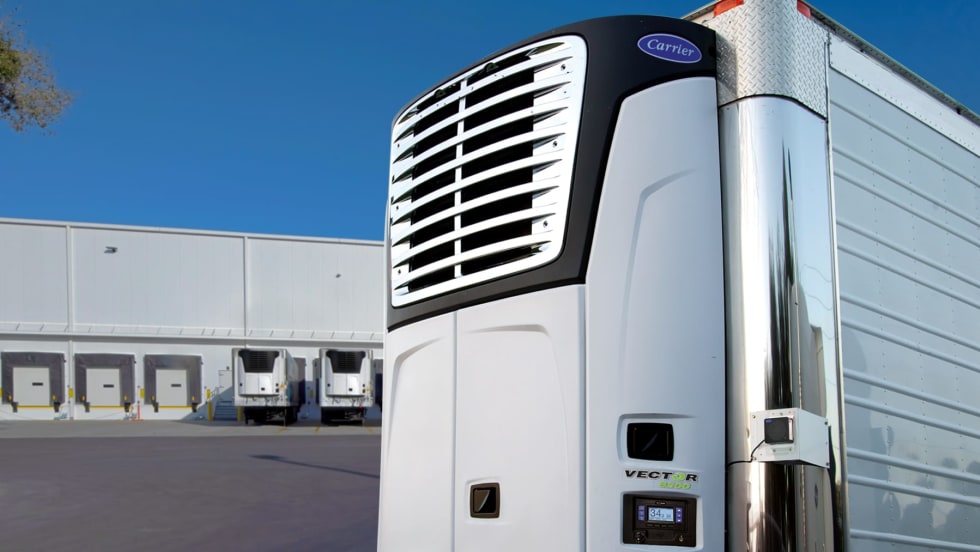
Carrier Transicold Adds All-Electric TRU for Stationary Cold Storage
Carrier Transicold’s new Vector 8200 all-electric transport refrigeration unit gives fleets a diesel-free option for temporary refrigerated and frozen trailer storage.
Read More →
A Closer Look at Kenworth’s Electric T880E Vocational Truck [Video]
Learn more about Kenworth's T880E battery-electric vocational truck at the Paccar Technical Center, including its range, applications, upfitting considerations, and PTO options, in this HDT Spotlight video.
Read More →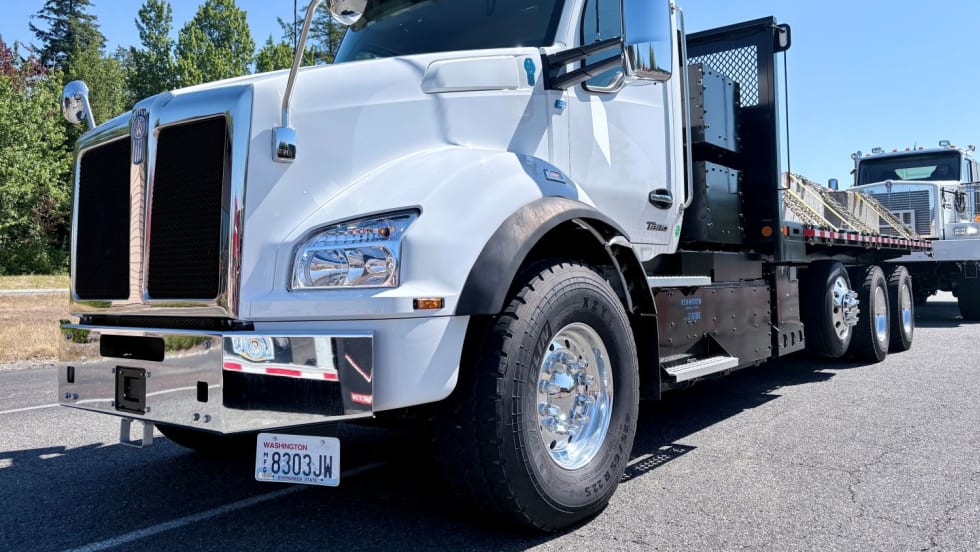
Kenworth T880E Brings EV Power to Vocational Trucks
A closer look at the Kenworth T880E’s range, charging, powertrain and upfit options — and where fleets are showing the most interest.
Read More →
What the U.S.-Canada Trade War Means for Trucking
Escalating U.S.-Canada tariffs could disrupt cross-border freight, reduce truck volumes, raise costs, and create new uncertainty for carriers on both sides of the border.
Read More →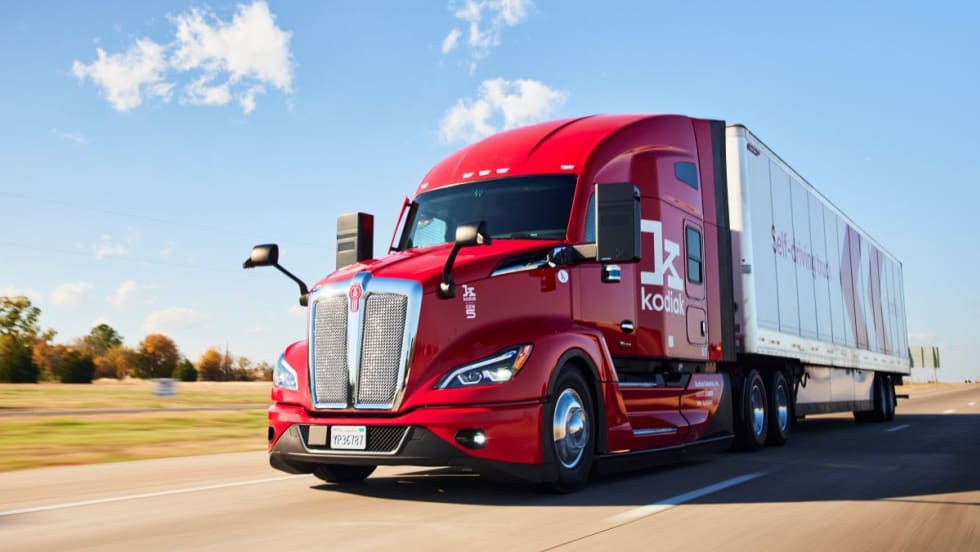
Autonomous Truck Testing Moves Ahead in California as Teamsters Challenge Rules
California has begun permitting heavy-duty autonomous truck testing, with Aurora and Kodiak among the first to receive approval, as the Teamsters sue the DMV over the new regulations.
Read More →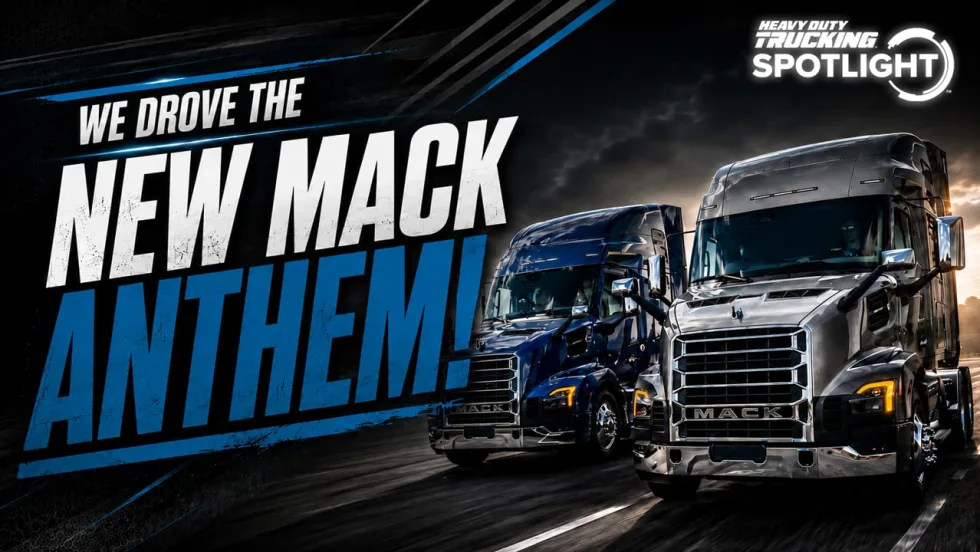
Behind the Wheel of the New Mack Anthem [Video]
HDT takes the new Mack Anthem around Mack’s Pennsylvania test track to see how its driver-focused design, technology, visibility and handling perform from behind the wheel.
Read More →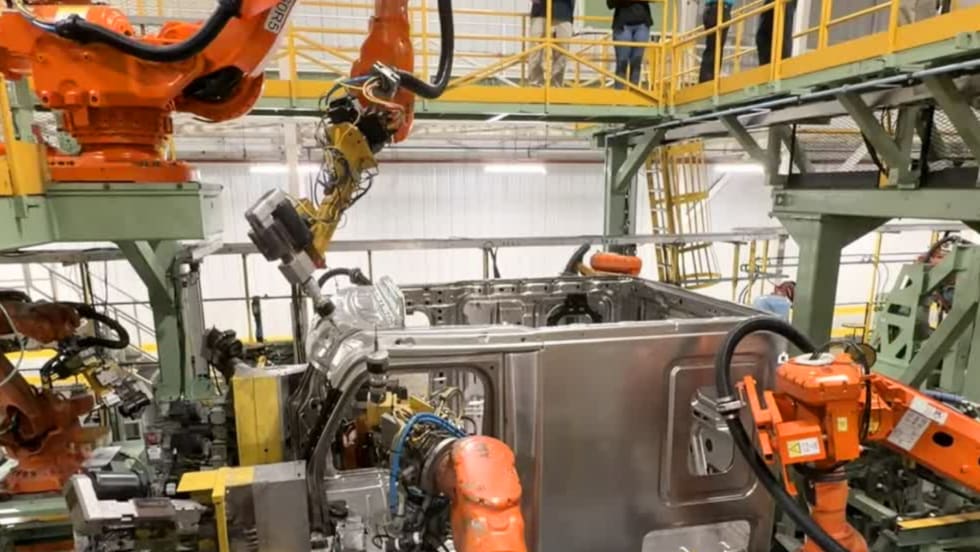
DTNA Plans New U.S. Truck Plant as Manufacturing Footprint Shifts
Daimler Truck North America is evaluating sites for a new assembly plant expected to open in 2029 while winding down operations at its longtime Portland manufacturing facility.
Read More →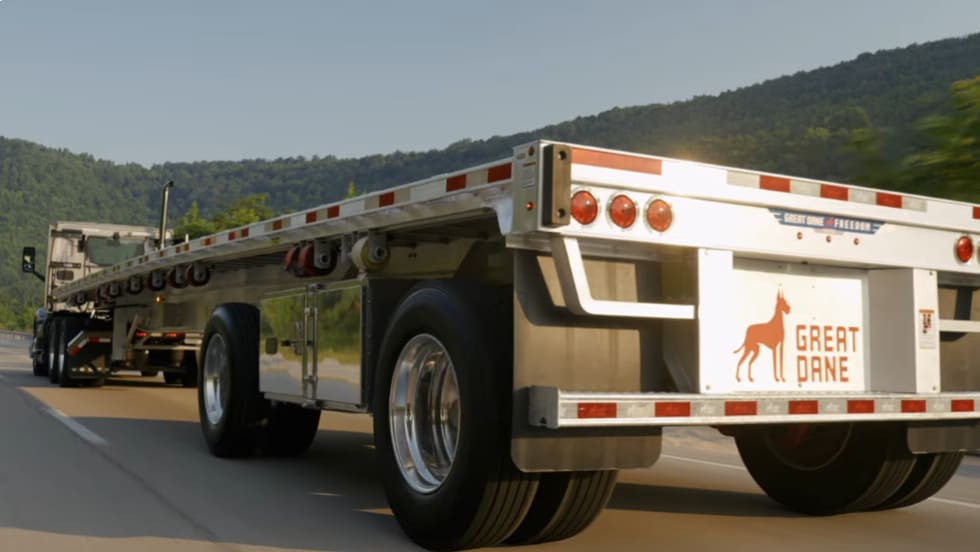
Great Dane Flatbed Trailer Offers Light Weight and Strength
Freedom Ultra is designed for a wide range of open-deck applications, including building materials, lumber, machinery, steel products, industrial freight, and coil hauling.
Read More →
What It's Like Inside this Custom 2025 Peterbilt 589?
Take a driver's-eye tour of this customized 2025 Peterbilt 589 in this video, as longtime driver Ingrid Brown explains its features, compares it to previous models, and shares plenty of personality along the way.
Read More →