





Nikola FCEV Recall: Mounting Bolts Could Damage Hydrogen Tank
Nikola's Former HQ, Manufacturing Plant Sold to Passenger-EV Startup Lucid
A passenger-EV startup has won an auction to acquire Nikola Corp.’s former headquarters and manufacturing facility -- but the deal doesn't include the bankrupt Nikola’s zero-emission trucks business.
April 15, 2025
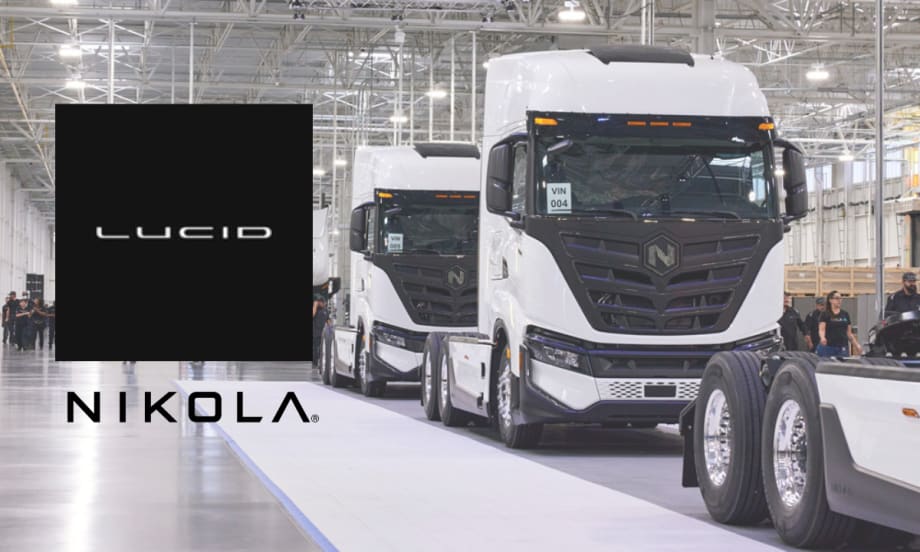
Lucid is buying Nikola's former manufacturing facility and HQ but not its ZEV truck business.
Image: HDT Graphic/Nikola photo
2 min to read
A passenger-EV startup has won an auction to acquire Nikola Corp.’s former headquarters and manufacturing facility. However, Lucid Group apparently will be using the facilities to expand the footprint for its own electric light-duty EVs, not continuing the bankrupt Nikola’s zero-emission trucks business.
A news release announcing the deal said the transaction does not include the acquisition of Nikola's business, customer base, or technology related to Nikola's hydrogen fuel cell electric trucks.
According to TechCrunch, the move surprised industry watchers, as Nikola had been trying to sell its whole business since it filed for bankruptcy protection in February.
TechCrunch also reported that Nikola founder Trevor Milton, who was convicted of fraud in 2022 but was pardoned by President Trump in March, was evaluating a bid of his own, but Nikola convinced the court to block Milton from inspecting its factory and other assets in person ahead of the auction.
What Will Lucid Do With Nikola Assets?
Lucid will take over Nikola's former Coolidge, Arizona, manufacturing facility, as well as the Phoenix facility previously used as Nikola's headquarters and product development center. These buildings collectively add more than 884,000 square feet to Lucid's Arizona footprint.
Lucid's agreement to acquire these assets follows Nikola's bankruptcy auction, which concluded April 10 as part of Nikola’s filing for Chapter 11 bankruptcy relief.
The company also said it plans to offer employment to more than 300 former Nikola employees in roles across Lucid's Arizona facilities.
Lucid is a Silicon Valley-based technology company focused on creating advanced EVs, such as the Lucid Air and new Lucid Gravity, both of which it assembles in its vertically integrated factory in Arizona.
"As we continue our production ramp of Lucid Gravity and prepare for our upcoming midsize platform vehicles, acquiring these assets is an opportunity to strategically expand our manufacturing, warehousing, testing, and development facilities while supporting our local Arizona community," said Marc Winterhoff, Interim CEO at Lucid.
Last year, Lucid announced that its 2025 MY Lucid Air Pure achieved 5 miles per kilowatt hour of energy and recorded a 146 MPGe (miles per gallon of gasoline-equivalent) EPA rating.
More Fuel Smarts

How Volvo Updated Its D13 for EPA 2027 [Watch]
Volvo’s updated D13 promises lower emissions without sacrificing performance or fuel economy. Take a closer look at what changed inside the engine in this HDT Spotlight video.
Read More →
Diesel Price Spike Shortens Payback for Natural Gas Trucks, Report Says
Energy Vision estimates fleets could recover the higher purchase price of an RNG-fueled Class 8 tractor in 1.3 to 2.8 years under current fuel-price scenarios.
Read More →
Calstart Becomes Catalyst Mobility, Reflecting Broader Focus
Calstart is now Catalyst Mobility, reflecting the nonprofit’s growing national role in clean transportation, including zero-emission trucks, infrastructure and incentive programs.
Read More →

Record Diesel Prices Squeeze Trucking Fleets
Average U.S. diesel prices have climbed to nearly $6 a gallon, surpassing the 2022 record as tight refinery capacity and Middle East disruptions keep fuel costs elevated.
Read More →
Sponsored•September 9, 2026
How Fuel Delivery Shapes Engine Performance
Fuel delivery depends on more than what happens at the injector. For fleet, maintenance and technical professionals, looking at the full path from pump to injector can provide useful context for understanding engine performance.
Read More →
East Coast Port Launches $45M Electric Truck Push
The Port Authority of New York and New Jersey announced millions in incentives for zero-emission drayage trucks, yard tractors, and new charging hubs near the port.
Read More →
California Bill Could Shed Light on Electric Truck Prices
Why do battery-electric Class 8 trucks remain so expensive? A California bill headed to Gov. Gavin Newsom would give fleets and state agencies more visibility into what manufacturers charge.
Read More →
Detroit Opens Orders for EPA 2027 Engines
Detroit isn’t starting from scratch to meet EPA 2027 diesel emissions standards. Its Gen 6 DD13 and DD15 engines keep much of today’s platform while updating the fuel and aftertreatment systems.
Read More →
Zero-Emission Truck Corridor Planned for West Coast
California, Oregon, Washington, British Columbia and Baja California are coordinating plans for truck charging and hydrogen fueling from Canada to Mexico.
Read More →
A Closer Look at Kenworth’s Electric T880E Vocational Truck [Video]
Learn more about Kenworth's T880E battery-electric vocational truck at the Paccar Technical Center, including its range, applications, upfitting considerations, and PTO options, in this HDT Spotlight video.
Read More →