




New Personal Conveyance Guidance Gives Flexibility to Find Truck Parking
The Federal Motor Carrier Safety Administration just announced regulatory guidance that gives drivers a way to deal with one of the most vexing problems with the electronic logging device mandate – finding a safe place to park for the night – as well as clarification for ag haulers on the 150-air-mile exemption.

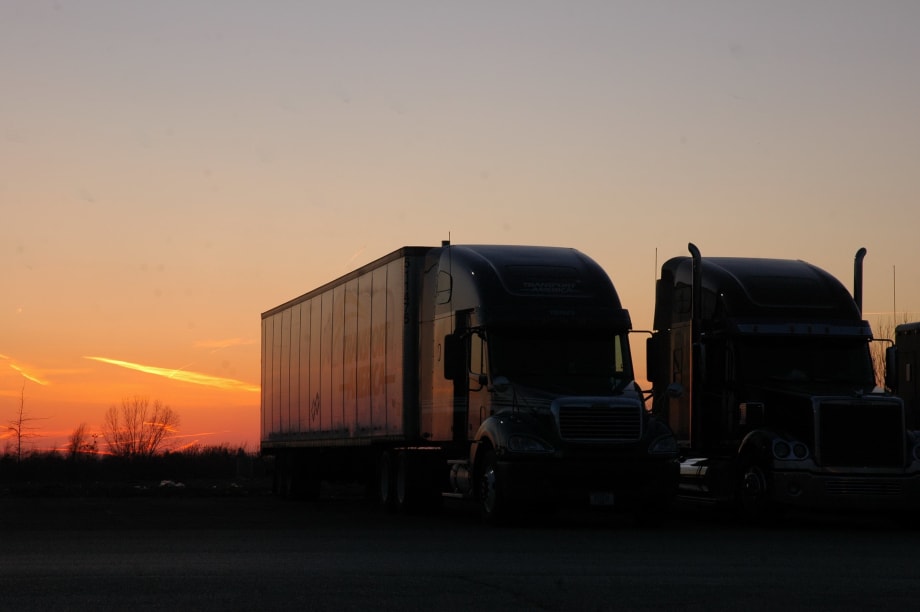
Personal conveyance now may be used for drivers to find a safe place to park for the night when they're caught out of hours after waiting to load or unload.
Photo by Jim Park
The Federal Motor Carrier Safety Administration just announced regulatory guidance that gives drivers a way to deal with one of the most vexing problems with the electronic logging device mandate – finding a safe place to park for the night.
FMCSA on May 31 published new guidance documents providing more detail of the “personal conveyance” provision of federal hours of service rules, including a key change from the 1997 guidelines, as well as clarifying the longstanding 150 air-miles hours-of-service agricultural commodity exemption.
Personal Conveyance
Personal conveyance is not a new part of the hours of service regulations. Motor carriers may, at their discretion, authorize drivers to use a commercial motor vehicle while off-duty for personal conveyance. This must be documented in a driver’s logs, whether electronic or on paper. ELD manufacturers are required to include a special driving category for personal conveyance.
The previous guidance, in 1997, explicitly excluded the use of “laden” vehicles as personal conveyance. The new guidance focuses instead on the reason the driver is operating the commercial vehicle while off-duty, without regard to whether it’s loaded or not. This opens it up to the ability to be used by drivers who run out of legal driving hours while delayed at a shipper or receiver so they can get to the nearest reasonable safe place to park, explained Joe DeLorenzo, director of the Federal Motor Carrier Safety Administration’s Office of Enforcement and Compliance, in a conference call with reporters.
“Previously we had said, ‘Do the best you can, but it’ll put you in hours violation,'” DeLorenzo said. “But when you analyze why you are making that move – to get to a safe location to get your required rest – that can be done during personal conveyance. Say I get woken up in the middle of the night because law enforcement wants me to move my truck. Again, the purpose of that movement is not to advance the load or get closer to where you’re going; the purpose is to get somewhere safe in order to take rest.”
However, he said, it’s not to be used as an excuse to get further down the road toward your next pickup or delivery. “The next reasonable safe location with parking available is where you have to be.”
What exactly is considered a safe location is not explicitly defined. Obviously parking on the side of the road is not safe. Other questions such as the amount of lighting available are left up more to the discretion of the driver.
DeLorenzo emphasized the need for drivers to document the situation using annotations in their ELD, and to have a conversation with the enforcement officer at roadside. If the driver still gets a citation and doesn’t believe he or she should have, carriers can use the DataQs process to challenge it.
DeLorenzo also said that returning to the terminal is not considered personal conveyance, but rather the continuation of an interstate move. There are other examples of what can and cannot be considered personal conveyance in the guidance, which can be found at https://www.fmcsa.dot.gov/personal-conveyance-guidance. This guidance is effective immediately and will appear in the Federal Register sometime next week.
He also noted that despite what the law allows, it is up to the carrier’s discretion as to what it allows as personal conveyance. He encouraged carriers to make sure they have a written policy.
Agricultural Commodities and the 150-Air-Mile Exemption
FMCSA also published new regulatory guidance for agriculture haulers, using a question-and-answer format to explains the 150 air-mile radius agricultural commodity exemption and how the “source” of the commodity is determined. For a copy of this guidance, see https://www.fmcsa.dot.gov/ag-commodity-guidance.
DeLorenzo explained that the 150-air-mile exception is a statutory definition provided by Congress that has been translated into FMCSA regulations. There was no previous guidance on this, and the ELD rules have prompted a number of questions the agency felt needed to be addressed.
He highlighted two key areas of the guidance: What time actually is counded for those taking advantage of this exception; and what constitutes the “source” from which the radius is calculated.
“Any of the time that takes place working within that 150-mile radius is not counted toward hours of service,” he said, such as the time spent driving to the pickup point, loading time, and time transporting that agricultural commodity within that 150-mile radius of the source.
“There has been some confusion about that,” he said. “All that time doesn’t count. Also, a transporter who is also traveling outside the 150-mile radius can take advantage of the exception for that portion of the trip. So all that time doesn’t count, and no ELD is required. Once you exit that radius, then the hours of service rules kick in starting at zero. At that point you have the full hours of service to go. There’s a fairly significant extension to the work day.”
The other key point, he said, is clarifying what is the “source” of that commodity. It not only includes the obvious ones, like a farm or a ranch, but also can be a place where the produced is aggregated and loaded, such as a grain elevator or sale barn. “The other part of the clarification we made is that on any given trip, you can only have one source.”
He also noted that occasional transporters who only go out of the 150-mile radius a few times a month, they may also be able to take advantage of the “eight in 30 days” exception for ELDs and never have to have an ELD. If you are not required to fill out a log book more than eight days in every 30, the ELD rule allows you to stay on paper.
The process
The agency characterized this as a continuing part of the evolution of the ELD mandate. While neither of these are new rules, ELDs brought confusion and questions about them into focus.
“Due to input from commercial vehicle stakeholders and the public, the Department has taken steps to provide greater clarity and flexibility regarding the intent and effect of these regulations, for the agricultural and other sectors,” said Secretary of Transportation Elaine Chao.
FMCSA published Federal Register notices proposing regulatory guidance for the transportation of agricultural commodities and the use of personal conveyance in December 2017 and requested public comment.
In all, nearly 850 public comments were submitted to the Federal Register dockets on the proposed guidance pertaining to the transportation of agricultural commodities as well as on the personal conveyance provision.
Related – FMCSA Chief: Agency ‘Open to Ideas’ on Improving Safety
More Safety & Compliance

Kodiak Lines Up Fleets for Driverless Trucking
An agreement for 75 trucks, a new Texas freight lane, and progress on safety validation move Kodiak closer to its planned driverless highway launch.
Read More →
More Trailer Data Through the Same Seven-Way [Video]
Can trucking’s standard seven-way connector handle more cameras and trailer data? Grote’s Adam Slade shows HDT how the company is using new technology with its 4See trailer system, not only to add a new backup camera but also to expand other capabilities — without adding another connection.
Read More →
PrePass Intelligence Mines Fleet Bypass, Toll and Safety Data
PrePass Intelligence helps fleets measure bypass savings, flag potential toll overcharges, and spot suspicious transactions by combining data from separate systems.
Read More →
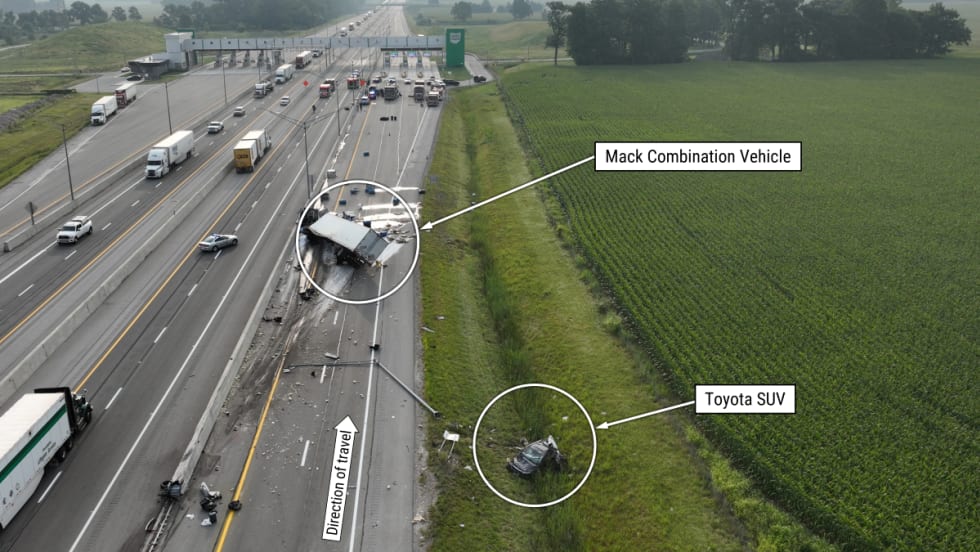
Fatal Crash Exposes Toll Plaza Risks
An NTSB investigation found that last-minute lane changes and large speed differences at an Ohio toll plaza created a hazard the truck driver couldn't avoid in time.
Read More →
When Language Stops the Truck: The Return of ELP Out-of-Service Orders
English language proficiency rules for commercial drivers aren’t new, but renewed out-of-service enforcement has raised the stakes. Here’s what carriers need to know before a driver reaches a roadside inspection.
Read More →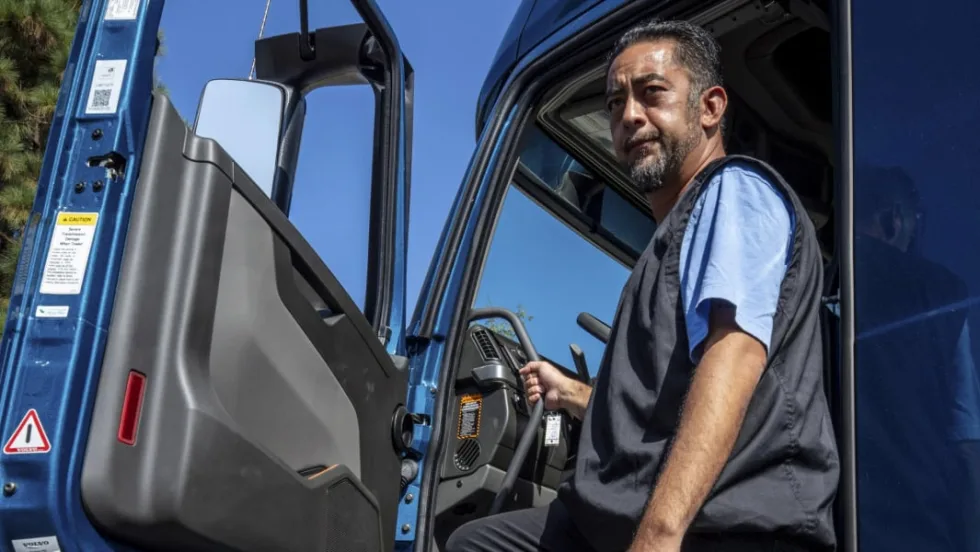
A Camera Isn't a Safety Program. Here's What Brokers Are Screening for Now
Footage alone may not be enough to pass broker vetting processes. Here's what counts as a defensible safety program now.
Read More →
Marijuana and Trucking’s Drug-Testing Dilemma
Marijuana is getting stronger, laws are changing, and drug tests still can’t reliably establish impairment. What does that mean for truck drivers and the fleets that employ them?
Read More →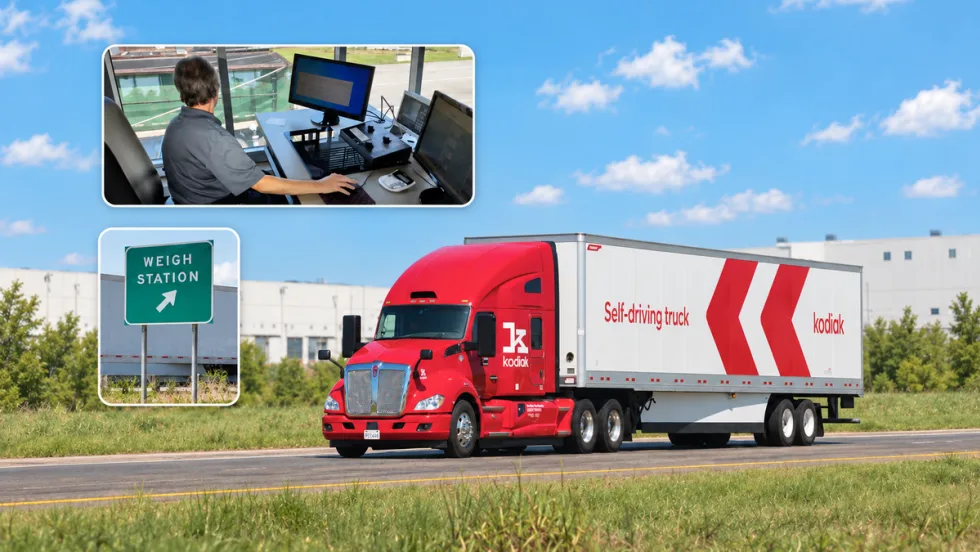
PrePass, Kodiak Connect Driverless Trucks to Roadside Enforcement
The system will allow enforcement agencies to verify Enhanced Inspection information and decide whether Kodiak’s autonomous trucks can bypass roadside screening sites.
Read More →
From One Generation to the Next: How Mentorship Builds Safer Truck Drivers
After three decades in trucking, Harold Perry shares what he's learned about driver safety, mentorship, and helping the next generation build confidence behind the wheel.
Read More →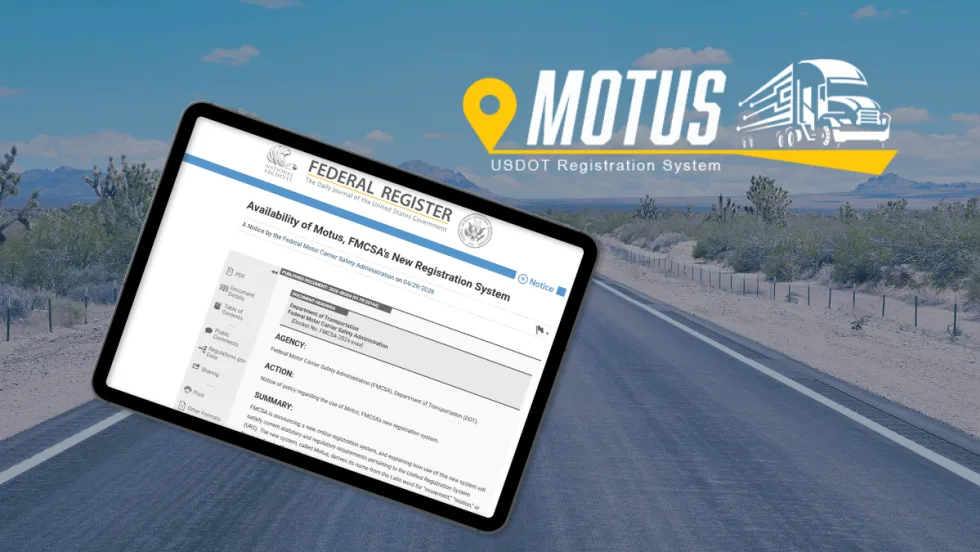
FMCSA Pauses Biennial-Update Enforcement Amid Motus Transition
Carriers whose updates were due on or after June 1 have more time, while FMCSA works to stabilize its new registration system and warns of phishing sites impersonating its new carrier registration system, Motus.
Read More →