





5 Things Motor Carriers Need to Know about LTL Freight Classification Changes
New LTL Freight Classification System Scheduled for July
The National Motor Freight Traffic Association is introducing "transformative updates" to the LTL freight classification system.
December 17, 2024
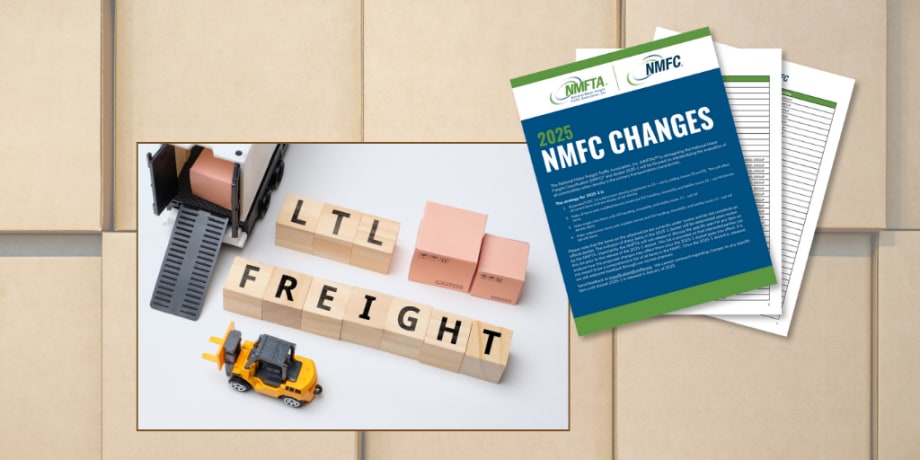
The National Motor Freight Classification updates, pushed to July, will increase the efficiency of the online tool, including using API.
Image: HDT Graphic
2 min to read
Changes to the less-than-truckload freight classification system are now expected to go into effect in July, rather than the May date originally announced.
The expected 2025 National Motor Freight Classification changes will go live on July 19, 2025, according to the National Motor Freight Traffic Association.
These changes will enhance the technologies that use NMFC data, including replacing the online tool ClassIT with ClassIT+, according to the association.
Ultimately, incorrectly classifying freight can lead to higher costs, and NMFTA's main priority is to prepare industry professionals for these expected changes to prevent an increase in charged fees.
“NMFTA is introducing transformative updates to the LTL freight classification system the NMFC,” said Joe Ohr, chief operating officer for NMFTA.
“These changes will focus heavily on simplifying the process and improving transparency for shippers, carriers, and third-party logistics (3PL) providers.
“Additionally, it’s our goal to enhance the user experience with ClassIT, the NMFC’s online counterpart. These updates will increase the overall efficiency for classifying freight so that users can experience more accurate results on the first attempt. This will, in part, be done via a new application programming interface (API).”
Throughout 2024, the Freight Classification Development Council has conducted three public meetings to discuss the proposals for amending the NMFC and ClassIT. Professionals who use the NMFC were encouraged to submit written statements sharing feedback on the proposed changes to be addressed during each expected meeting
The NMFTA urges industry professionals who will be impacted within the shipper, carrier, and 3PL sectors to obtain additional information about the expected changes at the following links:
More Fleet Management

Sponsored•September 16, 2026
Color Match Smarter: Tools That Restore & Perform
For fleet managers and collision repair professionals keeping heavy-duty trucks on the road, getting the color right the first time isn't just about appearance — it's about efficiency, turnaround time, and bottom-line results. Discover how today's digital color tools are transforming the repair process from guesswork to precision.
Read More →
FMCSA Pauses Biennial-Update Enforcement Amid Motus Transition
Carriers whose updates were due on or after June 1 have more time, while FMCSA works to stabilize its new registration system and warns of phishing sites impersonating its new carrier registration system, Motus.
Read More →
Sponsored•September 14, 2026
2026 Blueprint for Countering Smarter Supply Chain Theft
Cargo theft is no longer just the cost of doing business. It's a multi-billion-dollar criminal enterprise exploiting vulnerabilities across your fleet, drivers, and supply chain.
Read More →


Sponsored•September 1, 2026
How Telematics Improves Visibility, Control, and Performance in Refrigerated Fleets
Explore how telematics help refrigerated fleets improve visibility, uptime, efficiency, compliance, and cargo protection across connected cold chain operations.
Read More →
What the U.S.-Canada Trade War Means for Trucking
Escalating U.S.-Canada tariffs could disrupt cross-border freight, reduce truck volumes, raise costs, and create new uncertainty for carriers on both sides of the border.
Read More →
What Are Trucking’s Top Concerns for 2026?
The American Transportation Research Institute wants to know what's worrying trucking fleet managers, drivers, and other stakeholders in its annual Industry Issues survey.
Read More →
American Trucking Associations Looks for a New Leader
ATA President and CEO Chris Spear abruptly left his job at the association on August 21, at a pivotal time for the trucking industry.
Read More →
Public Wi-Fi Cybersecurity Risks: How Truck Drivers and Fleets Can Protect Their Data
Public Wi-Fi can expose truck drivers and fleets to credential theft, malware, and other cyber threats. Here’s how to reduce the risk on the road.
Read More →
For Nicky Cupp, Fleet Innovation Starts With Frustration
HDT Truck Fleet Innovator Nicky Cupp turns everyday pain points at Fraley & Schilling into opportunities for better technology and smarter processes.
Read More →
Adam Buttgenbach’s Approach to Electric Trucks: Start With Where They Fit
HDT Truck Fleet Innovator Adam Buttgenbach helped PepsiCo build one of North America’s largest EV fleets by focusing on where electric trucks make operational sense.
Read More →