




New LTL API Standard Offers Freight Charge Visibility
A new API standard for the less-than-truckload industry will give carriers, shippers, and 3PLs visibility into freight charges before invoices are issued.

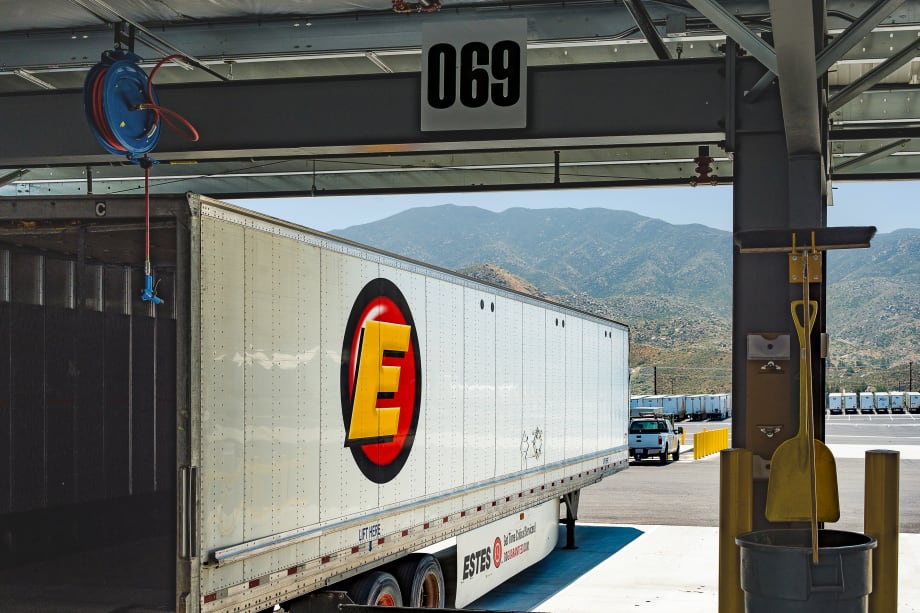
"API standards allow industry participants to build integrations once and use them across all partners, reducing redundancy and accelerating digital adoption,” said Kelly Koller, team lead for the PFC API Standard Development Workshop and product owner for Estes Express Lines.
Photo: Estes
The National Motor Freight Traffic Association’s Digital LTL Council has launched the Preliminary Freight Charges API Standard, which will give carriers, shippers, and 3PLs visibility into freight charges before invoices are issued.
It’s the latest application programming interface (API) from the Digital LTL Council, a division of the National Motor Freight Traffic Association’s Digital Standards Development Council.
According to a news release, this initiative marks a significant step in the Council's roadmap to digitize the less-than-truckload shipment lifecycle.
The PFC API is designed to provide proactive notifications and real-time visibility into freight bill charges throughout the shipment process.
Freight Visibility and Less-than-Truckload
Freight visibility is now the backbone of modern logistics. According to Gartner, by 2023, 50% of global product-centric enterprises had invested in real-time transportation visibility platforms.
With updated National Motor Freight Classification rules now in effect, reclassifications, reweighs, and accessorial fees can impact invoices more than ever.
By alerting stakeholders to potential billing discrepancies, such as reweighs, reclassifications, or accessorial fees, before final invoicing, the API aims to reduce disputes, enhance payment accuracy, and streamline billing operations.
“Our newest API Standard empowers shippers, carriers, and third-party logistics providers to address billing issues proactively," said Keith Peterson, staff liaison for the DSDC and vice president of operations for NMFTA, in a news release.
"By providing early visibility into potential charge adjustments, we can minimize surprises and foster trust among all parties involved."
A Digital LTL Roadmap
The PFC API is part of the Council's broader initiative to establish standardized digital communication protocols across the LTL industry. The roadmap includes seven operational APIs, covering functions from rate quotes to cargo claims, and two administrative APIs for document retrieval and carrier route guides.
"API standards allow industry participants to build integrations once and use them across all partners, reducing redundancy and accelerating digital adoption,” said Kelly Koller, team lead for the PFC API Standard Development Workshop and product owner for Estes Express Lines.
The PFC API specifically addresses the need for timely communication of billing changes. By integrating this API, stakeholders can receive immediate alerts about new or updated freight bills, track changes to charges, and maintain accurate records for accounting purposes.
"Real-time APIs enable carriers to communicate shipment and invoice exceptions as they happen, reducing costs and improving service for all parties,” said Brian Thompson, chairman of the Digital LTL Council and chief commercial officer for SMC³.
This collaborative approach mirrors the successful rollout of the electronic bill of lading (eBOL) API Standard in 2022, which is now seeing rapid, industry-wide adoption and building significant momentum across the LTL industry, according to the release.
More Fleet Management

Why Private Fleets Are Taking More Freight
Private fleets are putting their own trucks on demanding customers and high-cost lanes as companies seek greater control over service, costs, and capacity.
Read More →
Color Match Smarter: Tools That Restore & Perform
For fleet managers and collision repair professionals keeping heavy-duty trucks on the road, getting the color right the first time isn't just about appearance — it's about efficiency, turnaround time, and bottom-line results. Discover how today's digital color tools are transforming the repair process from guesswork to precision.
Read More →
FMCSA Pauses Biennial-Update Enforcement Amid Motus Transition
Carriers whose updates were due on or after June 1 have more time, while FMCSA works to stabilize its new registration system and warns of phishing sites impersonating its new carrier registration system, Motus.
Read More →


2026 Blueprint for Countering Smarter Supply Chain Theft
Cargo theft is no longer just the cost of doing business. It's a multi-billion-dollar criminal enterprise exploiting vulnerabilities across your fleet, drivers, and supply chain.
Read More →
How Telematics Improves Visibility, Control, and Performance in Refrigerated Fleets
Explore how telematics help refrigerated fleets improve visibility, uptime, efficiency, compliance, and cargo protection across connected cold chain operations.
Read More →
What the U.S.-Canada Trade War Means for Trucking
Escalating U.S.-Canada tariffs could disrupt cross-border freight, reduce truck volumes, raise costs, and create new uncertainty for carriers on both sides of the border.
Read More →
What Are Trucking’s Top Concerns for 2026?
The American Transportation Research Institute wants to know what's worrying trucking fleet managers, drivers, and other stakeholders in its annual Industry Issues survey.
Read More →
American Trucking Associations Looks for a New Leader
ATA President and CEO Chris Spear abruptly left his job at the association on August 21, at a pivotal time for the trucking industry.
Read More →
Public Wi-Fi Cybersecurity Risks: How Truck Drivers and Fleets Can Protect Their Data
Public Wi-Fi can expose truck drivers and fleets to credential theft, malware, and other cyber threats. Here’s how to reduce the risk on the road.
Read More →
For Nicky Cupp, Fleet Innovation Starts With Frustration
HDT Truck Fleet Innovator Nicky Cupp turns everyday pain points at Fraley & Schilling into opportunities for better technology and smarter processes.
Read More →