




New HoS Rules: No Big Impact on Fleets
An analysis of electronic logging device data by eRoad has shown recently implemented changes to the hours-of-service regulations have not had a big impact on user operations.
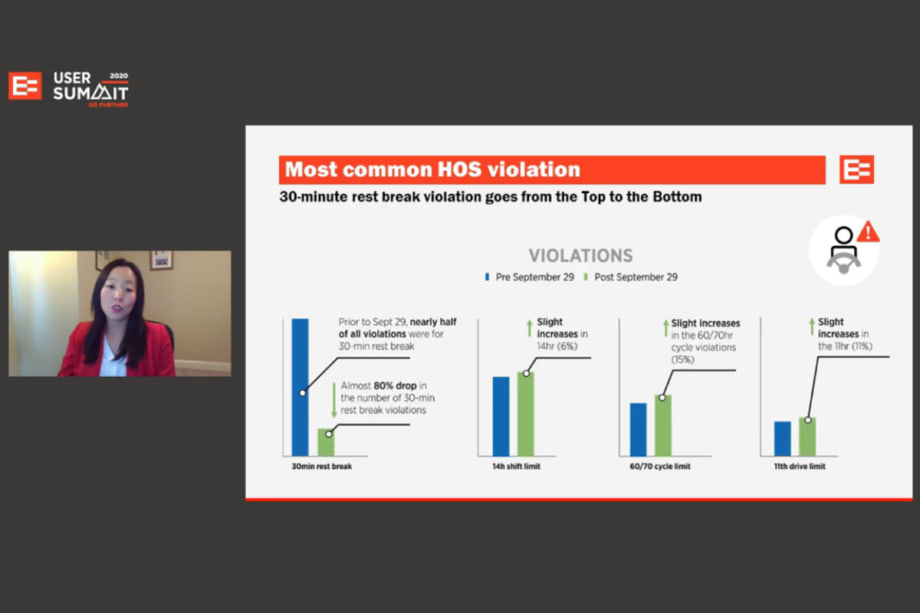
Image: Screenshot
An analysis of electronic logging device (ELD) data by eRoad has shown recently implemented changes to the hours-of-service regulations have not had a big impact on user operations.
Changes went into effect Sept. 29 involving shorthaul exemption criteria, adverse weather definitions, the 30-minute rest break, and split sleeper berth provisions. eRoad examined user data for the month preceding the changes and the month immediately following implementation. It found there was a nearly 80% reduction in violations related to the 30-minute break, thanks to increased flexibility afforded by the new rules.
“Drivers are benefiting from the new rules without significant changes to how they operate,” concluded Soona Lee, director, regulatory compliance with eRoad.
There was a 33% increase in drivers splitting their sleeper berth time, but Lee said drivers “haven’t fundamentally changed their shift schedules.”
Shorthaul drivers have seen their workday increased from 12 hours to 14, and the distance that qualifies from 100 air miles to 150. eRoad has seen a 34% decrease in shift limit breaches but an 84% spike in violations of the 11-hour driving limit. Lee said this could be because drivers don’t fully understand the driving limit has not increased, or are trying to squeeze in an extra run thanks to the more generous 14-hour workday.
Joe DeLorenzo, acting associate administrator for enforcement with the Federal Motor Carrier Safety Administration (FMCSA) said the shorthaul 11-hour driving breach increase was to be expected.
“As drivers are adjusting (to the changes) they may be pushing the limits a little bit, or not aware of that 11-hour rule and where they are in their day,” he noted.
Kerri Wirachowsky, director of the roadside inspection program with the Commercial Vehicle Safety Alliance (CVSA) said some shorthaul drivers still think they are exempt from hours-of-service rules.
“Just because you are under the shorthaul exemption doesn’t mean you’re exempt from hours-of-service,” she said. “You’re exempt from having a log, not exempt from hours-of-service.”
She also pointed out the increase in violations may be due to drivers operating legally under Covid-related emergency declarations.
The FMCSA hasn’t seen any worrisome trends from its enforcement data, related to the new HoS rules.
“There has been very little change in terms of violations before and after,” DeLorenzo said of the new rules. “I think we are still so early in the transition period that some drivers may not have even changed their schedules yet. We didn’t see much change at all in terms of violations from the month prior versus post-implementation. The real conclusion I draw from this is that folks are still making the adjustment.”
He said it could be six or nine months before fleets and drivers figure out how they can adapt their operations to take advantage of the greater flexibility afforded by the HoS changes.
Wirachowsky said enforcement officers have not yet seen a lot of drivers taking advantage of the greater sleeper berth flexibility now available to them.
“I haven’t heard from enforcement that they’re seeing a huge increase in split sleeper berth usage at this point,” she said. “I think you will over time. It takes time for the industry to figure out how to incorporate these new rules into their operations. I think over time we will see it increase and will see the motor carrier community figure out how to use it to their benefit.”
DeLorenzo warned carriers on the webinar not to expect further extensions for the expiration of commercial drivers’ licences and medical certificates. Those extensions expire Dec. 31, and DeLorenzo said it appears most state driver’s licensing agencies have adapted to function during the pandemic.
“We are trying to get everybody caught back up so we’re back in a regular rhythm,” he said.
Fleets will also be expected to resume normal random drug testing in 2021, he added, noting there was some flexibility granted to carriers who couldn’t maintain their 50% test rate this year due to the Covid-19 pandemic.
Roadside enforcement has returned to pre-Covid activity, Wirachowsky pointed out, adding there didn’t seem to be any adverse effects stemming from the drop in roadside inspection activity when Covid broke out in the Spring.
DeLorenzo addressed the drug and alcohol clearinghouse that went live in January, noting there are now 1.5 million user accounts set up, 1.3 million belonging to drivers. So far, 45,991 violations have been reported, in line with the agency’s expectations of 50,000 to 60,000 this year.
“It looks like we are well on track to meet that even with some reduction in testing earlier in the year because of the Covid-19 national health emergency,” he said.
He urged carriers who haven’t yet registered to do so before the Jan. 6 deadline.
“Despite the large number of registered users, there is a group of carriers that still seems to not be registered yet,” he noted. “Get those queries done and be ready to go into next year.”
Drivers looking to change carriers should also ensure they are registered before seeking new employment.
Wirachowsky pointed out 120 drivers have been placed out of service at roadside due to being flagged as prohibited, thanks to the clearinghouse.
“That tells me inspectors are doing a good job and the system is working right and having an impact on improving safety,” DeLorenzo added.
He also praised the new crash preventability determination program, noting about 10,000 data queues have been filed and 97% of those were ruled in the favor of the carrier, absolving them of blame for the crash. But Wirachowsky urged carriers to take the time to ensure their submissions are complete and appropriate.
“Don’t just throw it against the wall and hope it sticks,” she said. Be sure to include the crash report number, date, police report, insurance information, photos and video if available, even local news reports and any other information to support the case that the crash wasn’t the truck driver’s fault.
“The more you put there, the easier you make it for somebody that is reviewing it,” agreed DeLorenzo, adding improvements have been made to the portal to accommodate larger video files and to make it more user-friendly.
James Menzies is the editor of Today's Trucking, where this article originally appeared. This content was used with permission from Newcom Media as part of a cooperative editorial agreement.
More Safety & Compliance

From One Generation to the Next: How Mentorship Builds Safer Truck Drivers
After three decades in trucking, Harold Perry shares what he's learned about driver safety, mentorship, and helping the next generation build confidence behind the wheel.
Read More →
FMCSA Pauses Biennial-Update Enforcement Amid Motus Transition
Carriers whose updates were due on or after June 1 have more time, while FMCSA works to stabilize its new registration system and warns of phishing sites impersonating its new carrier registration system, Motus.
Read More →
ZF Expands Commercial Vehicle Push in North America
ZF is expanding its North American commercial-vehicle presence with new transmission applications, electrification, trailer technology and autonomous-driving systems.
Read More →
Truck Drivers Need More Than Another Alert
Fleets have more visibility into truck health, safety events, and driver activity than ever. The next challenge is turning all that information into useful guidance for the person who has to decide what to do next.
Read More →
Tesla Wants a Self-Driving Semi. Are Cameras Enough?
Could Tesla’s camera-only autonomous driving technology work on an 80,000-pound Semi? In this commentary, HDT's Deborah Lockridge takes a look at Tesla, Cybercab, and how autonomous trucks see the road.
Read More →
What DOT’s Automated Vehicle Strategy Means for Trucking
The U.S. Department of Transportation issued a new automated-vehicle strategy that outlines plans for driverless-truck regulations, cross-state freight corridors, and federal safety standards.
Read More →
NYC Expands Speed, Pedestrian Safety Tech Across Fleet
New York City is expanding intelligent speed assistance and pedestrian-alert systems across its municipal fleet, moving the technologies from pilot programs into vehicle procurement and retrofit requirements.
Read More →
FMCSA Removes 110 Truck Driver Training Schools from Certified ELDT List
Federal regulators also are targeting more than 160 additional training providers and launching a nationwide audit of third-party CDL skills testers as part of a broader crackdown on trucking fraud.
Read More →
Beyond DOT Compliance: What Makes a Trucking Fleet Truly Safe?
A trucking fleet can follow every rule and still make unsafe decisions. The real test comes when safety conflicts with freight, productivity, or cost.
Read More →
Hours of Service Pilot Programs: FMCSA Readies for 2027 Rollout
Two pilot programs could eventually reshape hours-of-service rules, giving truck drivers options to pause their 14-hour clock or use longer split sleeper rest periods.
Read More →