





Related: Multiple Lawsuits Filed against Navistar over MaxxForce Engines
Navistar to Settle Class Actions over MaxxForce Engines
Navistar International has agreed to settle pending class action lawsuits that alleged that certain Navistar MaxxForce Advanced EGR engines are defective and that Navistar failed to disclose or correct the alleged defect.
May 29, 2019
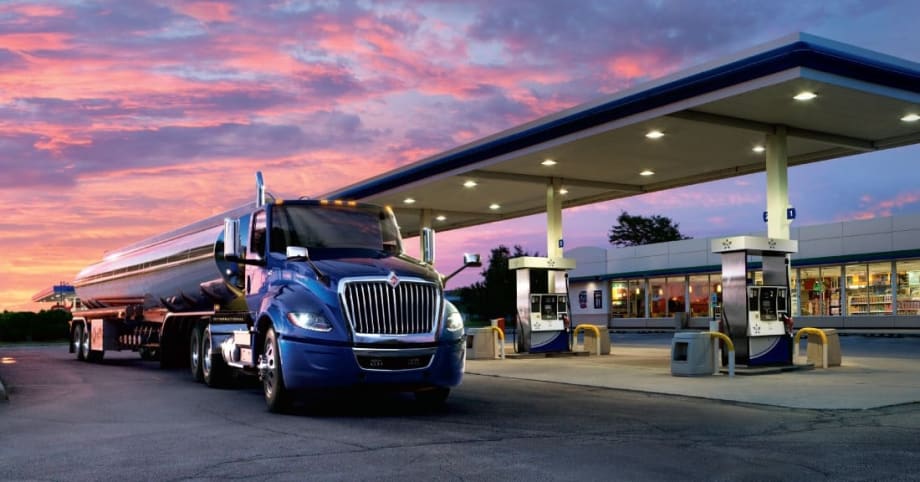
Agreement on class actions calls for Navistar to establish a $135 million settlement fund.
Image via Navistar
3 min to read
Truck and engine maker Navistar International has agreed to settle a number of pending class action lawsuits in the United States. The class actions, which were previously consolidated in the U.S. District Court for the Northern District of Illinois, alleged that certain Navistar MaxxForce Advanced EGR (exhaust gas recirculation) engines were defective and that Navistar failed to disclose or correct the alleged defect.
The settlement agreement, reported on a Form 8-Kfiled with the Securities and Exchange Commission on May 29 and subject to approval by the respective court, calls for Navistar to:
Establish a $135 million settlement fund, consisting of a cash fund and a rebate fund
Contribute $85 million to the cash fund, which will be used to pay all settlement fees and expenses, service awards, attorneys’ fees and costs, and cash payments to members of the settlement class
Commit to make available rebates with a face value totalling $50 million to the rebate fund.
The settlement will release Navistar and its affiliates from all claims and potential claims arising from or related to the allegations in the class actions, according to the company, except for claims for personal injury or damage to third-party property.
Asked by HDT to comment, Lyndi McMillan, Navistar’s director of business communications, explained that the company is taking a charge of $159 million in the second quarter "to address the costs associated with current period liabilities and future potential settlements of certain litigation related to Model Year 2011-2014 Class 8 trucks sold in the U.S. with the company’s 11L and 13L EGR-only engines, including U.S. class action lawsuits.
“This amount also includes additional funds for certain other engine lawsuits that are not included in the settlement agreement,” she continued, adding that the settlement agreement remains subject to approval by the court.
“Navistar expects that this preliminary step toward the settlement of these U.S. class action lawsuits will accelerate our efforts to move past the MaxxForce 11L and 13L EGR engines in the U.S.”
Jonathan Selbin of Lieff Cabraser Heimann & Bernstein, partner and co-lead counsel for the plaintiffs, commented in a May 29 news release that, “After years of hard-fought litigation, we believe this settlement represents an outstanding result for class members. In particular, we are proud of the choices it provides class members." They can choose a "no questions asked" cash payment of up to $2,500 per truck, or $10,000 rebate off the best negotiated price of purchase of a new truck, he explained, or can recover proven actual out-of-pocket damages of up to $15,000 per truck.
“We are also pleased Navistar stepped up to take care of its customers,” the attorney added.
The gist of the long-running class actions against Navistar regarding its EGR-only engines, according to a white paperposted by the Cohen Milstein law firm, is that Navistar and certain of its officers and directors, beginning in November 2010, allegedly made false representations regarding Navistar’s engine technology and its compliance with 2010 EPA emission rules.
“Plaintiffs contended that as a result of Navistar’s alleged missteps concerning emissions compliance and its false and misleading statements concerning the company’s ability to achieve compliant technology by certain EPA deadlines, Navistar allegedly faced legal, technological, and liquidity issues, which threatened its business,” the white paper states. “Plaintiffs also claimed that to conceal such facts from Navistar’s investors and customers, the company repeatedly falsely represented that it had EPA-compliant EGR engines ready to be certified and that would imminently be released to the market.”
In July 2012, Navistar announced that it was ceasing production of all 15L MaxxForce Class 8 heavy-duty diesel engines, and abandoning the use of its EGR-only technology on all its other Class 8 engines, instead moving to the selective catalytic reduction technology that other diesel engine makers used to meet the EPA 2010 emissions requirements.
More Equipment

How Volvo Updated Its D13 for EPA 2027 [Watch]
Volvo’s updated D13 promises lower emissions without sacrificing performance or fuel economy. Take a closer look at what changed inside the engine in this HDT Spotlight video.
Read More →
Michelin Tire Improves Efficiency and Durability for Regional Fleets
The Michelin X Multi Energy D2 is a regional haul drive tire engineered to help fleets improve fuel efficiency, durability and traction in demanding stop-and-go operations.
Read More →
ZF Expands Commercial Vehicle Push in North America
ZF is expanding its North American commercial-vehicle presence with new transmission applications, electrification, trailer technology and autonomous-driving systems.
Read More →
Tesla Wants a Self-Driving Semi. Are Cameras Enough?
Could Tesla’s camera-only autonomous driving technology work on an 80,000-pound Semi? In this commentary, HDT's Deborah Lockridge takes a look at Tesla, Cybercab, and how autonomous trucks see the road.
Read More →
Kodiak: Driverless Long-Haul Truck Launch on Track for 2026
Kodiak AI says its driverless long-haul safety case is 93% complete and it remains on track to begin commercial operations by year-end 2026.
Read More →
What DOT’s Automated Vehicle Strategy Means for Trucking
The U.S. Department of Transportation issued a new automated-vehicle strategy that outlines plans for driverless-truck regulations, cross-state freight corridors, and federal safety standards.
Read More →
East Coast Port Launches $45M Electric Truck Push
The Port Authority of New York and New Jersey announced millions in incentives for zero-emission drayage trucks, yard tractors, and new charging hubs near the port.
Read More →
PlusAI Going Public to Fund Autonomous Truck Launch
A SPAC deal could provide PlusAI with up to $300 million as it works toward a 2027 commercial launch of factory-built autonomous trucks.
Read More →
NHTSA Moves to Rewrite Truck Fuel-Economy Rules
The National Highway Traffic Safety Administration says it lacks authority to regulate medium- and heavy-duty truck engines separately from complete vehicles, but the existing standards have not yet been eliminated.
Read More →
Detroit Opens Orders for EPA 2027 Engines
Detroit isn’t starting from scratch to meet EPA 2027 diesel emissions standards. Its Gen 6 DD13 and DD15 engines keep much of today’s platform while updating the fuel and aftertreatment systems.
Read More →