




Meijer to Test Electric Trucks in Cold Weather Environment
Meijer will track performance of two all-electric Class 8 Freightliner eCascadia trucks in a cold weather environment as part of a grant from the U.S. Department of Energy.

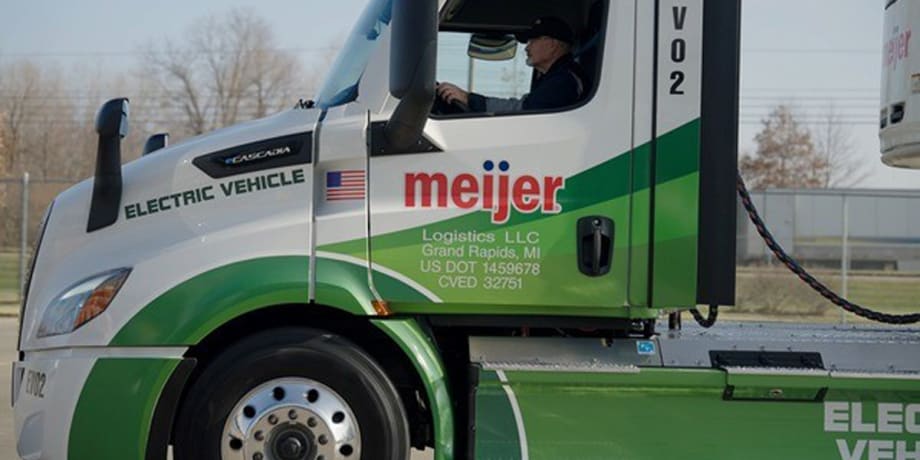
Meijer's Freightliner eCascadia trucks will operate out of the retailer’s Lansing Distribution Center.
Photo: Meijer
Meijer deployed two all-electric Class 8 Freightliner eCascadia trucks, and will track the performance of the trucks in a cold weather environment as part of a grant from the U.S. Department of Energy.
Meijer — a 2022 HDT Green Fleet — received the battery-electric trucks earlier this month and celebrated its inaugural delivery on Dec. 15 with a more than 44,000-pound food delivery and donation to Gleaners Community Food Bank in Detroit.
The trucks will operate out of the retailer’s Lansing Distribution Center, which is now equipped with specific charging infrastructure. They will make multiple deliveries daily to Meijer supercenters within a 200-mile trip range of the distribution center.
Meijer became a test fleet for Freightliner in 2009 and was selected in 2019 to test the manufacturer’s battery-electric trucks. After a successful conclusion of testing and integration of customer feedback in the design and development process, Freightliner is now rolling out the series produced battery-electric truck to customers, including Meijer that received the first delivery.
The retailer’s trucks were partially funded by a grant to Daimler Truck North America from the DOE’s vehicle technologies office geared toward the demonstration of battery-electric commercial trucks under diverse climate conditions. Meijer will continue reviewing data daily for temperature impact on mileage, charge times, battery life optimization and driver comfort.
“Through this partnership, we can help accelerate the industry’s transformation to electrification by applying valuable insights from data collected and real-world applications in a cold climate environment and make a meaningful difference when it comes to reducing greenhouse gas emissions,” said Mike Graham, senior vice president of supply chain and manufacturing for Meijer. “We’re pleased to work with Freightliner to further put the eCascadia tractors into real-world applications outside of southern California as we look for solutions to achieve zero emissions.”
The Freightliner eCascadia is the zero-emission version of the Cascadia and is ideally suited for short-haul routes that allow for depot-based charging. It provides a typical range of 230 miles, depending on vehicle configurations. A maximum battery capacity of almost 440 kilowatt hours can recharge 80% of the truck in approximately 90 minutes.
The 82,000-pound (GCW) truck comes standard with Detroit Assurance with active brake assist and active side guard assist. The side guard assist engages at urban speeds of 12 mph or less to mitigate the truck from making a right turn when a moving cyclist or pedestrian is detected on the passenger side of the truck.
More Fuel Smarts

California Bill Could Shed Light on Electric Truck Prices
Why do battery-electric Class 8 trucks remain so expensive? A California bill headed to Gov. Gavin Newsom would give fleets and state agencies more visibility into what manufacturers charge.
Read More →
Detroit Opens Orders for EPA 2027 Engines
Detroit isn’t starting from scratch to meet EPA 2027 diesel emissions standards. Its Gen 6 DD13 and DD15 engines keep much of today’s platform while updating the fuel and aftertreatment systems.
Read More →
Zero-Emission Truck Corridor Planned for West Coast
California, Oregon, Washington, British Columbia and Baja California are coordinating plans for truck charging and hydrogen fueling from Canada to Mexico.
Read More →
A Closer Look at Kenworth’s Electric T880E Vocational Truck [Video]
Learn more about Kenworth's T880E battery-electric vocational truck at the Paccar Technical Center, including its range, applications, upfitting considerations, and PTO options, in this HDT Spotlight video.
Read More →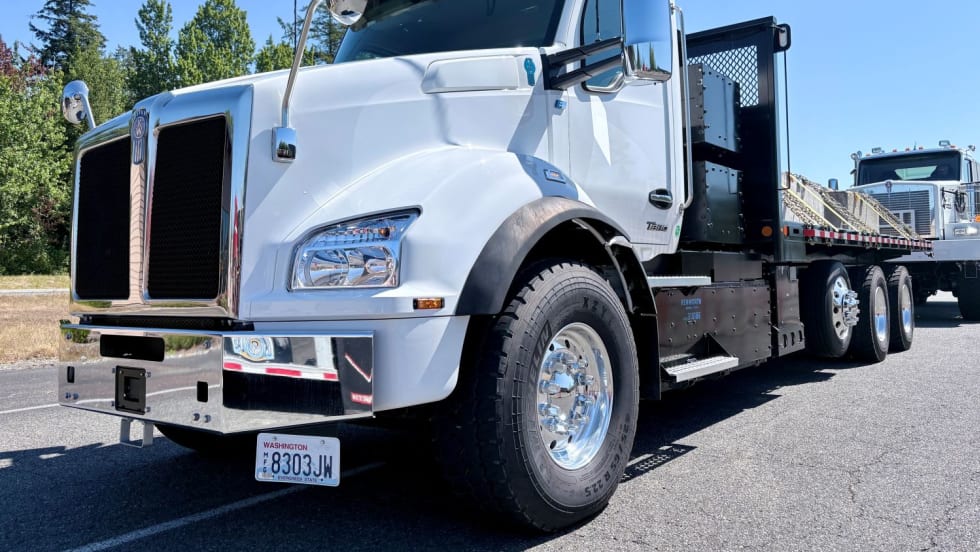
Kenworth T880E Brings EV Power to Vocational Trucks
A closer look at the Kenworth T880E’s range, charging, powertrain and upfit options — and where fleets are showing the most interest.
Read More →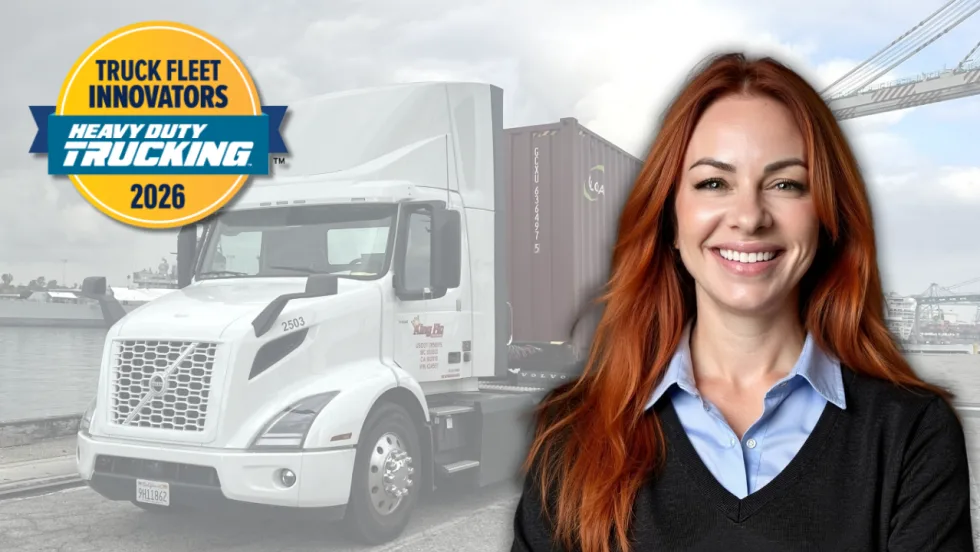
Jennie Abarca Is Proving Electric Trucks Can Do the Job
HDT Truck Fleet Innovator Jennie Abarca is building confidence in fleet electrification one load at a time while openly sharing the challenges she encounters along the way as a small-fleet owner.
Read More →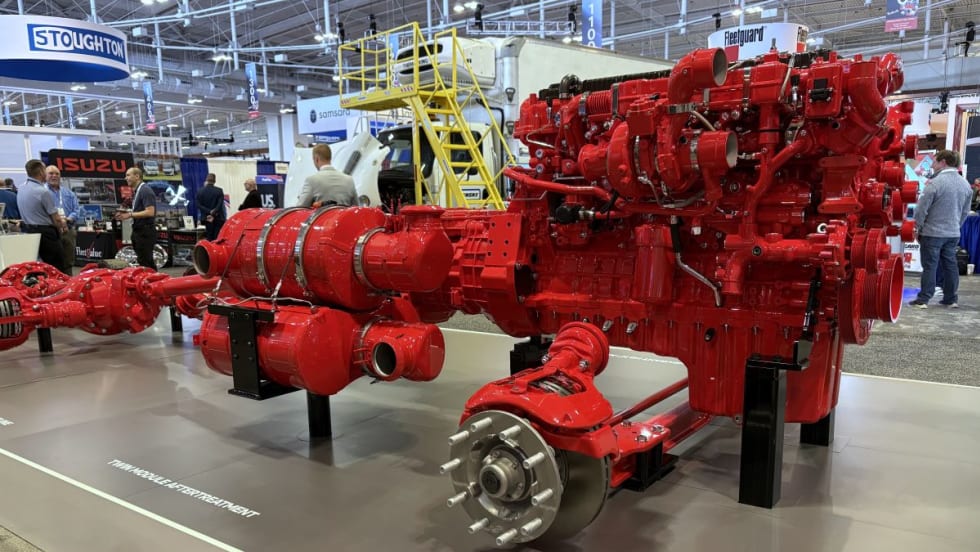
Cummins Adjusts 2027 Engine Rollout After EPA Proposal
The engine maker will gradually introduce its new Model Year 2027 diesel engines while continuing to offer current models during the transition, citing the EPA's proposed emissions rule changes.
Read More →
EPA Proposal Could Ease 2027 Truck Costs and Buying Uncertainty
The proposal doesn't change the tougher NOx standard, but it would revise key implementation requirements that manufacturers say have driven up costs and complicated fleet purchasing decisions.
Read More →
Cummins, Paccar Ease DEF Derates After EPA Guidance
Updated diesel engine software gives truck operators more time to address emissions-system issues while staying compliant with EPA emissions standards.
Read More →
Maintenance in the Messy Middle Part 3: Biodiesel
Biodiesel can reduce emissions, improve fuel-system lubricity and use existing diesel infrastructure. But NACFE’s Messy Middle maintenance report says fleets must actively manage storage, cold-weather operation, filters and oil drain intervals to avoid problems.
Read More →