




Meeting the Challenge of Truck and Bus Safety
On January 26, 1999, I assumed responsibility for the truck and bus safety program of the Department of Transportation. As Program Manager for the Office of Motor Carrier and Highway Safety, I was immediately immersed in
On January 26, 1999, I assumed responsibility for the truck and bus safety program of the Department of Transportation. As Program Manager for the Office of Motor Carrier and Highway Safety, I was immediately immersed in a controversy surrounding the increase in truck related fatalities from a low of 4,462 in 1992 to a high of almost 5,400 in 1997, and a corresponding decrease in enforcement activities. The organization had been paralyzed. Morale was low, and the significant contributions of good employees were lost in the thunder of criticism. Everyone jumped on the criticism bandwagon. In early 1999 we had no supporters.
Clearly change was needed. We looked at a four-point approach to safety – enforcement, increasing safety awareness, improving standards for operations and equipment, and improving information and technology – and agreed this approach should be the basis for success. We then looked at the allocation of resources to the various elements of our business and made major changes.
We gained new vision when Secretary of Transportation Rodney Slater raised the truck safety bar to what many thought to be an impossible level – a 50% reduction in truck-related deaths in 10 years. But Secretary Slater is absolutely right. There is enormous economic cost associated with truck fatalities, as well as personal loss for victims and their families. We have embraced the Secretary’s challenge and are working aggressively to accomplish his goal.
In April, I issued direction to our field staff to toughen our enforcement presence by increasing the number of compliance reviews of carriers, increasing the penalties for safety violations, and reducing the backlog of enforcement cases. I’m proud to say that from May 1999 to January 2000, FMCSA safety investigators conducted 96% more compliance reviews, brought 37% more enforcement cases, imposed 52% higher penalties and reduced our backlog of cases by 88%. Preliminary 1999 estimates indicate that while total highway fatalities stayed about the same as in 1998, fatalities in crashes involving large trucks declined by 3% last year, down to 5,203 in 1999 from 5,374 in 1998. FMCSA employees contributed significantly to this reduction, the first step toward the Secretary’s goal.
Of course, this is only a beginning. Reducing truck-related fatalities in half will take dramatic measures. We believe technology holds the greatest promise for major breakthroughs in reducing commercial vehicle crashes.
We are currently evaluating, in partnership with Volvo, Mack, and Freightliner, technologies to prevent truck rollovers, collision warning systems, electronic braking systems, and a hazardous location warning system. In addition, we are conducting research on fatigue detection devices, infra-red brake warning systems, and weigh-in-motion vehicle inspection devices. Operators of safe fleets are already installing safety technologies on their trucks because they are responsible. We anticipate widespread use of safety technologies in the near future because safety is good business.
We are also using technology to improve roadside inspections and enforcement. By integrating existing motor carrier information systems and networks in the states, streamlining operations, and providing real-time safety information to the inspectors at the roadside, we will better target high-risk carriers and drivers with histories of violations and crashes. In addition, we are emphasizing better information technology to help us learn why truck and bus crashes happen, identify the best prevention measures, and better identify carriers who are at risk.
We would be foolish if we thought we could achieve a 50% reduction in truck-related fatalities by ourselves. In fact, it will take the efforts of everyone who uses America’s roadways to accomplish that goal. That’s why we value partnerships such as the No-Zone Campaign, where hundreds of carriers and thousands of truck and bus drivers continue to help us carry the share-the-road safely message to people throughout the country. The Paperless Log System pilot project underway with Werner Enterprises is another partnership we value.
An important partnership is our priority enforcement initiative, the Performance and Registration Information System program. PRISM is a state and federal partnership to improve motor carrier safety by making safe performance a requirement for obtaining and keeping commercial vehicle license plates.
It has four essential parts: a link between safety performance and a carrier’s ability to register its vehicles; monitoring high-risk carriers; a process to improve the safety of carriers with moderate to serious safety problems; and progressive sanctions including the suspension or revocation of carrier’s vehicle plates if it fails to improve safety.
Future success will also depend on our ability to issue timely and effective regulations that make sense and will save lives. Several of our high priority regulations include “unsatisfactory equals unfit,” hours of service, and zero base. We are expecting a final rule on “unsat equals unfit” shortly. This rule will ensure that carriers that fail to meet basic fitness requirements may not continue to operate.
Hopefully, in the near future, our hours-of-service proposal will be public. This landmark rulemaking is science based, emphasizes rest, looks to a 24-hour clock, and attempts to address the various segments of the bus and truck industry.
We will be working hard to improve the Commercial Driver’s License program to require that driver information is shared within and among states. We will be issuing regulations for new disqualifying offenses and serious traffic violations and raising the bar on actions states must take to meet federal program requirements.
In December, legislation was signed that created the new Federal Motor Carrier Safety Administration. The legislation gave us new and stronger tools to help us accomplish our safety goals. We acted quickly to organize the new administration and in record time we had an approved structure and all employees operating under the new structure.
We took great care in the organizing the new administration’s structure to make sure our resources were placed where we would achieve the greatest safety gains. We have a strong team of managers, including many who proved their mettle in the firestorms of 1999, and supplemented by fresh blood to help provide different perspectives.
While Secretary Slater’s office actively works to identify candidates for the top leadership positions, we will be conducting an extensive search for high-quality executive candidates from a wide variety of backgrounds – safety, enforcement, industry, labor, government and non-profit organization – to fill the top career leadership positions in the agency. It will be this leadership that will ensure the success of FMCSA.
As I look back on the past year, I am overwhelmed by the dedication and focus of the staff at FMCSA, those career public servants who came to work every day knowing another crisis and criticism awaited. Who came to work every day not knowing what their agency would be called. Who came to work every day and did the best they could for the American people. Who came to work every day to save lives and were successful. Who worked long hours to put a new agency in place without additional resources and without a decrease in delivering the program.
Performance says it all and FMCSA staff has performed by any measure. As 1999 shows, FMCSA will be the performance benchmark for federal agencies.
Which brings me to my final point. As hard as we work, as focused as we are, as creative as we can be, we can’t succeed alone. Everyone has a responsibility for motor carrier safety. By everyone, I mean drivers of trucks, buses, and passenger cars, motor carriers, labor, corporate America, Congress, law enforcement, safety groups, victims groups, shippers, receivers, the i
More Drivers

Competition Heating Up for Truck Drivers
New report reveals rising driver hiring costs, the return of sign-on bonuses, growing AI advantages, and the operational factors shaping driver retention.
Read More →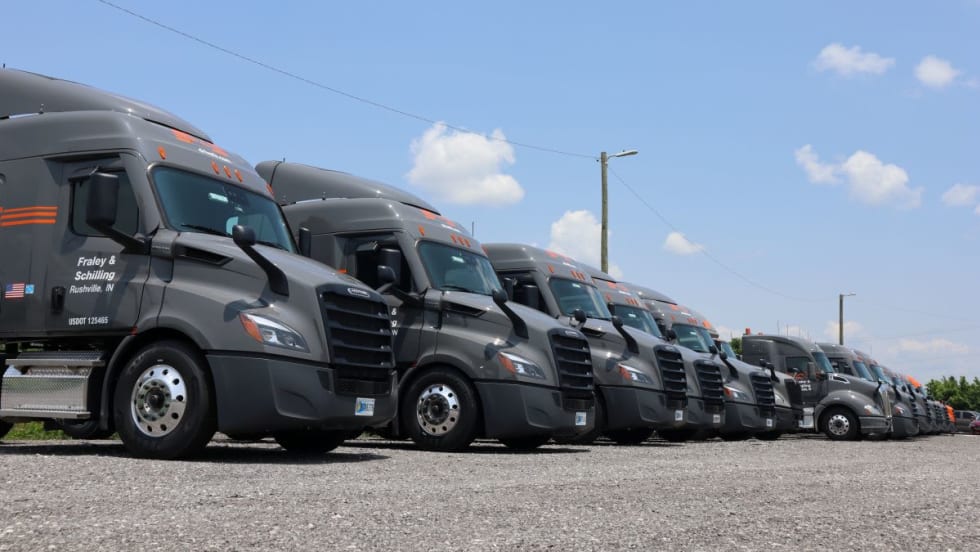
How Fraley & Schilling Improved Logbook Compliance by Over 50%
Fraley & Schilling needed a way to close a compliance workflow gap in its ELD system without adding more work from driver training, reminders, and back-office follow-ups. It found the answer in a custom driver app.
Read More →
Volvo Goes Gaming
Volvo has roared into American Truck Simulator with two new flagship trucks.
Read More →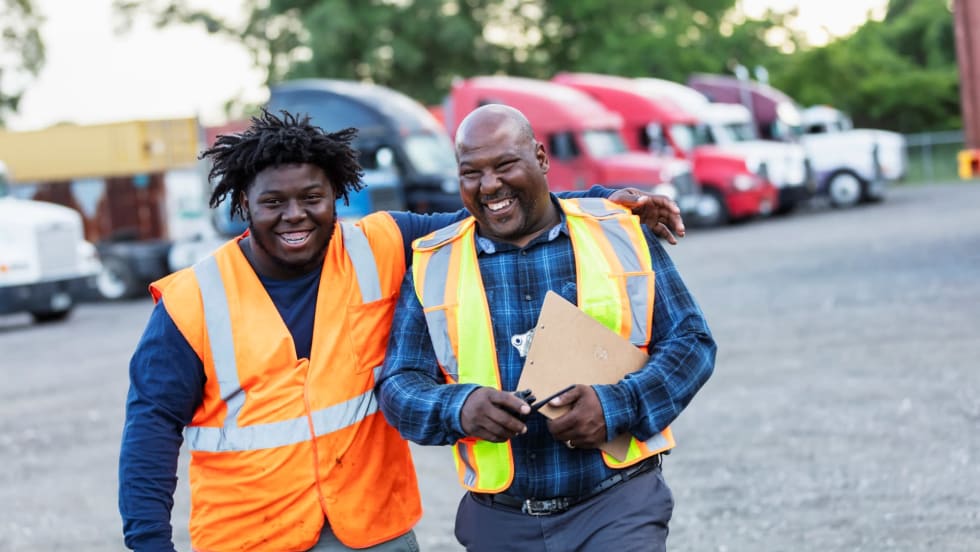
What the Best Fleets to Drive For Teach About Driver Retention
Survey fatigue, AI-powered routing, owner-operator expectations, and the decline of social media all emerged as themes from this year's Best Fleets to Drive For program.
Read More →
Driver Retention Lessons From the Best Fleets to Drive For
What separates trucking's best workplaces from the rest? Jane Jazrawy shares the biggest lessons from this year's Best Fleets to Drive For program on driver retention, communication, AI, and workforce trends on the HDT Talks Trucking podcast.
Read More →
Farewell, CDL: Why I'm Giving Up My Commercial Driver's License
After more than 20 years as a CDL holder, HDT Executive Editor Jack Roberts is letting his commercial license expire. Not because he wants to — but because trucking's nuclear verdict crisis has made the risks of public-road test drives too great for editors, manufacturers, and everyone involved.
Read More →
How Top Trucking Fleets Improve Driver Retention [Video]
What do healthy snacks, optimized routing, and just picking up the phone have in common? They're all strategies the Best Fleets to Drive For are using to retain truck drivers.
Read More →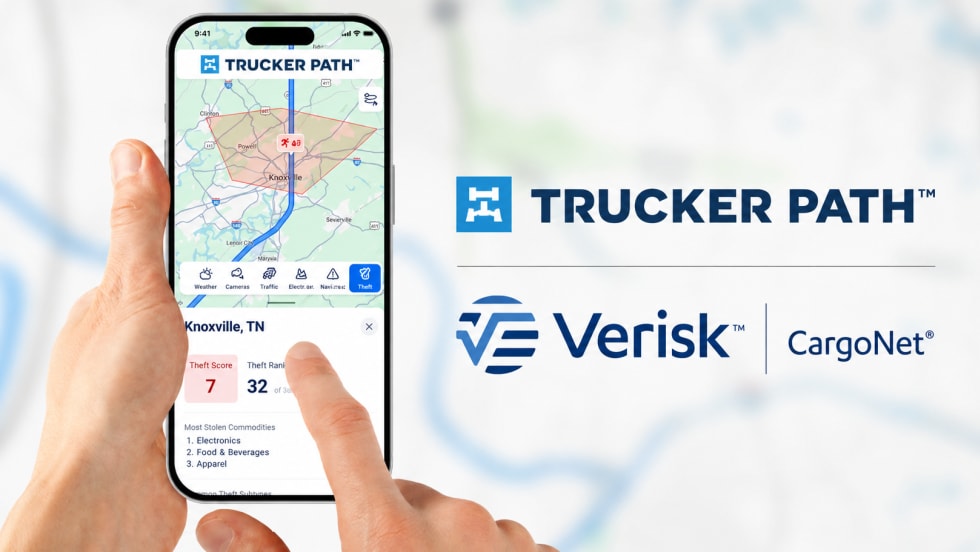
Trucker Path Adds Verisk CargoNet Theft Data to Navigation Platform
Trucker Path’s new cargo theft risk overlays give drivers and fleets visibility into high-risk areas, stolen commodity trends, and theft hotspots.
Read More →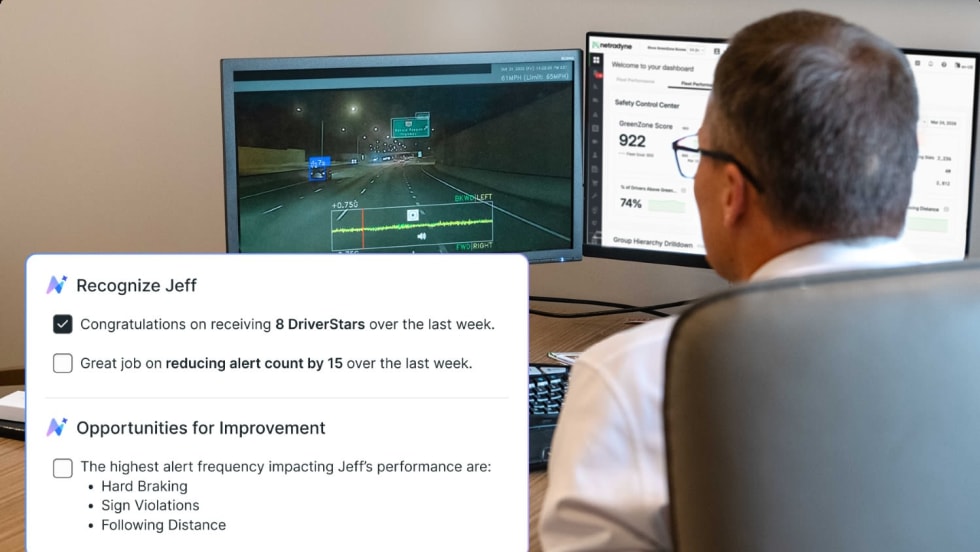
Netradyne Intelligence Uses New AI Agents to Automate Response to In-Cab Camera Data
The company called the next-generation in-cab camera safety platform "a fundamental shift from systems that report on what happened to systems that actively drive what should happen next."
Read More →
Why Truck Detention Keeps Costing Fleets Time and Money
A 2024 ATRI study found detention affects nearly 40% of truckload stops and costs the industry more than $15 billion annually. Despite the toll on drivers, fleets, and supply chains, the problem remains stubbornly persistent.
Read More →