




The Federal Highway Administration, under orders from Congress, has proposed changes to the Motor Carrier Safety Assistance program that will shift emphasis from activities to results.
MCSAP, first authorized in 1982, originally provided funds to the states for vehicle inspections. The program has since expanded to include other safety activities such as hazardous materials training, commercial driver license enforcement, traffic enforcement activities and the reporting of truck and bus crash data.
With last year’s Transportation Equity Act for the 21st Century, Congress again expanded the scope of MCSAP by giving the states more responsibility for improved motor carrier safety. One key change is that states must adopt performance-based programs starting with fiscal year 2000.
According to FHWA, this is already being done, since annual funding requests must include safety plans and program evaluations. However, the agency did admit that success has been measured by the number of activities conducted (inspections performed, for instance) rather than the outcomes achieved (fewer truck accidents, fewer fatalities, etc.)
Performance-based planning gives the states more flexibility to design programs that address their own safety problems along with national objectives. To provide further incentive, a new funding distribution formula would favor states that demonstrate safety improvement.
The notice appeared in the March 9 Federal Register, pages 11,414-11,431. It can be accessed at http://www.access.gpo.gov.
MCSAP Changes Give States More Flexibility In Truck Safety
The Federal Highway Administration, under orders from Congress, has proposed changes to the Motor Carrier Safety Assistance program that will shift emphasis from activities to results
More Safety & Compliance

Nominations Open for HDT Truck Fleet Innovators 2026
Heavy Duty Trucking is searching for forward-looking leaders at trucking fleets as nominations for HDT’s Truck Fleet Innovators 2026. Deadline is May 15.
Read More →
Freightliner Expands Detroit Assurance with New Intersection and Turning Safety Tech
Detroit’s next-generation ABA6 safety system adds cross-traffic detection and enhanced side guard assist with left-turn protection, targeting high-risk urban scenarios.
Read More →
'Beyond Compliance,' Regulations, Driver Coaching on ATRI’s 2026 Research List
The American Transportation Research Institute will examine driver coaching, regulatory impacts — including the "Beyond Compliance" concept —and weather disruptions that shape trucking operations.
Read More →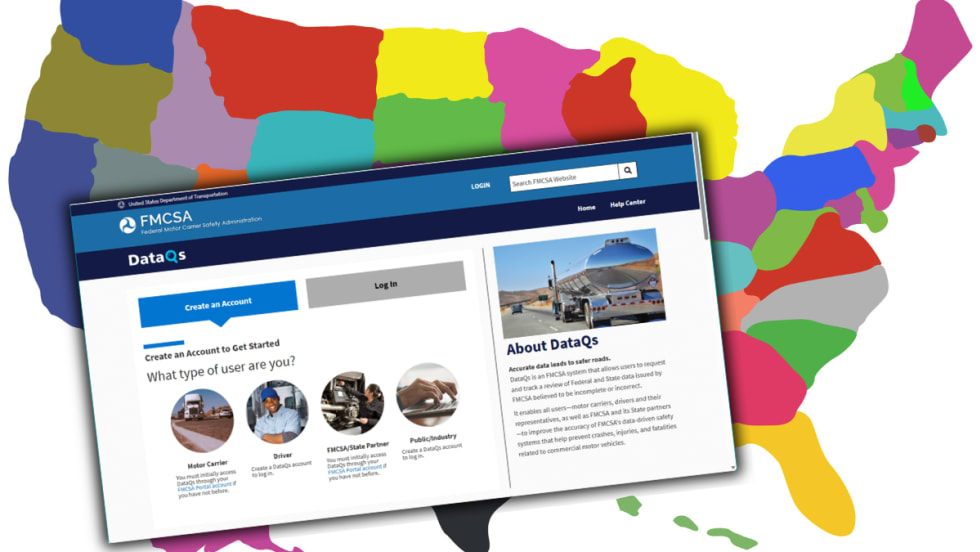
FMCSA Revamps DataQs to Improve Fairness, Speed of Reviews
New requirements add firm deadlines and independent review steps, addressing long-standing complaints about inconsistent rulings and slow response times.
Read More →
FMCSA Extends Paper Medical Card Exemption … Again
Five states still aren't ready to accept commercial driver medical exam information directly from the medical examiner's registry.
Read More →
HDT Honors the Best New Products of 2025 at TMC [Photos]
Heavy Duty Trucking's Top 20 Products awards recognize the best new products and technologies. Check out the award presentations at the 2026 Technology & Maintenance Council annual meeting.
Read More →
Detroit Engines: Trusted Performance, Built for What's Next
The Detroit® Gen 6 engine platform proves that real progress doesn’t require a complete redesign. Built on 20 years of trusted technology, these engines are designed for efficiency, stronger performance, and greater reliability than before. And they do it all while complying with 2027 EPA standards on every mile.
Read More →
Aperia Expands Halo Platform with Steer-Tire Inflation System, Fifth-Wheel Integration
Aperia Technologies introduced a new automatic tire inflation system for steer axles and a partnership with Fontaine Fifth Wheel to integrate coupling status into its Halo Connect platform.
Read More →
Fleetworthy and HAAS Alert Expand Partnership Stopped Truck Protection Alerts
Fleetworthy and HAAS Alert expanded their partnership to deliver real-time digital alerts that warn motorists when commercial trucks are stopped roadside and notify truck drivers when approaching emergency responders.
Read More →
New Entrants, Chameleon Carriers, and Safety: Is It Too Easy to Start a Trucking Company?
More than 100,000 new trucking companies enter the industry each year, but regulators manage to audit only a fraction of them. That churn creates opportunities for inexperienced startups — and for “chameleon carriers” that shut down after safety violations and reappear under new identities. Read more from Deborah Lockridge in this commentary.
Read More →