




U.S. employers will be hiring at a moderately slower pace during the second quarter of 2003, according to the Employment Outlook Survey, conducted by Manpower Inc. and released today.
"The survey results are clearly showing a dominating sense of uncertainty, as hiring intentions have dipped for the first time in over a year," said Jeffrey A. Joerres, chairman and CEO of Manpower Inc. "The results were unusually inconsistent across regions and sectors, which may signify a higher than normal level of caution and anxiety in the marketplace, rather than a trend," he added.
Of the nearly 16,000 employers interviewed, 22% said they expect to hire more people during the second quarter of 2003 compared with 20% in the first quarter of this year. Nine percent intend to reduce their workforce compared with 12% in the previous quarter. A steady 63% of companies plan to maintain their current staff levels and 6% are uncertain. When the seasonal variations are removed from the data, employment prospects are expected to be weaker than in the first quarter, but up slightly from the second quarter of 2002.
Below are survey results by industry sector:
Mining: Nineteen percent of employers in the Mining sector intend to hire more people in the second quarter of the year and 10% report that they will be reducing their workforces. When seasonal variations are removed, this is nearly identical to the first quarter survey results, and moderately stronger than the sector reported in second quarter of 2002.
Construction: Thirty-one percent of construction firms said they expect to hire at a quicker pace in the second quarter, and 7% plan to slow it down a bit over the next few months. On a deseasonalized basis, workers can expect job availability to remain stable through June of 2003 with a slight increase over the same quarter of last year. The Northeast reported a notable improvement over first quarter, showing the largest gains of all regions.
Durable goods manufacturing: Employers in this sector expect to hire at a slower pace through the second quarter, with 23% intending to increase their payrolls and 10% planning to reduce their hiring activity. Across the country, Durable Goods Manufacturing is slated to have a markedly improved hiring outlook over the same quarter of last year. All regions are positive, with the West and Northeast increasing employment activity the most significantly.
Non-durable goods manufacturing: Manufacturers are expected to hold back somewhat in the second quarter, as 22% of employers plan to continue hiring more people and only 9% expect a decline in job postings. The employment outlook for this sector is weaker this quarter in all regions, with the West expecting to pick up the pace the most over last year. The Midwest is the only region that is not expected to see employment pick up over last year’s levels in the same quarter.
Transportation/Public utilities: This sector declined moderately from last quarter and slightly from the year ago quarter. The weak job outlook shows 15% of employers plan to hire more people in the second quarter and 10% expect demand for workers to slacken. The Northeast holds the most negative outlook in seven years, lagging the rest of the country.
Wholesale/Retail Trades: When seasonal variations are removed from the data, the Wholesale/Retail Trades appear headed for a disappointing drop in hiring activity in the second quarter. While 24% of employers say they will be adding more people to their payrolls, 10% are planning to cut back. The South holds the most favorable outlook in the country, compared to the same quarter of 2002.
Finance/Insurance/Real Estate: Another gloomy quarter is in store for job seekers in the Finance/Insurance/Real Estate sector, as 19% of employers anticipate higher staffing levels in the next few months and 7% plan to hire fewer people. The South has the best prospects for improved opportunities over the year ago quarter.
For more information, visit Manpower’s U.S. web site at www.us.manpower.com.
Manpower Survey Shows Hiring to Decline in 2nd Quarter
U.S. employers will be hiring at a moderately slower pace during the second quarter of 2003, according to the Employment Outlook Survey, conducted by Manpower Inc. and released today.
More Fleet Management

The Trucking Industry’s Threat Intelligence Gap
The trucking industry has no shortage of cybersecurity reports and cargo crime statistics. What it lacks is timely, operational intelligence that fleets can actually use.
Read More →
Truck Crash Rates Are Down. So Why Do Insurance Costs Keep Rising?
ATRI’s latest research points to litigation, social inflation, and soaring claims costs as key drivers behind record-high liability premiums for trucking fleets. But there are things motor carriers can do.
Read More →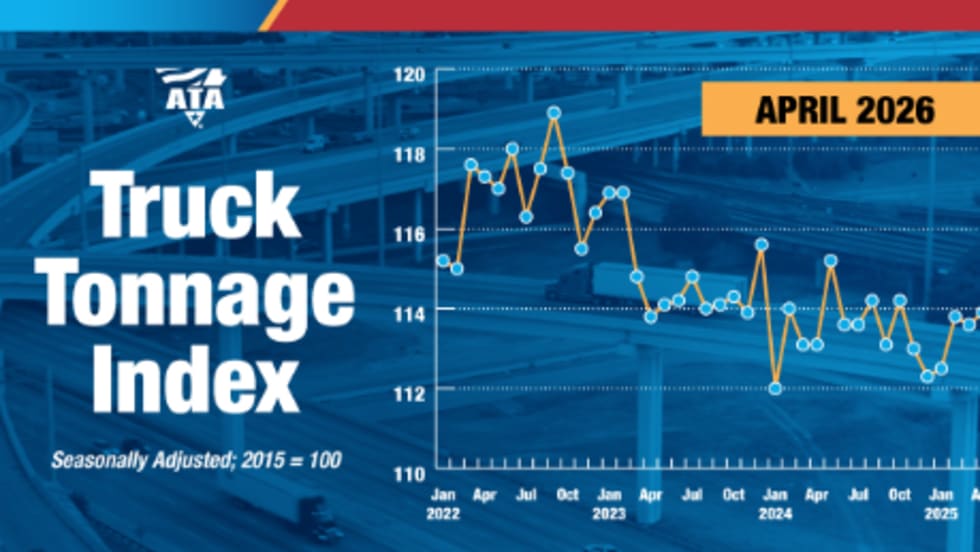
ATA Truck Tonnage Holds Steady in April at Highest Levels Since 2022
ATA’s For-Hire Truck Tonnage Index was unchanged in April after a strong March gain, with freight volumes remaining at their highest levels since late 2022.
Read More →
Fleetworthy Launches Connected Platform for Fleet Readiness Across Safety and Compliance, Toll Management, and Weigh Station Bypass
Fleetworthy has unveiled three major product launches it says mark a new era in fleet readiness.
Read More →
Behind the SCOTUS Broker Ruling Part 1
Transportation attorney Greg Feary breaks down the recent Supreme Court decision that brokers can be held liable for damages in truck accidents and what it means for the trucking industry going forward.
Read More →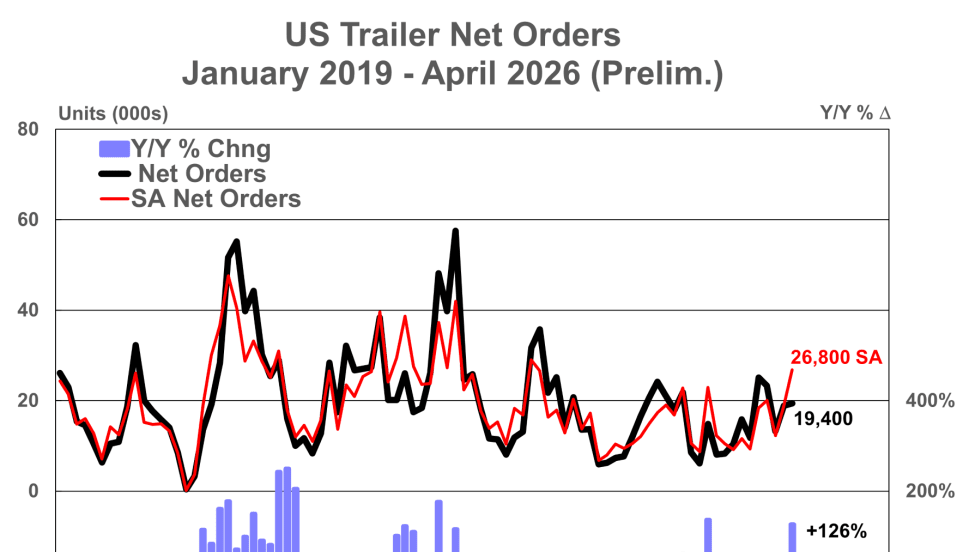
ACT Research: Trailer Orders Continue Upward Surprise in April
Preliminary net trailer orders rose 3% from March and jumped 126% year over year, signaling stronger-than-expected demand despite typical seasonal softness.
Read More →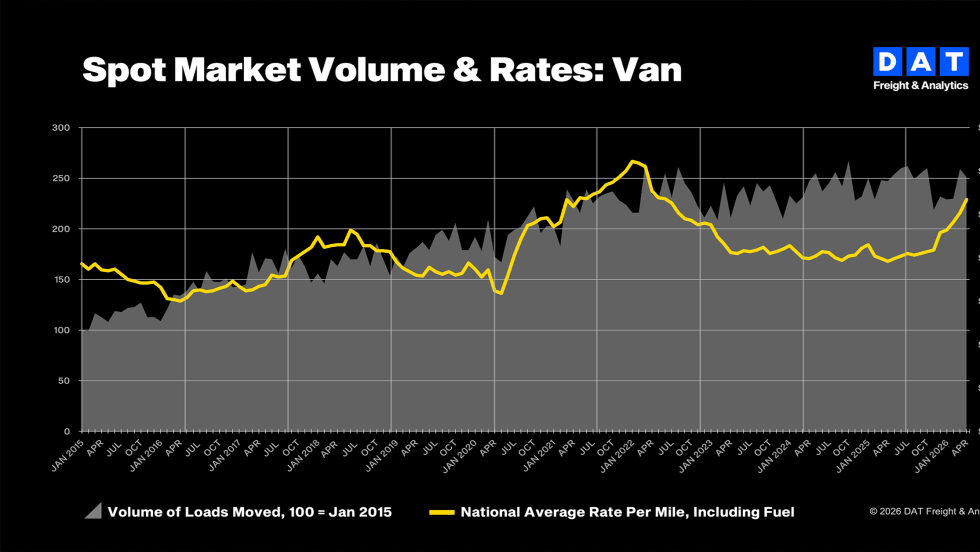
DAT: Fuel Surcharges Drive April Truckload Rate Gains as Freight Volumes Slip
Truckload spot and contract rates climbed in April. But DAT says higher fuel costs -- not stronger freight demand -- were behind most of the increase.
Read More →
Deadline Extended for HDT Truck Fleet Innovators Nominations
Heavy Duty Trucking has extended the deadline for nominations for its Truck Fleet Innovators awards. The deadline has been extended to May 22.
Read More →
Supreme Court Ruling Puts Freight Broker Vetting Practices in Spotlight
The unanimous SCOTUS ruling in the closely watched Montgomery v. Caribe case allows state negligence claims against freight brokers that hire unsafe motor carriers, raising new liability and vetting concerns among brokers.
Read More →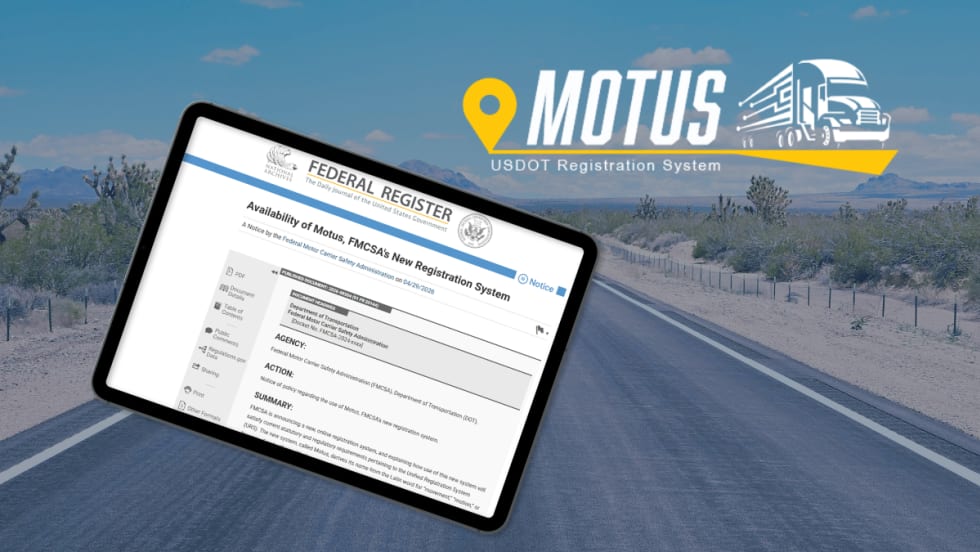
FMCSA’s Motus System Is Coming. What Fleets Need to Know Now
FMCSA's long-awaited registration system promises a single portal — and tighter fraud controls. And there are steps you need to take by May 14.
Read More →