




Machinery Haulers Get 2019 Outlook
The 2019 outlook is generally rosy for motor carriers that haul machinery, as trucking will continue to see the effects of the ELD mandate and drivers and owner-operators will continue to be in demand. That was what The Machinery Haulers Association heard at the group’s winter meeting.


The Machinery Haulers Association gets a regulatory update from David Heller with the Truckload Carriers Association.
The 2019 outlook is generally rosy for motor carriers that haul machinery. That was what The Machinery Haulers Association, a small but growing group of specialized open-deck carriers, heard when they met in early December in Rock Island, Illinois, for the association’s winter meeting.
TMHA, with founding roots dating to the 1950s, is a trade association of specialized, open-deck commercial motor carriers that transport agricultural, construction, and industrial machinery and related commodities on primarily step-deck, lowbed, and RGN-type equipment. Allied members include companies that provide supporting services and products to member motor carriers.
About a year ago, the group brought on board Clayton Fisk, formerly vice president of safety with association member Warren Transport, to professionally manage the group. He announced that the association gained six new members this year. “This is a little bit of a rebuilding year,” he noted. “We got a new coach and added some great new team members. I think next year will really be a breakout year.”
The winter meeting focuses on economic and regulatory issues and a look into the year ahead.
ELDs and more
David Heller, vice president of government affairs at the Truckload Carriers Association, highlighted the first year of the electronic logging device mandate, noting that while there have been some challenges, the data the devices are providing will help drive industry-friendly changes in hours-of-service regulations, such as changes to the split sleeper berth rules.
“Data is now the magical word in the industry,” he said. In addition to helping regulations better reflect real-world operations, he said, this “data explosion” can help address other issues, such as detention. There’s even the capability to track detention time right down to the specific door at a loading/unloading facility.
And ELDs already have helped tighten capacity and therefore drive up freight rates, he noted.
“It’s probably the best period of time ever for trucking in terms of rate increases,” Heller said. “This industry has experienced a boom it has never before, and ELDs are part of that.”
Other issues to watch for, he said, include action on the “federal preemption” issue of state meal and rest break rules conflicting with federal HOS; the new Compliance, Safety, Accountability program that will use Item Response Theory; measures such as allowing younger drivers to address the continued driver shortage; the new entry-level driver training rule scheduled to go into effect in early 2020; drug and alcohol testing changes; continued development and discussion of autonomous vehicles; and possible movement on infrastructure funding reform.
Good time for owner-operators
Todd Amen with ATBS shared some results from the company’s independent contractor benchmarking study from the second quarter of the year. Noting that many in the association use owner-operators, he said he’s a big believer in the model of owner-operator as part of a career progression – from employee driver, to lease-purchase contractor, to an owner-operator with their own truck but leased on to a carrier, to an independent owner-operator and even a small fleet owner.
“The last 18 months, the opportunity has been unbelievable,” he said.
Amen said there are about 150,000 owner-operators who are leased on to motor carriers, and of those, about 67,000 are in some sort of leas purchase program, while about 88,000 own their own trucks. So trucking fleets that want to increase their capacity with owner-operators are competing for a relatively small group.
Looking at the spot freight market, Amen said, “When we think about the last 18 months vs. the last 10 years, it’s no wonder our industry has been so fun to be in the last year.” While recent softer numbers were disappointing, he said, “keep it in perspective – we’re still above 2014, and all of us would take 2014 again.”
Where do we go from here? Amen said, “If you’ve been in the industry for one or three or four economic cycles, what you know is if we’re in a market with 6 and 7% rate increases, that’s awesome … The fact that we went up by 30% in the last 18 months is amazing. What it means in my mind is we set a new bar. We’re not going to go back. All recessions of course mean reduced rates, but we’ve come up so far so fast, as a function of ELDs, of a booming economy. We’re smarter, we’re learning how to price better, how to manage our businesses better. It’s not going to stay at these rates, but they’re not going to go back 30%.”

Another change, he said? Drivers are driving fewer miles, but making more money.
“Drivers often judge their success by miles,” he said. “The crazy thing is miles actually go down in a good economic cycle.” Showing a graph with miles down 2.5% overall to 108,144 and 2.5% down in flatbed to 89,000, he explained, “People might think it is because of ELDs, and for sure that’s probably a piece of it,” he said. The average owner-operator 15 years ago ran 133,000 miles a year, he said. “You can’t physically legally do that. So ELDs have affected that.” But it goes beyond that, he said. “To me, a driver has to earn a certain amount per week. What they really want is some home time, to enjoy life a little bit. So when rates are up they can drive less (and make the same amount). My guess is that’s going to bottom out and drivers are going to have to run more next year.”
Amen said ATBS numbers showed second-quarter 2018 rates were up in flatbed to $1.88 a mile. “I love to see that flatbed rates are up that significantly,” he said. “We started seeing this a couple years ago.” In his experience, he said, flatbed freight is a sign of businesses making long-term investments. “You don’t shut that off overnight.”
The demand for ag and construction machinery
Curt Blades, senior vice president of the Association of Equipment Manufacturers, offered some information on the state of the agriculture and construction markets, key indicators for machinery haulers.
Purchases of agricultural equipment, he said, seem to be higher than one would expect based on low farm income. “But that’s not the exclusive driver” of those purchases, he said. Other factors include commodity prices, tax policy, trade, replacement market, and technology. At some point, even when incomes are down, he said, farmers need to replace their equipment and invest in new technology.
“We were just with our machinery [manufacturer] execs last week, and there were a lot of concerns, but the general feeling was positive. They’re seeing 1 to 5% year over year increase in the next 12 months, and 17% of them are calling for above normal growth.”
“Construction is a little more simple,” he said. “There are not as many nuances as the ag market in what affects demand. You can get a pretty good indication of what the economy is going to look like by looking at construction. The best indication of whether a city is on the rise is the number of cranes on the horizon.”
Things that drive the construction side include things like oil prices, housing starts, exchange rates, general economic indicators, construction spending, and the stock market, “but it all boils down to whether the economy is going up or going down.”
That said, construction growth is strong but slowing, he said, moving into a more normal growth pattern.
What could give that a boost is a federal infrastructure spending plan. “Infrastructure’s in the air,” he said with a new Congress coming in, with many seeing it as one bipartisan issue that could gain traction. AEM, like the trucking industry, has been outspoken trying to get infrastructure funding passed, “We continue to hear infrastructure is very high on the list. “The House switching [to Democrat controlled] is going to force the president to become a little more bipartisan.”
More Fleet Management

Nomination Deadline Extended for HDT Emerging Leaders
Just a few more days to nominate accomplished trucking fleet professionals under 40 who are making an impact and helping lead the industry forward for the HDT Emerging Leaders award. Deadline extended to October 20!
Read More →
What Will ATA’s New Leader Bring to Trucking's Table?
Incoming President and CEO Mark Colson’s record in Alabama offers clues about his priorities and approach following Chris Spear’s abrupt departure as the head of the American Trucking Associations.
Read More →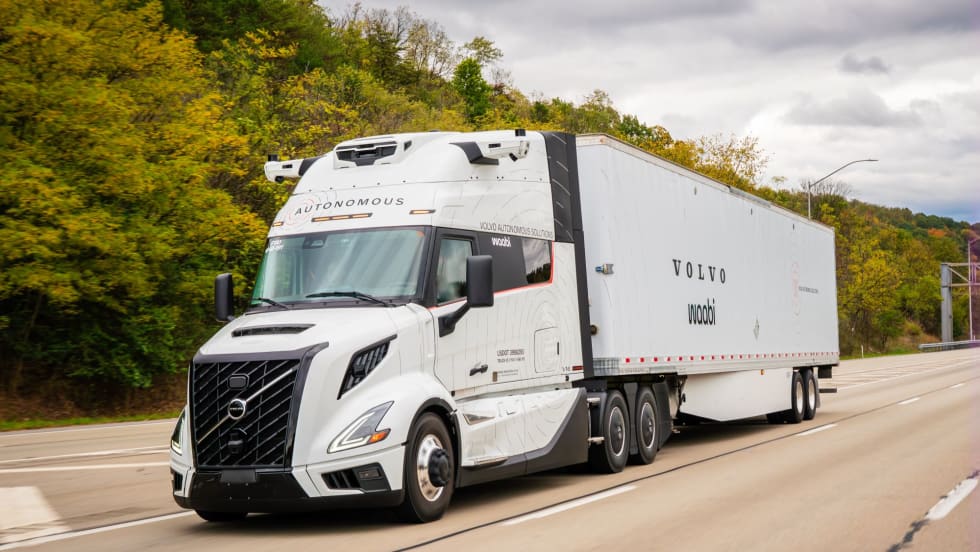
Volvo, Waabi Start Commercial Autonomous Operations in Texas
Volvo VNL Autonomous trucks, powered by the Waabi Driver, are hauling freight directly to third-party facilities for a customer in Texas.
Read More →
Samsara Launches Custom AI Agent Builder
Agent Studio lets fleets create AI tools for hours-of-service monitoring, reporting and driver support, including agents that communicate by phone.
Read More →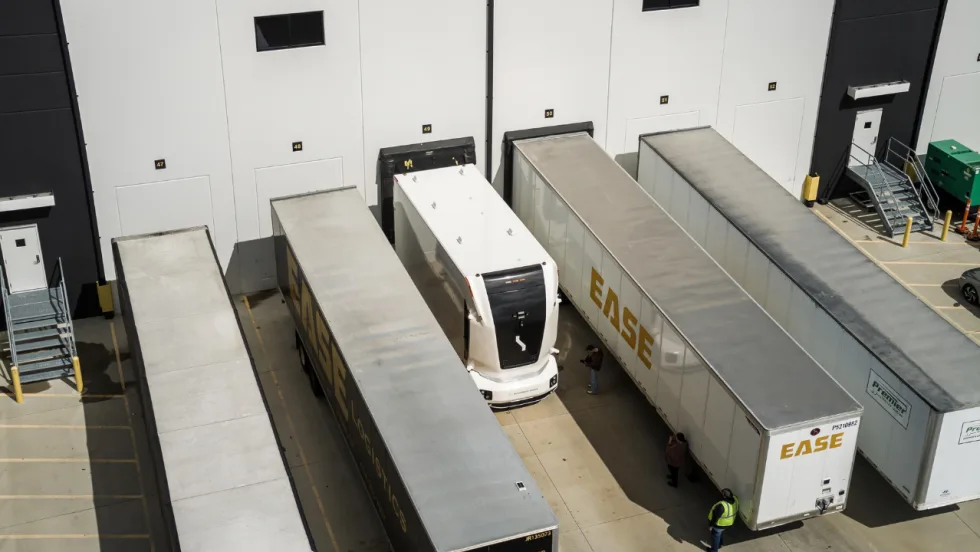
Einride Driverless Electric Trucks Begin Daily Freight Operations in Ohio
Two cabless electric trucks are hauling freight between EASE Logistics facilities in Marysville, Ohio, as part of a multi-state truck automation project.
Read More →
Geotab Links Fleet Card to Vehicle Data
The new card combines fuel discounts with telematics-based purchase controls. Geotab’s analysis also points to potential savings from choosing lower-priced fuel stops.
Read More →
How MFA Helps Protect Trucking Fleets
Multi-factor authentication adds protection when passwords are stolen. Here’s how it works and where fleets should start.
Read More →
How Better Freight Data Helps Trucking Teams Get Ahead of Disruption
Trucking and logistics teams have plenty of data. The problem is getting the right information in front of the right people soon enough to act. Better-connected data can help teams spot trouble earlier and make smarter decisions before small problems become big ones.
Read More →
Trimble: Taking Artificial Intelligence in Trucking Beyond Faster Tasks
At Insight 2026, Trimble executives argued that fleets may need to redesign workflows to get more from AI as it introduced new products and enhancements. AI’s value will depend on how fleets combine automation with their people's knowledge.
Read More →
Build a bulletproof fleet: Uniting ELDs and dash cams for total compliance
An ELD can prove compliance, but it cannot always prove what happened on the road. Discover how uniting accurate ELD data with AI-powered dash cam video can help your fleet strengthen compliance, defend against liability, protect drivers and reduce operational costs.
Read More →