




Losses to Trucking from Sandy Will Be Recouped in Future
Hurricane Sandy hit a region that's both densely populated and important economically. According to IHS Global Insight, the initial estimate of economic losses are in the $30-$50 billion range. However, some trucking companies may see a boost in both the near term and longer term

President Barack Obama and New Jersey Gov. Chris Christie talk with citizens who are recovering from Hurricane Sandy, while surveying storm damage in Brigantine, N.J. (Official White House Photo by Pete Souza)
Hurricane Sandy hit a region that's both densely populated and important economically. According to IHS Global Insight, the initial estimate of economic losses are in the $30-$50 billion range. However, some trucking companies may see a boost in both the near term and longer term.
The loss of economic activity will have a negative impact on the fourth quarter real (i.e., inflation adjusted) GDP reading -- possibly by 0.6 percentage points, according to Bob Costello, chief economist at the American Trucking Associations.
However, he noted in a special economic bulletin for ATA members, there are industries and companies that lose and ones that benefit from natural disasters.
During the rebuilding phase, construction companies and makers of construction materials will benefit, as will the flatbed carriers hauling construction freight related to rebuilding.
He also says fleets are expected to see an increase in activity in the coming weeks and months during the clean-up and rebuilding phases. Dry van carriers will likely see a boost in freight from retailers replenishing store shelves that were depleted in the days before the hurricane, but of course these fleets saw a lull in freight in the Mid-Atlantic and Northeast during the last few days.
According to FTR Senior Consultant Noel Perry, the initial estimated loss of $140 million per day the trucking industry will suffer from downtime associated with Super Storm Sandy will ultimately be recouped because of associated resupply and rebuilding truck freight demands.
Perry's per day estimate of loss revenue is based on 20% of the industry not moving freight because of the storm and its aftermath.
"While some fleets will surely lose revenue during the initial phases of the latest disaster, storms like Sandy create new demand later," explained Perry. "Retail outlets need immediate resupply that only trucking's time-sensitive character can accommodate. Plus storm damage needs to be fixed. That creates longer term additional freight tonnage. While the storm is devastating to many, the trucking industry will see mostly positive effects."
A University of Memphis economist agrees that cataclysmic weather in the Northeast could provide a balm for a sluggish economy.
Dr. John Gnuschke, director of the Sparks Bureau of Business and Economic Research at U of M, told the sixth annual Freight Conference on Tuesday that recovery from the tropical storm could well boost the nation's economic numbers.
Gnuschke was filling in for Costello, who canceled an appearance at the Intermodal Freight Transportation Institute meeting because of storm-related flight outages in the Northeast.
Because of "the great storm Sandy," Gnuschke said, "we're going to make people spend more money than they ever dreamed of spending" to repair damage to buildings and infrastructure, purchase emergency relief supplies and other spending.
More Fleet Management

What the U.S.-Canada Trade War Means for Trucking
Escalating U.S.-Canada tariffs could disrupt cross-border freight, reduce truck volumes, raise costs, and create new uncertainty for carriers on both sides of the border.
Read More →
What Are Trucking’s Top Concerns for 2026?
The American Transportation Research Institute wants to know what's worrying trucking fleet managers, drivers, and other stakeholders in its annual Industry Issues survey.
Read More →
American Trucking Associations Looks for a New Leader
ATA President and CEO Chris Spear abruptly left his job at the association on August 21, at a pivotal time for the trucking industry.
Read More →
Public Wi-Fi Cybersecurity Risks: How Truck Drivers and Fleets Can Protect Their Data
Public Wi-Fi can expose truck drivers and fleets to credential theft, malware, and other cyber threats. Here’s how to reduce the risk on the road.
Read More →
For Nicky Cupp, Fleet Innovation Starts With Frustration
HDT Truck Fleet Innovator Nicky Cupp turns everyday pain points at Fraley & Schilling into opportunities for better technology and smarter processes.
Read More →
Adam Buttgenbach’s Approach to Electric Trucks: Start With Where They Fit
HDT Truck Fleet Innovator Adam Buttgenbach helped PepsiCo build one of North America’s largest EV fleets by focusing on where electric trucks make operational sense.
Read More →
Deen Albert: Let Automation Do the Math, People Make the Decisions
HDT Truck Fleet Innovator Deen Albert makes sure people are still at the heart of operations at Grand Island Express, even while adopting artificial intelligence tools. AI-assisted dispatch helped boost revenue 25% with the same number of trucks.
Read More →
Trimble’s New AI Agent Takes Aim at Fleet Back-Office Busywork
Arc Agent works across Trimble TMS products to automate repetitive tasks such as freight orders, maintenance, invoices, fuel costs and more.
Read More →
How HDT’s 2026 Truck Fleet Innovators Are Rethinking Fleet Operations
Meet five trucking leaders who are challenging assumptions, solving operational problems, and putting innovative ideas to work.
Read More →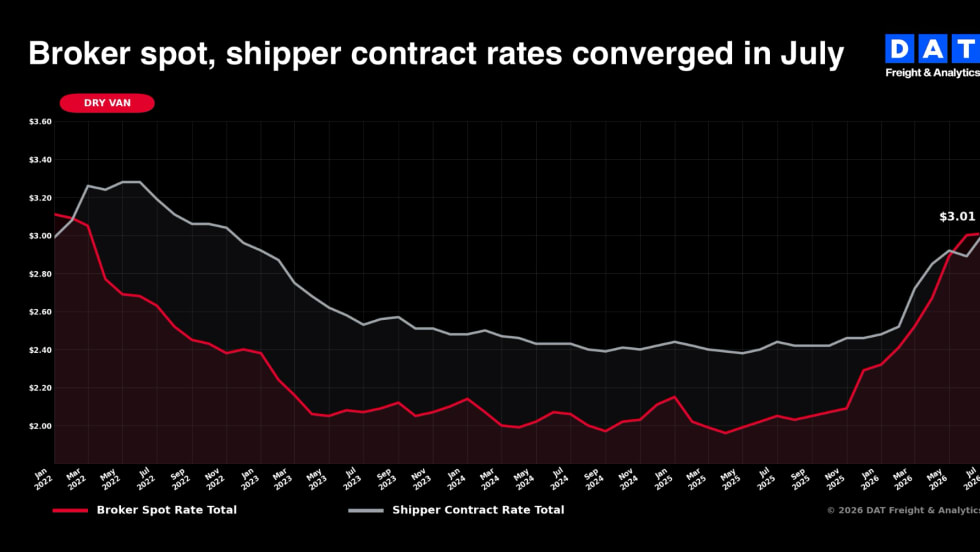
Tight Trucking Capacity Pushes Rates Higher Even as Freight Volumes Fall
“Spot rates moving ahead of contract rates have historically signaled a tightening market, but we haven’t seen a capacity-driven market quite like this one,” said DAT's Dean Croke.
Read More →