




Legislation Would Support Hydrogen Fuel-Cell Trucks, Fueling Infrastructure
Bipartisan federal legislation to support the adoption of hydrogen-fuel-cell technology in trucks and other heavy-duty vehicles has been introduced in both the Senate and the House.

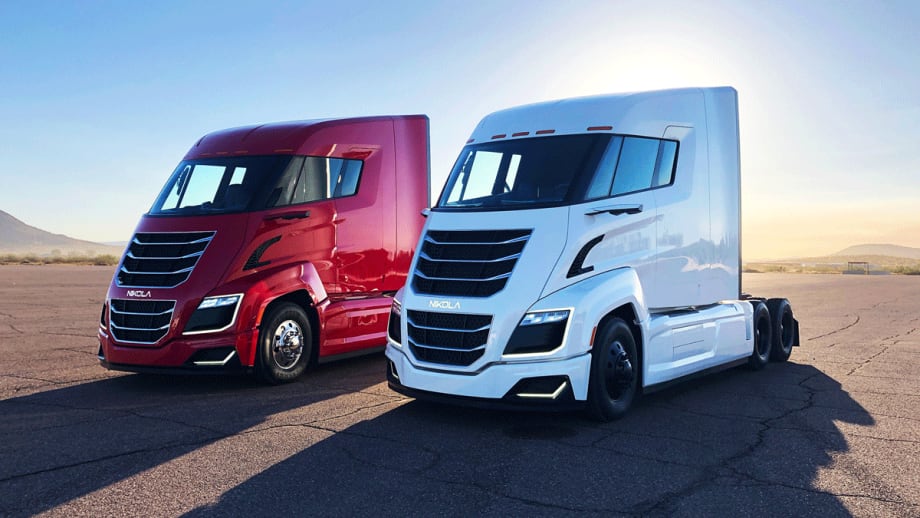
Nikola praised the Hydrogen for Trucks legislation. The Nikola Two FCEV Sleeper, designed for up to 900-mile runs, could be in production by 2024.
Photo: Nikola
Bipartisan federal legislation to support the adoption of hydrogen-fuel-cell technology in trucks and other heavy-duty vehicles has been introduced in both the Senate and the House.
U.S. Senators Chris Coons (D-Del.) and John Cornyn (R-Texas) introduced the Hydrogen for Trucks Act, S.3806, to support the adoption of heavy-duty hydrogen fuel cell vehicles and hydrogen fueling stations. Companion legislation in the House, H.R.7064, is being led by Representatives Katie Porter (D-Calif.) and Gus Bilirakis (R-Fla.).
Supporters of the bills explained in a release that heavy-duty vehicles account for only a small fraction of vehicles on the road but contribute nearly a quarter of all transportation greenhouse gas emissions. Hydrogen-powered fuel cell electric vehicles produce no tailpipe emissions — just water vapor and warm air — providing an opportunity for cleaner forms of transportation without sacrificing reliability or range.
Heavy-duty fuel cell vehicles are an emerging technology just beginning to enter the market, and first adopters face cost barriers and risks that require federal support to overcome. The Hydrogen for Trucks Act provides financial support to fleet owners and operators looking to make the switch to zero-emission vehicles, and also aims to support the development of fueling stations.
The Hydrogen for Trucks Act would:
Incentivize the adoption of heavy-duty hydrogen fuel cell vehicles by covering the cost difference between these vehicles and traditional diesel vehicles.
Encourage parallel deployment of vehicles and fueling stations, addressing the chicken-and-egg challenge that exists with vehicles and fueling infrastructure.
Provide data and benchmarks for different types of fleet operations, helping to incentivize private investment and accelerate deployment.
The bill is endorsed by Air Liquide, Air Products, Bakken Energy, Bipartisan Policy Center (BPC) Action, Carbon Direct, Chemours, Clean Air Task Force, Clean Hydrogen Future Coalition, Cummins, Fuel Cell & Hydrogen Energy Association, Information Technology and Innovation Foundation, Nikola, PGT Trucking, RMI, and Third Way.
“The time for action is now, and this legislation will help accelerate decarbonization of the transportation industry,” said Amy Adams, vice president of fuel cell and hydrogen technologies for Cummins, in a release. “It is critical that we invest in both hydrogen infrastructure and vehicle technologies to deploy the solutions required to combat climate change.”
PGT Trucking said it is investing in trucks that will operate using hydrogen as a fuel source. “While trucking companies and equipment manufacturers are making substantial investments and taking risks toward the development of various hydrogen-fueled transportation solutions, it is critical that an infrastructure providing robust distribution channels of hydrogen fuel be deployed nationwide,” said Gregg Troian, president of PGT.
This is one of the latest in a number of other bills that have been introduced in both chambers this session aimed to accelerate hydrogen-fuel-cell adoption, including a number that would incentivize the production of “green” hydrogen.
More Fuel Smarts

How GP Transco Builds Fuel Savings a Fraction at a Time
Aerodynamic specs, solar panels, and driver incentives help GP Transco turn small efficiency gains into savings it can reinvest in its people.
Read More →
Trucking’s Diesel Squeeze Isn’t Letting Up
With diesel topping $6 a gallon nationally, ATA's Bob Costello explains why fleets should prepare for continued pressure at the pump.
Read More →
FlowBelow Redesigns Trailer AeroSlider to Cut Fuel Use
The lighter trailer aerodynamic system installs in less than 45 minutes, according to the company, with potential payback in under a year depending on fuel prices and trailer mileage.
Read More →
Why Diesel Price Relief Efforts May Fall Short
Diesel prices have eased from September’s record high, but doubts about additional Russian supply and limits on dyed-diesel tax relief mean trucking fleets still face expensive fuel. And prices could go higher.
Read More →
Why Small Fuel Savings Matter in Trucking
Can better fuel economy help pay for driver raises? In this podcast, GP Transco explains how small efficiency gains create room to reinvest in its people.
Read More →
How GP Transco Cuts Trucking Fuel Costs, a Tenth of a Gallon at a Time
What’s another tenth of a mile per gallon worth? GP Transco shares how equipment upgrades and driver coaching turn small gains into meaningful fuel savings.
Read More →
Electric Yard Tractors Move Beyond Pilots
Operating-cost savings have overtaken sustainability goals as the leading reason surveyed fleets are adopting battery-electric terminal tractors, according to new NACFE research.
Read More →
Geotab Links Fleet Card to Vehicle Data
The new card combines fuel discounts with telematics-based purchase controls. Geotab’s analysis also points to potential savings from choosing lower-priced fuel stops.
Read More →
Fleet Economics Shape Electric Truck Outlook
ACT Research expects costs, charging infrastructure, and technology improvements to drive zero-emission commercial vehicle adoption as federal regulations and incentives retreat.
Read More →
Wex Adds Cardless Fuel Payments for Over-the-Road Customers
A new fuel card feature for Wex customers offers convenience and security.
Read More →