




Related: Kenworth Offers 52-Inch Mid-Roof Sleeper on T680 Advantage
Kenworth Offers Several New Options for T680 and T880
Kenworth is offering a few new options for its heavy-duty trucks, including a new natural gas engine and bunk heater system for the T680 and T880 and a FlowBelow AeroKit for the T680.
by Staff
October 10, 2016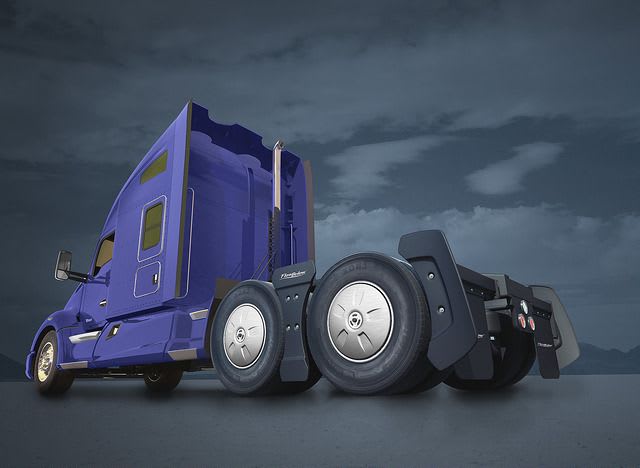
Kenworth now offers the FlowBelow Tractor AeroKit as a T680 option. Photo: Kenworth
3 min to read
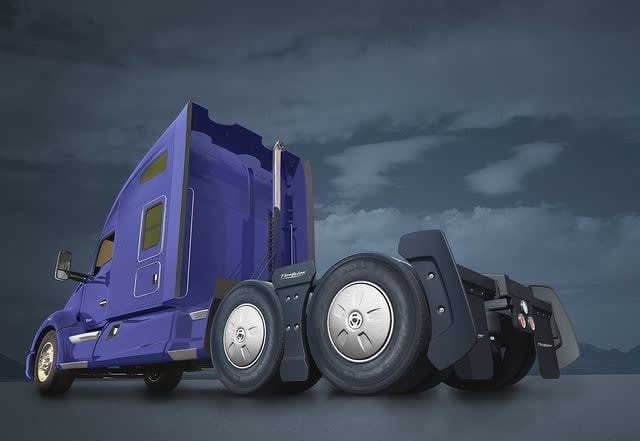
Kenworth now offers the FlowBelow Tractor AeroKit as a T680 option.Photo: Kenworth
Kenworth is offering a few new options for its heavy-duty trucks, including a new natural gas engine and bunk heater system fo the T680 and T880 and a FlowBelow AeroKit for the T680.
Kenworth will offer the Cummins Westport ISL G Near Zero NOx emissions natural gas engine on its T680 and T880 model. The engine produces emissions that are 90% lower than the current NOx limit of 0.2 gram per brake horsepower-hour and it meets the 2017 EPA greenhouse gas emission reduction requirements.
The 8.9-liter Cummins Westport ISL G Near Zero comes with ratings up to 320 horsepower and 1,000 lb-ft. of torque. The engine can operate on 100% natural gas, which can be carried on the vehicle in either compressed natural gas or liquefied natural gas form. The ISL G Near Zero is also compatible with renewable natural gas, which allows for even further reductions in GHG emissions.
“The Kenworth T680 and T880 equipped with the ISL G Near Zero emissions engine is well suited for regional haul, vocational and refuse fleets focused on the reduced environmental impact of natural gas use and reducing their operating costs,” said Jason Skoog, Kenworth assistant general manager for sales and marketing.
Kenworth is also adding cab temperature monitoring for the T680 and T880 with its Auto Start and Stop Capability and an optional Espar Airtronic D4 fuel-fired bunk heater. The Espar bunk heater produces nearly double the BTUs of Espar’s previous generation heater.
“For operators who run in cold temperatures, or shut down for a 34-hour reset, our new offerings give a one-two punch in vehicle performance and driver comfort,” said Kevin Baney, Kenworth chief engineer. “We’ve built our power management system into what we feel is the most comprehensive system in the market. And, for engine-off, constant heat in the sleeper, the new Espar Airtronic D4 heater has a BTU rating up to 13,650, and is available for the Kenworth T680 and T880 specified with either the 76-inch or 52-inch sleepers.”
The Engine Auto Start and Stop system monitors the starting batteries and batteries used to power hotel loads. When the batteries need to be recharged, the system starts the engine to begin battery charging. The system also monitors oil temperature, starting the engine when the temperature falls below a pre-determined level.
Additionally, Kenworth and FlowBelow have partnered to develop the FlowBelow Tractor AeroKit as an option on the T680.
The kit consists of an AeroKit fairing fitted to each side of the truck between the Kenworth T680’s tandem axles along with a fairing directly behind the rear drive axle. The fairings are constructed of a durable and flexible thermoplastic polyolefin. The system also uses quick-release aerodynamic wheel covers that are designed to reduce turbulence within the wheel itself.
“The tandem axle fairing and wheel cover combination enhances the T680’s superior aerodynamics by keeping airflow moving even more efficiently around the end of the tractor and onto the trailer, especially when the trailer is outfitted with its own side fairings, and reduces drag and turbulence around the tractor’s rear wheels,” said Kenworth's Baney. “This option offers our T680 customers an additional option to help optimize fuel economy.”
More Fuel Smarts

How Volvo Updated Its D13 for EPA 2027 [Watch]
Volvo’s updated D13 promises lower emissions without sacrificing performance or fuel economy. Take a closer look at what changed inside the engine in this HDT Spotlight video.
Read More →
Diesel Price Spike Shortens Payback for Natural Gas Trucks, Report Says
Energy Vision estimates fleets could recover the higher purchase price of an RNG-fueled Class 8 tractor in 1.3 to 2.8 years under current fuel-price scenarios.
Read More →
Calstart Becomes Catalyst Mobility, Reflecting Broader Focus
Calstart is now Catalyst Mobility, reflecting the nonprofit’s growing national role in clean transportation, including zero-emission trucks, infrastructure and incentive programs.
Read More →

Record Diesel Prices Squeeze Trucking Fleets
Average U.S. diesel prices have climbed to nearly $6 a gallon, surpassing the 2022 record as tight refinery capacity and Middle East disruptions keep fuel costs elevated.
Read More →
Sponsored•September 9, 2026
How Fuel Delivery Shapes Engine Performance
Fuel delivery depends on more than what happens at the injector. For fleet, maintenance and technical professionals, looking at the full path from pump to injector can provide useful context for understanding engine performance.
Read More →
East Coast Port Launches $45M Electric Truck Push
The Port Authority of New York and New Jersey announced millions in incentives for zero-emission drayage trucks, yard tractors, and new charging hubs near the port.
Read More →
California Bill Could Shed Light on Electric Truck Prices
Why do battery-electric Class 8 trucks remain so expensive? A California bill headed to Gov. Gavin Newsom would give fleets and state agencies more visibility into what manufacturers charge.
Read More →
Detroit Opens Orders for EPA 2027 Engines
Detroit isn’t starting from scratch to meet EPA 2027 diesel emissions standards. Its Gen 6 DD13 and DD15 engines keep much of today’s platform while updating the fuel and aftertreatment systems.
Read More →
Zero-Emission Truck Corridor Planned for West Coast
California, Oregon, Washington, British Columbia and Baja California are coordinating plans for truck charging and hydrogen fueling from Canada to Mexico.
Read More →
A Closer Look at Kenworth’s Electric T880E Vocational Truck [Video]
Learn more about Kenworth's T880E battery-electric vocational truck at the Paccar Technical Center, including its range, applications, upfitting considerations, and PTO options, in this HDT Spotlight video.
Read More →