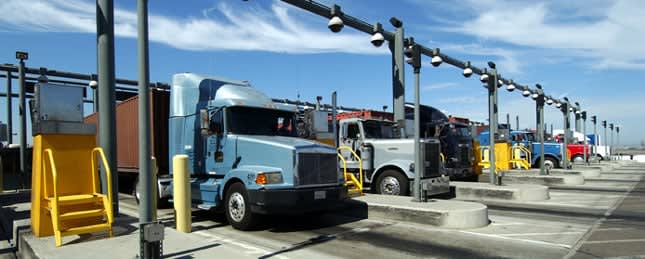
A federal judge in California stopped the Port of Los Angeles from implementing a key piece of its concession program for drayage carriers, pending an appeal of the issue to a higher court.
Judge Stays LA Port's Driver Employee Requirement
A federal judge in California stopped the Port of Los Angeles from implementing a key piece of its concession program for drayage carriers, pending an appeal of the issue to a higher court

Carriers at the Ports of LA and Long Beach may continue using owner-operators while the case is appealed.
Judge Christina A. Snyder of the U.S. District Court for the Central District of California agreed with American Trucking Associations that the port's plan to require all drayage drivers to be employees of companies, rather than owner-operators, should be stayed pending further review.
The case presents "serious legal questions," Snyder said in her Oct. 26 order. Drayage carriers serving the port are likely to "suffer irreparable harm" due to the employee driver provision if the stay is not granted she said.
Snyder also said that the carriers would be harmed by the port's prohibition against parking tractors on city streets, but the public interest there weighs more in the port's favor so she denied ATA's plea for an injunction on that issue.
This decision puts a stop to the port's plan to start phasing in its driver employee requirement next year, pending the review by the U.S. Court of Appeals for the 9th Circuit that ATA is seeking.
The port had planned to require drayage companies to convert to an all employee workforce over three years: 20 percent by the end of next year, 66 percent by the end of 2012 and 100 percent by the end of 2013. Right now approximately 90 percent of drivers working at the port are independents.
The key underlying legal issue in the case has to do with Snyder's earlier finding that the concession program is legal under the "market participant" doctrine - the port is a private business and is thus exempt from the law that says only the federal government has the authority to regulate trucking business operations.
The port's Clean Truck Program has by all accounts done a good job of improving air quality in and around the port, the employee requirement is a matter of deep concern to trucking and shipping interests not just in California but around the country.
It alarms carriers and shippers because it would open the door for unionization of port drivers.
The owner-operators who serve the port are independents and under current law cannot be organized. There is no guarantee that the Teamsters could succeed in organizing the drivers, but if the Port of LA prevails the union would be able to try.

More Fleet Management

From Diesel Prices to Cyberattacks: How the Iran War Is Affecting Trucking
The impact of the Iran conflict extends beyond fuel costs, bringing more fraud and cybersecurity risks to the trucking industry.
Read More →
ATA’s Spear Warns Fuel Prices, Trade Policy, and Global Conflict Could Stall Trucking Recovery
Speaking at the TMC Annual Meeting in Nashville, ATA President Chris Spear said trucking faces mounting pressure from rising fuel prices, geopolitical instability, and uncertainty around trade policy.
Read More →
New Entrants, Chameleon Carriers, and Safety: Is It Too Easy to Start a Trucking Company?
More than 100,000 new trucking companies enter the industry each year, but regulators manage to audit only a fraction of them. That churn creates opportunities for inexperienced startups — and for “chameleon carriers” that shut down after safety violations and reappear under new identities. Read more from Deborah Lockridge in this commentary.
Read More →
Fleet Managers Invited to Apply for Exclusive HDT Exchange Event
HDTX is an intimate event that connects heavy-duty trucking fleet managers with industry suppliers through small-group discussions, educational sessions, and structured one-on-one meetings.
Read More →
DAT Launches iPhone Widget to Help Owner-Operators Find Loads Faster
New DAT One feature shows top-paying loads directly on an iPhone’s home screen, helping carriers react faster to spot-market opportunities.
Read More →
Optimal Dynamics Launches AI System to Help Carriers Choose Better Freight
Optimal Dynamics says its new Scale platform uses AI agents and optimization to help carriers find and secure freight that improves network balance and profitability.
Read More →
DAT: Flatbed Demand Climbs as Van and Reefer Rates Soften
DAT Freight & Analytics data shows tightening flatbed capacity, easing produce markets, and softening van and reefer rates.
Read More →
Run on Less “Messy Middle” Data Shows Multiple Paths Forward for Truck Powertrains [Watch]
NACFE's Run on Less - Messy Middle project demonstrates the power of data in helping to guide the future of alternative fuels and powertrains for heavy-duty trucks.
Read More →
Federal Court Lets NYC Congestion Pricing Continue
A federal court ruling allows New York City’s congestion pricing program to continue, leaving truck tolls in place for fleets delivering into Manhattan.
Read More →
Fontaine Modification Launches Real-Time Truck Modification Tracking Portal
Fontaine Modification has introduced a new customer portal designed to give fleets real-time visibility into the truck modification process, addressing one of the most common questions fleet managers face: “Where’s my truck?”
Read More →