





22 Questions You Must Answer Before Installing EV Charging Stations
Isuzu Taps ChargePoint for EV Charging Solutions
Isuzu announced that will partner with ChargePoint to provide charging, training, dealer support and infrastructure solutions for its electric truck models.
October 11, 2023

ChargePoint will provide support for Isuzu's first electric truck, the Class 5 2025 NRR EV, which will be available in 2024.
Photo: Isuzu
4 min to read
Isuzu Commercial Truck of America announced it has appointed ChargePoint, a provider of networked solutions for charging electric vehicle to provide charging infrastructure and software solutions for its electric truck models. Additionally, as an official Isuzu source, ChargePoint will provide training to Isuzu dealers and customers.
The news comes on the heels of Isuzu’s March announcement that it will introduce the 2025 NRR EV, a Class 5 battery electric truck, in early 2024.
“This relationship will allow our dealers and customers to get ready now for the introduction of our electric truck next year,” said Shaun Skinner, president of Isuzu Commercial Truck of America and Isuzu Commercial Truck of Canada. “Trying to find a reliable resource for the installation of the necessary charging and electrification infrastructure can be staggering. Our relationship with ChargePoint will ease the transition for everyone.”
A Simplified Process
The process is easy, according to Skinner. Isuzu dealers will simply need to access a ChargePoint website portal using the dealer’s own secure credentials. ChargePoint or one of its channel partners will then work with the dealer and/or customer directly to develop a customized electrification solution and identify available incentives from state and local agencies and utilities. ChargePoint or one of its channel partners will be able to manage all aspects of the project, from needs assessment through equipment purchase and installation and charging training.
“Commercial trucks play a critical role in the transition to electrification, underscoring the need for integrated charging solutions to help streamline operations and deliver a lower total cost of ownership (TCO),” said Rich Mohr, Senior Vice President, Americas at ChargePoint. “Together, Isuzu and ChargePoint are removing barriers to entry for electrifying commercial trucks and delivering integrated software and hardware solutions that maximize Isuzu customers’ TCO advantage.”
2025 Isuzu NRR EV Details
The NRR EV is Isuzu’s first all-electric production model. Notable features of the truck include:
Four choices of battery capacity, the largest of which has an estimated range up to 235 miles.
AC (Level 2) and DC Fast Charging (Level 3) charging capability.
A full 19,500-pound Class 5 GVWR.
Wheelbases ranging from 132.5 to 176 inches to accommodate a variety of body lengths.
An upgraded cab features a new front end (bumper, grill, and headlight assemblies) and a completely new dash design and layout with a new interior color scheme.
Every NRR EV will be powered by a number of 20-kilowatt-hour, lithium-ion battery packs. Compared to conventional lead-acid batteries, lithium-ion batteries store more energy in less space; are lighter; last much longer; and do not require traditional maintenance, according to Isuzu.
Customers will be able to choose from three-, five-, seven-, and nine-battery-pack models. All else being equal, the more battery packs, the longer the driving range. By offering four configurations, Isuzu will allow buyers to choose the combination that’s best for their business.
For ease of charging, all NRR EV models will be equipped with charging ports that accommodate the most popular charging connectors in the U.S. and Canada:
DC charging (CCS1)
AC charging (J1772)
To accommodate their multiple battery packs and to provide reasonable charging times, NRR EV trucks, with battery capacities of 60, 100, 140, and 180 kWh, will have an AC Level 2 charging time range from 6 to 10.5 hours and a DC Fast Charging time range from 2.5 to 3 hours.
Depending upon the number of battery packs chosen, NRR EV trucks will have estimated driving ranges from 41 to 235 miles:
Three battery packs (60 kWh capacity): 41-80 miles
Five battery packs (100 kWh capacity): 68-130 miles
Seven battery packs (140 kWh capacity): 95-180 miles
Nine battery packs (180 kWh capacity): 122-235 miles
All figures are calculated estimates, based on a fully charged battery, and for comparison purposes only, Isuzu cautioned. “Battery capacity decreases with time and use,” said Skinner. “A truck’s actual range will vary based on a number of factors, including number of battery packs, vehicle options, driving conditions and habits, vehicle and battery’s condition and outside temperature.”
He continued, “Obviously, our dealers, fleet customers and owner/operators have already started wondering how to keep their trucks charged and ready to go. That’s a major reason we selected ChargePoint, a proven industry leader in electric vehicle infrastructure.”
For more than 15 years, ChargePoint has been committed to making it easy for businesses and drivers to go electric with one of the largest EV charging networks and a comprehensive portfolio of charging solutions, the company said. The ChargePoint cloud subscription platform and software-defined charging hardware are designed to include options for every charging scenario, and ChargePoint hardware is UL- and CE-certified for safety. Today, one ChargePoint account provides access to hundreds-of-thousands of places to charge in North America and Europe.
“We are thrilled to work with an industry leader like ChargePoint to provide a turnkey solution for our dealers and customers who are ready to begin making the transition to an electrified future,” Skinner concluded. “Those who take advantage of this relationship now will be able to fully support our exciting new NRR EV when it hits the market early next year.”
More Fuel Smarts

How GP Transco Builds Fuel Savings a Fraction at a Time
Aerodynamic specs, solar panels, and driver incentives help GP Transco turn small efficiency gains into savings it can reinvest in its people.
Read More →
Trucking’s Diesel Squeeze Isn’t Letting Up
With diesel topping $6 a gallon nationally, ATA's Bob Costello explains why fleets should prepare for continued pressure at the pump.
Read More →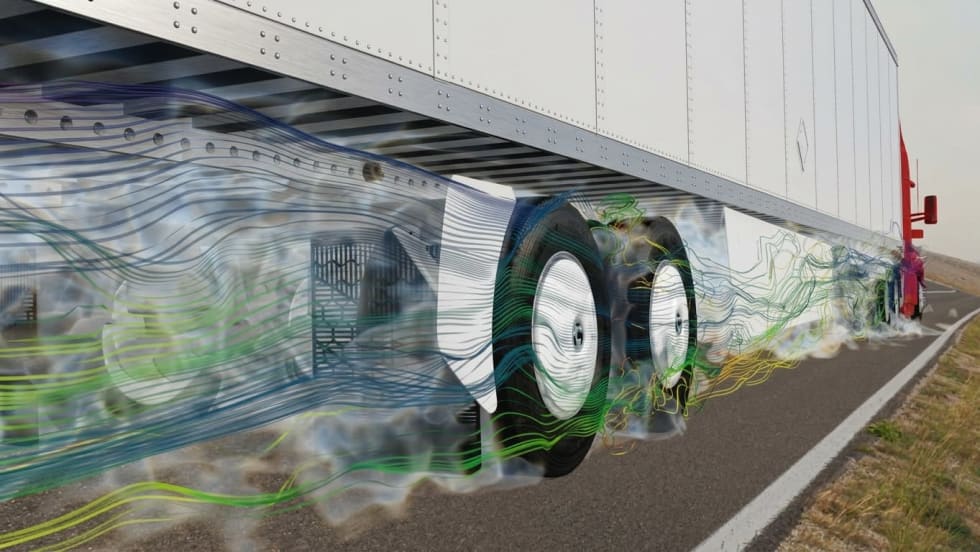
FlowBelow Redesigns Trailer AeroSlider to Cut Fuel Use
The lighter trailer aerodynamic system installs in less than 45 minutes, according to the company, with potential payback in under a year depending on fuel prices and trailer mileage.
Read More →
Why Diesel Price Relief Efforts May Fall Short
Diesel prices have eased from September’s record high, but doubts about additional Russian supply and limits on dyed-diesel tax relief mean trucking fleets still face expensive fuel. And prices could go higher.
Read More →
Why Small Fuel Savings Matter in Trucking
Can better fuel economy help pay for driver raises? In this podcast, GP Transco explains how small efficiency gains create room to reinvest in its people.
Read More →
How GP Transco Cuts Trucking Fuel Costs, a Tenth of a Gallon at a Time
What’s another tenth of a mile per gallon worth? GP Transco shares how equipment upgrades and driver coaching turn small gains into meaningful fuel savings.
Read More →
Electric Yard Tractors Move Beyond Pilots
Operating-cost savings have overtaken sustainability goals as the leading reason surveyed fleets are adopting battery-electric terminal tractors, according to new NACFE research.
Read More →
Geotab Links Fleet Card to Vehicle Data
The new card combines fuel discounts with telematics-based purchase controls. Geotab’s analysis also points to potential savings from choosing lower-priced fuel stops.
Read More →
Fleet Economics Shape Electric Truck Outlook
ACT Research expects costs, charging infrastructure, and technology improvements to drive zero-emission commercial vehicle adoption as federal regulations and incentives retreat.
Read More →
Wex Adds Cardless Fuel Payments for Over-the-Road Customers
A new fuel card feature for Wex customers offers convenience and security.
Read More →