




Industry Experts Share Forecasts At NTEA Economic Update
Leading U.S. economists told more than 80 attendees at the March 5 National Truck Equipment Association 2002 Economic Update in Orlando, Fla., that the recession affecting the commercial truck and transportation industry has reached a troug
Leading U.S. economists told more than 80 attendees at the March 5 National Truck Equipment Association 2002 Economic Update in Orlando, Fla., that the recession affecting the commercial truck and transportation industry has reached a trough
and the economy will begin to expand again by the second quarter of 2002.
The trailer market is not expected to begin seeing economic recovery until year-end. While the overall outlook for the truck industry points toward recovery, the heavy truck market outlook is less than rosy.
"The heavy truck market will be negatively impacted in the second and third quarter of 2002 by lower freight tonnage, higher insurance costs, declining used truck values, and a likely price increase resulting from new emissions requirements," said Eli Lustgarten, managing director of H.C. Wainwright and Co., New York, N.Y.
Lustgarten added that there were a record 4,200 truck company bankruptcies in 2001, which is likely to impact recovery for the heavy truck market in 2002 as well.
Within the Class 8 sector, the population of 1- to 5-year-old Class 8 vehicles will increase by 4% over the next four years and the population of 6- to 10-year-old Class 8 vehicles will increase by 23%. This pattern has resulted in a glut of unsold new trucks that will take some time to subside, reported Martin Labbe, president and CEO of Martin Labbe Associates, Ormond Beach, Fla.
Labbe further forecasted that Class 8 write-downs will exceed $2.5 billion, used truck prices will be soft until 2004 and trailer demand will remain soft through 2002 due to the glut of equipment.
The NTEA Economic Update gave industry management, marketing and sales personnel an opportunity to get next year's forecast on truck and transportation equipment markets. Attendees also learned if pertinent end use industries are expected to be up or down, and which industries have the best potential for growth.
NTEA will host a full-day Economic Outlook Sept. 19, 2002, at the Hyatt Regency in Dearborn, Mich. To date, the speaker lineup includes Lustgarten; Labbe; Stephen Latin-Kasper, director of market data and research, NTEA (Farmington Hills, MI); Mustafa Mohatarem, chief economist, General Motors; and Brian Bethune, economics and analysis manager, Caterpillar. For more information, contact Stephen Latin-Kasper at (414) 294-3408 or e-mail stevelk@ntea.com.
The NTEA was established in 1964 and represents nearly 1,600 companies that manufacture, distribute, install, sell and repair commercial trucks, truck bodies, truck equipment, trailers and accessories. Buyers of work trucks and the major commercial truck chassis manufacturers also belong to the NTEA.
More Fleet Management

What the U.S.-Canada Trade War Means for Trucking
Escalating U.S.-Canada tariffs could disrupt cross-border freight, reduce truck volumes, raise costs, and create new uncertainty for carriers on both sides of the border.
Read More →
What Are Trucking’s Top Concerns for 2026?
The American Transportation Research Institute wants to know what's worrying trucking fleet managers, drivers, and other stakeholders in its annual Industry Issues survey.
Read More →
American Trucking Associations Looks for a New Leader
ATA President and CEO Chris Spear abruptly left his job at the association on August 21, at a pivotal time for the trucking industry.
Read More →
Public Wi-Fi Cybersecurity Risks: How Truck Drivers and Fleets Can Protect Their Data
Public Wi-Fi can expose truck drivers and fleets to credential theft, malware, and other cyber threats. Here’s how to reduce the risk on the road.
Read More →
For Nicky Cupp, Fleet Innovation Starts With Frustration
HDT Truck Fleet Innovator Nicky Cupp turns everyday pain points at Fraley & Schilling into opportunities for better technology and smarter processes.
Read More →
Adam Buttgenbach’s Approach to Electric Trucks: Start With Where They Fit
HDT Truck Fleet Innovator Adam Buttgenbach helped PepsiCo build one of North America’s largest EV fleets by focusing on where electric trucks make operational sense.
Read More →
Deen Albert: Let Automation Do the Math, People Make the Decisions
HDT Truck Fleet Innovator Deen Albert makes sure people are still at the heart of operations at Grand Island Express, even while adopting artificial intelligence tools. AI-assisted dispatch helped boost revenue 25% with the same number of trucks.
Read More →
Trimble’s New AI Agent Takes Aim at Fleet Back-Office Busywork
Arc Agent works across Trimble TMS products to automate repetitive tasks such as freight orders, maintenance, invoices, fuel costs and more.
Read More →
How HDT’s 2026 Truck Fleet Innovators Are Rethinking Fleet Operations
Meet five trucking leaders who are challenging assumptions, solving operational problems, and putting innovative ideas to work.
Read More →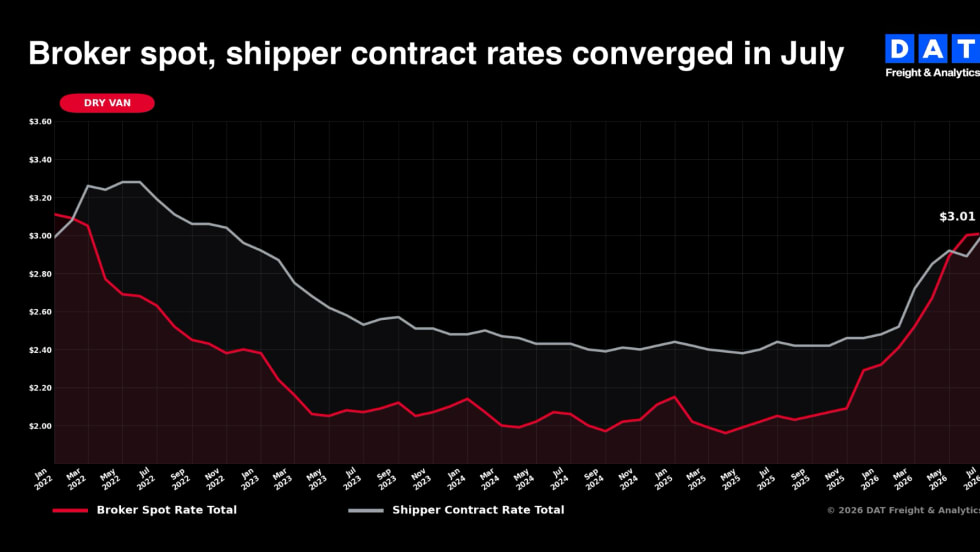
Tight Trucking Capacity Pushes Rates Higher Even as Freight Volumes Fall
“Spot rates moving ahead of contract rates have historically signaled a tightening market, but we haven’t seen a capacity-driven market quite like this one,” said DAT's Dean Croke.
Read More →